
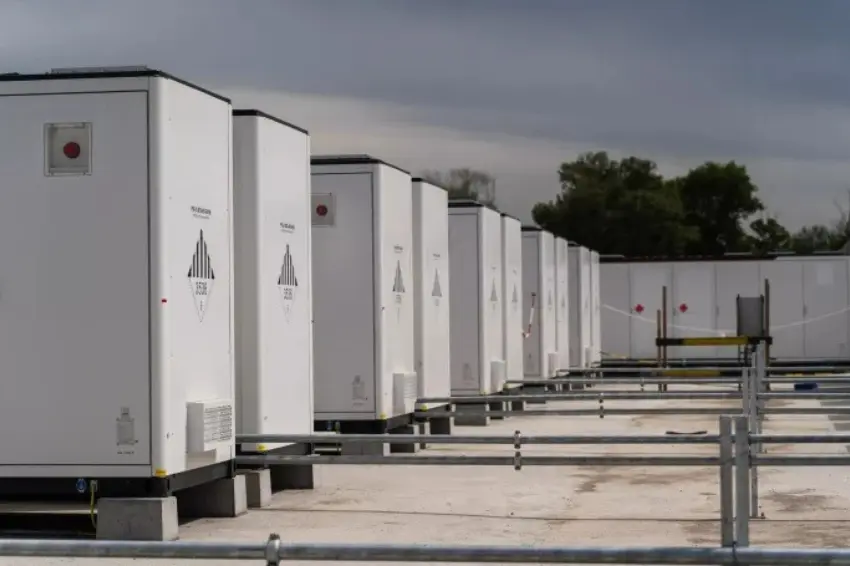
In several articles, I have been analyzing the preparations and expectations for the LRCAP (Capacity Reserve Auction in the form of Power), scheduled for December 2nd and 4th. But this week promises to be one of the most important in the entire process for the sector.
In the coming days, a series of technical, financial, and regulatory decisions should drastically reduce the number of projects that will actually reach the competition.
Many critical issues remain unresolved, and some of them even have the potential to affect the competition schedule itself.
The next filters: qualification and bid guarantees.
The first major turning point is expected this Tuesday, November 17, when EPE (Energy Research Company) is expected to publish the list of projects technically qualified for both auctions [1].
It is important to keep in mind the size of the funnel: 5.296 projects were registered for the National Storage product (2028 A), totaling 261,4 GW, and 5.734 projects for the Storage product (2028 B), totaling 281 GW [2].
Market expectations are that EPE's screening process will result in a significant cut based on rigorous technical criteria.
Project overlap: preventing projects with overlapping areas or facilities, or with physical overlaps, from competing simultaneously, thus avoiding duplicate offers and ensuring the feasibility of implementation.
Distance from transmission facilities: require strict compliance with the distance from the DIT (Basic Network and Other Transmission Facilities) within the ADS (Substation Development Area) in accordance with the Normative Resolution. ANEEL No. 1.055/2022 [3].
Technical and documentary consistency: disqualify proposals with design flaws, incomplete documentation, or incompatibilities with access rules.
After the list of qualified candidates is released, the schedule imposes very short windows for agents to confirm their bets and provide the guarantees required in the call for proposals [1]:
Online registration: from 8am on 11/18/2026 to 11pm on 23/20/2026
Bid Guarantee Submission: from 8:00 AM on 11/18/2026 to 11:00 PM on 11/23/2026. A new development that provides financial relief at this stage was the revision of the reference CAPEX for calculating the bid guarantee (based on PDE 2035). The reference value fell from R$ 9,8 million to R$ 6 million per MW, reducing the required guarantee to R$ 60,000 per MW [1].
Although it softens the initial outlay, the amount still requires companies to have the financial resources to maintain large project portfolios.
The big question: who will foot the bill for ERCAP?
While engineering and regulatory departments race against licensing deadlines, market attention is focused on Brasília and the... ANEELThe central question is: who will be responsible for the cost of the Capacity Reservation Charge for storage systems (ERCAP-SAE)?
Currently, § 6 of article 3-A of Law No. 10.848/2004 (inserted by Law No. 15.269/2025) establishes that this charge should be shared exclusively among electricity generators.
A ANEEL Public Consultation No. 037/2026 on the methodology for allocating this charge ended on November 6th, and a decision is expected later this month, with the aim of providing clarity before the auction.
In the opinion of the reporting director, Gentil Nogueira, the position is to maintain the collection concentrated on the generators, following the text of the current law. However, this definition does not completely shield the market from impacts, since costs passed on to generators tend to be indirectly reflected in the final prices of contracts and energy.
Meanwhile, the discussion has gained urgency in Congress. Bill (PL) No. 3.716/2026, authored by Representative Arnaldo Jardim (Cidadania-SP), proposes to change this dynamic, seeking to transfer part of the burden of ERCAP to consumers [4].
The project was approved under an urgency procedure in the Chamber and could be put to a vote this week, driven by strong mobilization from industry associations, which will even debate the topic at an event this Wednesday [5].
The possibility of changing the rules of the game at the last minute creates significant legal uncertainty. The director-general himself... ANEELSandoval Feitosa has already warned that last-minute legislative changes may force a review of the auction dates [6].
If the change occurs after the auction, the ANEEL It will face the complex challenge of reassessing the impacts on the already signed CRCAP (Capacity Reserve Contracts for Power).
For investors, the strategic recommendation is clear: financial models need to run stress scenarios, considering both the maintenance of the charge on generation and the possibility of legislative changes.
The reality of the market: will we have almost 300 GW in the competition?
The short and realistic answer is no. The noisy mark of almost 300 GW of initial registrations has been dwindling in the face of grid flow restrictions, the rigor of EPE's analyses, and the climate of regulatory uncertainty. The recent movement of major players confirms that selectivity and caution prevail.
Major groups such as Copel [7] and TAESA [8] have already publicly ruled out participation due to profitability analyses and institutional uncertainties. ISA Energia has expressed strong criticism of the rules suggested for transmission companies [9] and Auren has stated that it is still evaluating whether the risk is worthwhile [10].
Three factors explain this decline in interest:
Unfavorable Risk-Return Ratio: The prospect of predatory competition coupled with a macroeconomic scenario of high interest rates raises the cost of capital. For many companies, the expected return does not cover the minimum acceptable rate of return.
Uncertainties surrounding ERCAP: assuming financial guarantees without knowing for sure how a central burden will be distributed within the business model is a high risk.
Revenue rules for transmission companies: the understanding by technical areas to allocate revenue from LRCAP projects of transmission companies to offset tariffs (tariff moderation) works against these companies' appetite for new investments [9].
Therefore, the volume of registrations becomes merely an indicator of prior interest, not of real competition. Effective participation will depend on projects with high-quality technical connectivity and sponsors willing to face the current regulatory volatility.
What to watch out for in the coming days?
This week will define the size and profile of Brazil's first battery auction. The market should watch closely:
The EPE list of qualified candidates on the 17th;
The progress of Bill 3.716/2026 in the Chamber of Deputies and the actions of the associations;
The collateral contributions due by the 23rd will reveal who is truly willing to put capital at risk.
The technical filter, the capacity for financial guarantees, and the definition of the ERCAP-SAE will naturally select the projects. The expectation is that, at the end of the cycle, a much leaner, yet consistent, group of truly competitive projects will remain.
I will continue to follow each of these technical and political developments, bringing the practical implications of these decisions for engineering and the feasibility of energy storage in the country.
If you follow the BESS market, regulation, and the Brazilian energy transition, connect with my profile so you don't miss future analyses.
References
[1] MME / ANEEL. Notice of Auctions for Reserved Capacity in the form of Power (LRCAP National Storage and Storage 2026) and MME Normative Ordinance No. 136/2026.
[2] EPE. Registration Report, LRCAP Storage 2026.
[3] Energy Research Company (EPE). FAQ Auctions (13/07/2026, Version 4) and Regulatory Resolution ANEEL No. 1.055/2022.
[4] Chamber of Deputies. Bill (PL) No. 3.716/2026.
[5] MegaWhat. Associations sue government over approval of bill that changes cost sharing for batteries. Available at: https://megawhat.uol.com.br/armazenamento/associacoes-acionam-governo-por-aprovacao-de-pl-que-muda-rateio-de-custos-de-baterias/
[6] MegaWhat. Change in law before battery auctions will require new dates, says Sandoval. Available at: https://megawhat.uol.com.br/armazenamento/mudanca-na-lei-antes-de-leiloes-de-baterias-exigira-novas-datas-diz-sandoval/
[7] MegaWhat. Copel rules out participation in battery auctions due to low profitability. Available at: https://megawhat.uol.com.br/economia-e-politica/resultados/copel-descarta-participacao-nos-leiloes-de-baterias-por-baixa-rentabilidade/
[8] CNN Brazil. Taesa decides not to participate in the battery auction due to regulatory uncertainty. Available at: https://www.cnnbrasil.com.br/infra/taesa-decide-nao-participar-do-leilao-de-baterias-por-incerteza-regulatoria/
[9] MegaWhat. LRCAP battery rules for transmitters don't make sense, says ISA Energia. Available at: https://megawhat.uol.com.br/economia-e-politica/resultados/regras-do-lrcap-de-baterias-para-transmissoras-nao-fazem-sentido-diz-isa-energia/
[10] Canal Solar. Auren evaluates participating in battery auction. Available at: https://canalsolar.com.br/auren-avalia-participar-leilao-baterias/
The opinions and information expressed are the sole responsibility of the author and do not necessarily represent the official position of the author. Canal Solar.

Comments
Comments are moderated before publication.Comments should be respectful and contribute to a healthy debate. Offensive comments may be removed. The opinions expressed here are those of the authors and do not necessarily reflect the views of the author. Canal Solar.