
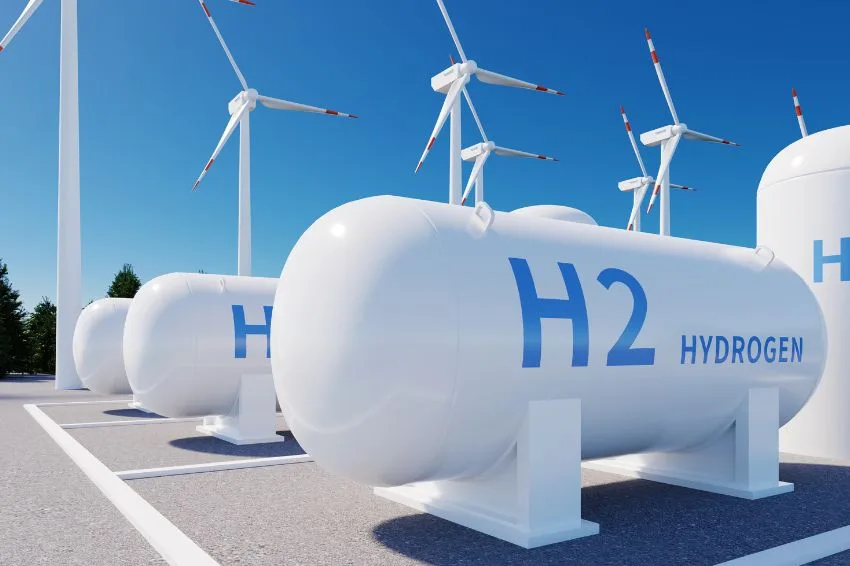
The Government of the State of São Paulo created the CCD – ERCF (Center of Sciences for the Development of Renewable Energies and Fuels of the Future) which will be located at the IPT (Institute of Technological Research facilities) to promote clean energy and contribute to the fight against climate change.
The new center was created with the purpose of boosting the development and application of hydrogen low carbon, a solution to reduce GHG (Greenhouse Gases).
The project received a total investment of R$32 million, with resources coming from different agencies: R$9 million financed by Fapesp (São Paulo State Research Support Foundation), R$11 million from IPT and Semil (Secretariat of Environment, Infrastructure and Logistics), in addition to R$12 million allocated by the Secretariat of Science, Technology and Innovation.
The resources will be applied to infrastructure, equipment acquisition, research development and training programs.
According to Semil, the project will evaluate different aspects of the production, storage, transportation, distribution, use and regulation of low-carbon hydrogen.
This product is considered one of the solutions for decarbonization, with applications ranging from electricity generation to use in industrial processes and transportation.
According to the Secretariat of Environment, Infrastructure and Logistics, low-carbon hydrogen, considered one of the big bets for the energy future, will be essential to meet the state's sustainability goals.
Decarbonization strategy
A biomethane plant was inaugurated on November 6 in Caieiras, in the Metropolitan Region of São Paulo.
The plant has the installed capacity to produce around 70 m³/day of biofuel and will process the biogas captured by UVS (Solví Essencis in the Sustainable Valorization Unit), one of the largest landfills in the world.
With 3,5 million square meters, the landfill receives 10,5 thousand tons of waste daily, mainly from Greater São Paulo and nearby municipalities.
The unit will prevent the emission of around 300 tonnes of CO₂ equivalent per year, contributing to the energy transition and decarbonisation of the region's industries. In addition, the plant will be able to issue carbon credits.
all the content of Canal Solar is protected by copyright law, and partial or total reproduction of this site in any medium is expressly prohibited. If you are interested in collaborating or reusing part of our material, please contact us by email: redacao@canalsolar.com.br.



Comments
Comments are moderated before publication.Comments should be respectful and contribute to a healthy debate. Offensive comments may be removed. The opinions expressed here are those of the authors and do not necessarily reflect the views of the author. Canal Solar.