
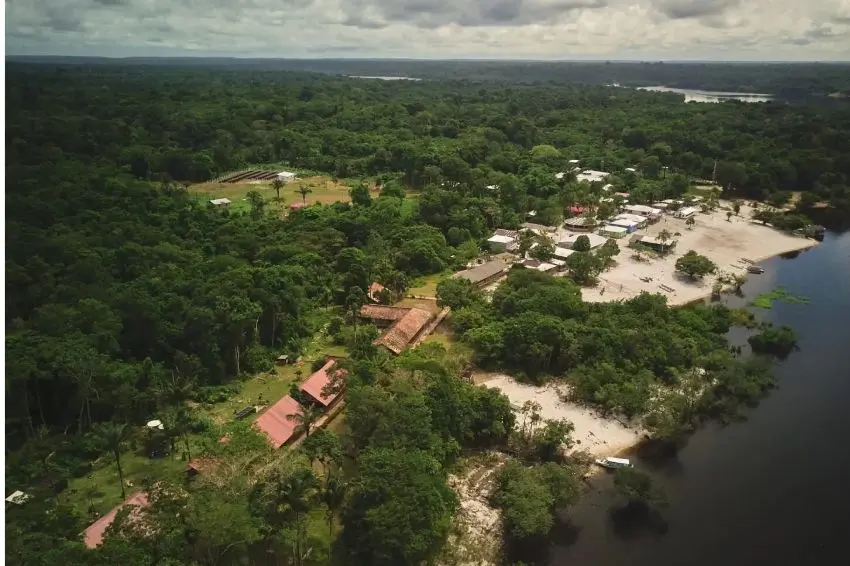
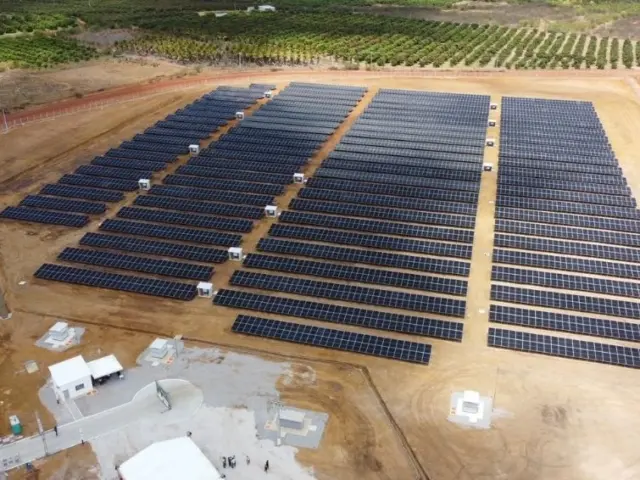
A photovoltaic system with battery storage installed in the indigenous community of Três Unidos, in Amazonas, generated 79,1 MWh of electricity in 251 days of operation and avoided the estimated emission of almost 73 tons of CO₂, according to data released by FAS (Sustainable Amazon Foundation).
The results, recorded by the facility's monitoring application, represent a reduction in emissions equivalent to planting 4.309 trees, according to the organization's estimate. In addition to the environmental benefits, the project reduced dependence on diesel generators and expanded access to electricity for residents.
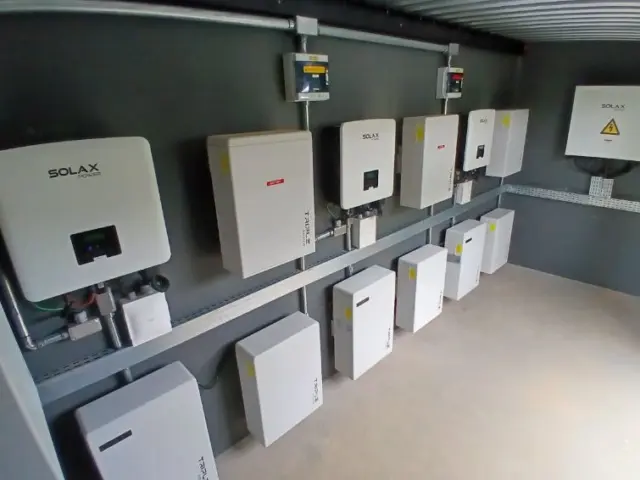
According to Thiago Carvalho, project leader at FAS, the system has batteries that allow the energy produced during the day to be stored for use at night and during periods of low solar irradiance, meeting most of the community's electricity demand.
Before the installation, residents relied on a diesel generator that provided electricity for approximately four hours a day, mainly at night. To use power outside of that period, it was necessary to organize the operation of the equipment and share the fuel costs.
With the arrival of the photovoltaic solution, the community now has a 24-hour electricity supply, reducing diesel costs and expanding the possibilities for using household appliances and developing commercial activities.
One of the main changes occurred in food preservation, where the continuous distribution of energy made it possible to operate refrigerators and other refrigeration equipment, both in homes and in small businesses in the community.
In a community restaurant, refrigeration also facilitated the storage of ingredients and contributed to food safety. In homes, in addition to preserving food, families began using fans during hot periods.
Furthermore, the increased access to electricity has created new income-generating opportunities for Raimundo Cruz, a local entrepreneur.
The project's impacts also extend to the education and communication of residents. According to Enoque Ventura, coordinator of the NIEDS (Innovation and Education Centers for Sustainable Development) at FAS, young people from the community have started pursuing higher education through distance learning, attending classes online without having to leave the area.
The system also contributed to the water supply by providing energy for the equipment responsible for pumping and distributing water to homes.
all the content of Canal Solar is protected by copyright law, and partial or total reproduction of this site in any medium is expressly prohibited. If you are interested in collaborating or reusing part of our material, please contact us by email: redacao@canalsolar.com.br.
Comments
Comments are moderated before publication.Comments should be respectful and contribute to a healthy debate. Offensive comments may be removed. The opinions expressed here are those of the authors and do not necessarily reflect the views of the author. Canal Solar.