
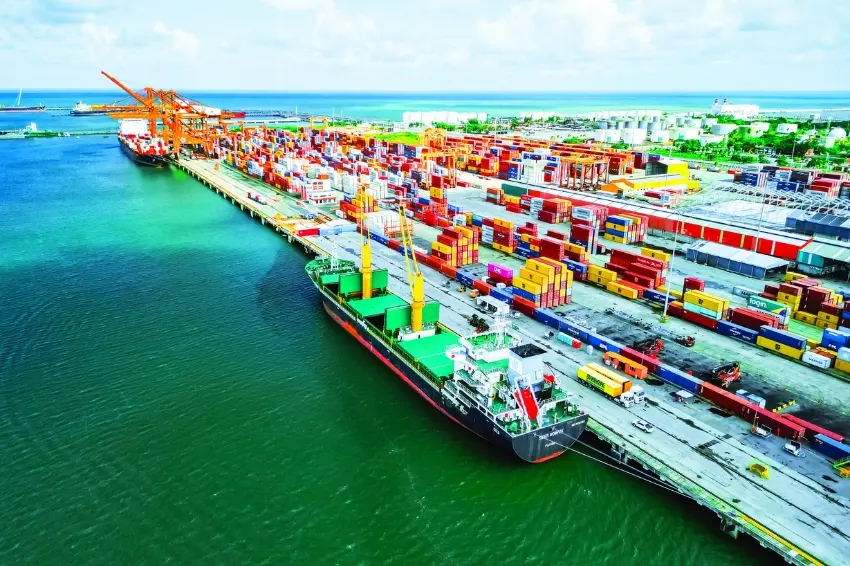
The Port of Suape, in Pernambuco, is studying the possibility of supplying renewable energy directly to ships during their docking period. The initiative aims to reduce the use of fossil fuels by vessels while they remain in the port complex.
The project considers the adoption of OPS (Onshore Power Supply), a system that connects ships to the electrical infrastructure on land. In this way, compatible vessels can shut down the auxiliary generators used to power equipment during port operations.
Even when stationary, ships continue to consume energy for lighting, refrigeration, ventilation, communication, and other services. Today, much of this electricity is produced on board by equipment powered by fossil fuels.
Suape's proposal is to replace this generation with energy supplied on land and ensure that the supply comes from renewable sources. The traceability model for this electricity will still be defined during the structuring of the project.
Electrical infrastructure will be sized
Before any potential implementation, Suape will gather information on vessel consumption patterns, the average time they remain docked, and how many ships using the port are compatible with the technology.
The analysis should also indicate what changes will be necessary in the electrical grid and at the cradles. Substations, transformers, control systems, connections, and higher-capacity cables are among the structures that may be integrated into the project.
In addition to the technical aspects, costs, business models, potential partnerships, and the gradual implementation of the technology according to the demand from shipping companies will be considered.
OPS in international ports
Electrification of docked ships is already present in large international port complexes, but its application is still limited for large vessels in Brazil.
In a diagnosis published in 2025, ANTAQ (National Agency for Waterway Transportation) pointed out that the expansion of OPS (Operational Planning System) in the country depends, among other factors, on investments in electrical infrastructure and physical adaptations at the terminals.
In Europe, ports such as Hamburg in Germany and Rotterdam in the Netherlands already have projects of this type. Rotterdam, for example, is working on expanding its infrastructure to serve long-haul container terminals.
With studies underway, Suape intends to identify which berths could receive the technology first and determine the necessary investments for a future implementation of the system.
all the content of Canal Solar is protected by copyright law, and partial or total reproduction of this site in any medium is expressly prohibited. If you are interested in collaborating or reusing part of our material, please contact us by email: redacao@canalsolar.com.br.


Comments (2)
Comments are moderated before publication.Comments should be respectful and contribute to a healthy debate. Offensive comments may be removed. The opinions expressed here are those of the authors and do not necessarily reflect the views of the author. Canal Solar.
I need help. I have extensive experience in providing onboard power. Please contact me if you are interested. I am 72 years old.
The statement does not clarify how the renewable nature of the energy supplied to the ships will be guaranteed. The energy supplied to the Port of Suape comes from the National Integrated System, composed of mostly renewable, but not exclusively, generation sources. How is this point addressed in the European ports of Hamburg and Rotterdam?