
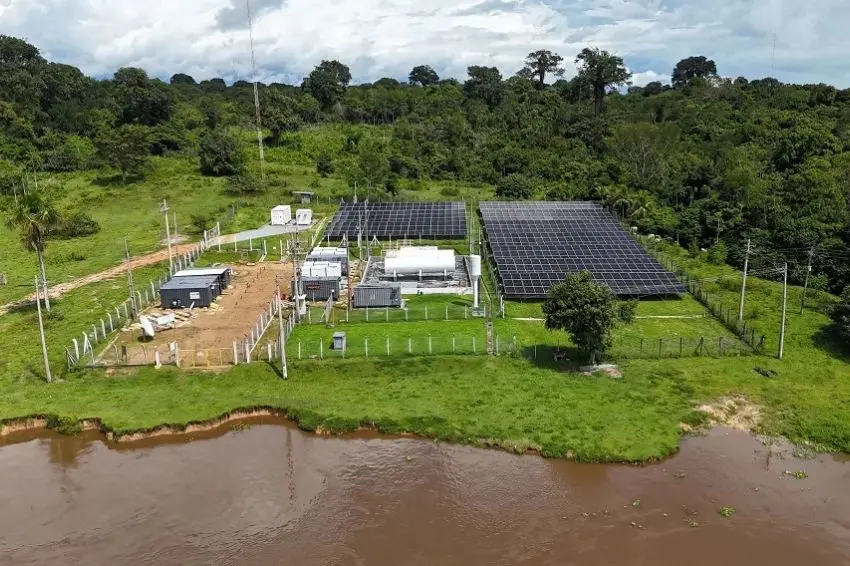
Amid projections of a Super El Niño in the second half of this year, ABSAE (Brazilian Association of Energy Storage Solutions) argues that technology should be more effectively integrated into contingency plans aimed at ensuring the security of energy supply.
In a statement sent to ANEEL (National Electric Energy Agency), the entity proposed that the role of storage be incorporated into the discussions of the event “Super El Niño and the Resilience of the Brazilian Electric Sector”, scheduled for August 20th in Brasília (DF).
According to the association, battery systems can offer a virtually immediate response to the unavailability of power plants, transmission lines, transformers, or substations, in addition to contributing to frequency and voltage support, maintaining the supply of essential loads, and forming microgrids and temporarily isolated systems in emergency situations.
Logistics under pressure
The discussion takes place at a time of growing concern about the impacts of the drought predicted for the Northern region. Associated with the Super El Niño phenomenon, the reduction in the level of Amazonian rivers threatens to compromise the logistics of supplying fuels used in isolated power generation systems, leading companies in the electricity and fuel sectors to anticipate preventive measures before the most critical period of the drought.
Among the measures adopted are the expansion of fuel stocks, the advance contracting of logistics solutions, and the reorganization of transport operations to reduce the risk of supply interruptions.
The ANP (National Agency of Petroleum, Natural Gas and Biofuels) requested contingency plans from the main distributors operating in the Amazon region and began continuously monitoring the evolution of hydrological conditions in conjunction with the ANA (National Agency of Water and Basic Sanitation).
In parallel, the agency also participates in actions coordinated by ANEEL for the isolated systems of Amazonas, Acre and Rondônia.
Enhanced operation
In Rondônia, where logistics heavily depend on river navigation, Energisa supplies fuel, equipment, and parts via the rivers to ten of the twelve thermoelectric power plants in isolated systems, according to information from the Bnamericas website.
August and September are considered the most critical months, a period in which the navigable depth can drop to between three and four meters. A gradual recovery is expected only from October onwards.
In areas considered more vulnerable, such as Maici, Demarcação, Pedras Negras, and Nazaré, supply may require operations involving different vessels and modes of transport, meaning that a single delivery could take up to 11 or 12 days.
The distributor anticipated fuel purchases, reinforced stocks before the drought worsened, and structured a contingency plan valid between August 15 and October 15. The company also maintains an emergency structure in Porto Velho equipped with four generator sets to respond to any incidents.
Financial impact
Preparations to face the drought are already putting pressure on companies' operating costs. Aggreko has requested that... ANEEL The economic and financial rebalancing of contracts, citing extraordinary expenses related to the advance contracting of logistics, the formation of strategic stocks, and preventive supply operations.
At the same time, the CMSE (Electricity Sector Monitoring Committee) approved a set of measures to strengthen security of supply.
Among them is the early commissioning of five power plants contracted in previous auctions, which will add approximately 1,8 GW to the SIN (National Interconnected System) starting September 1st.
The decision takes into account both the high probability of El Niño occurring and the geopolitical uncertainties that could put pressure on international fuel prices.
all the content of Canal Solar is protected by copyright law, and partial or total reproduction of this site in any medium is expressly prohibited. If you are interested in collaborating or reusing part of our material, please contact us by email: redacao@canalsolar.com.br.
Comments
Comments are moderated before publication.Comments should be respectful and contribute to a healthy debate. Offensive comments may be removed. The opinions expressed here are those of the authors and do not necessarily reflect the views of the author. Canal Solar.