

Many end consumers and, especially installers, have asked this question to the main inverter manufacturers in the solar energy market in Brazil. But why?
In fact, knowing the useful life of the equipment that makes up a photovoltaic (PV) system is extremely important, as this is directly linked to the investment that the end customer will make. By knowing the price and useful life of a PV system, it is possible to calculate the yields, the return time (payback), as well as to estimate the term of this investment.
As we know, many PV module manufacturers guarantee a useful life of approximately 25 years for their equipment, with an expected drop in efficiency during this period. However, it is worth noting that these panels can last much longer than the time stated by the manufacturer, because despite losing their efficiency, there are many cases of panels that have been in operation for more than 30 years.
The installation location, the care provided and recommended by the manufacturer, as well as its fixing and technology, help to extend the useful life of the product.
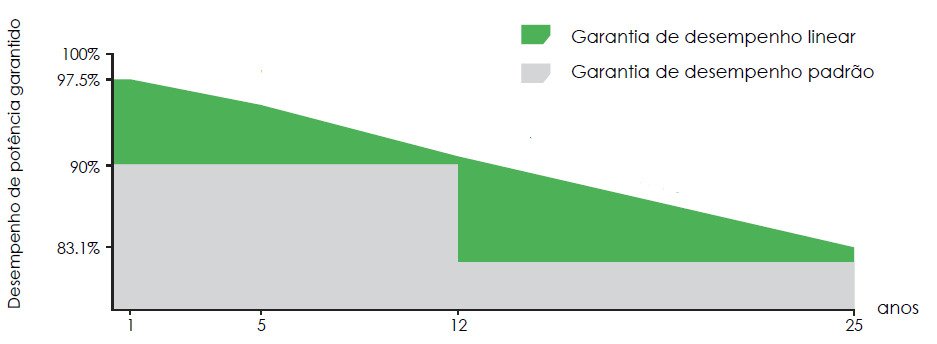
The same is true for inverters. Inverter manufacturers also usually tell us the useful life of their equipment, but in this case we come across the famous acronym MTBF (Mean Time Between Failures). For major inverter manufacturers, this time between failures is approximately 20 years.
But what does this mean?
MTBF expresses the average time observed for a failure to occur. Inverters are subjected to several tests in the laboratory, such as high and low temperatures, radiofrequency emission, humidity, salinity, among others. In this way, under more rigorous conditions than those found in real life, the average time for a failure in their internal components to occur is observed.
Therefore, the higher the MTBF of a piece of equipment, the longer the useful life guaranteed by the manufacturer will be and consequently this can also be used as a deadline for investment calculations as previously mentioned.
Just like PV Modules, inverters can also last much longer than the stated MTBF, as depending on the installation location, temperature, humidity, among other factors, the inverter can work more calmly and without stressing its internal components, prolonging this MTBF and ensuring a long-term investment for the end customer.
Inverters in operation for 30 years?
Although solar energy is a new technology in the country, it has been increasingly gaining ground in Brazilian homes since 2012, when REN 482 regulated the operation of distributed generation PV systems in the country. Even though it is still a recent technology in Brazil, we have already had several cases of PV systems connected to the grid in operation since 2014, as reported by Canal Solar.
Read also Longevity of inverters in a photovoltaic system
With just under 10 years of operation, we could have already encountered failures, maintenance or even damage to the equipment. However, reports of the use of these systems are very positive, with customers increasingly satisfied and with several expansions of them. Outside Brazil, it is already possible to find PV systems that have been in operation for 30 years, as is the case of the PV system of the German engineer Franz Ammersdorfer, owner of one of the first Fronius inverters, the Sunrise model (at the time still a prototype).
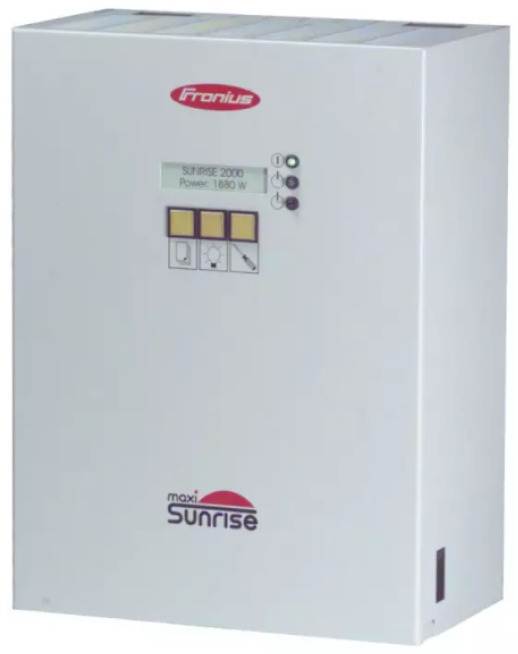
Initially, the PV system installed in 1994 featured a 1 kW Fronius Sunrise inverter and 2 kWp PV modules. Since then, Franz has started to expand his system and optimize his self-consumption, using a water heating system, as well as a charging point for his electric car.
As the internet was not yet completely accessible to everyone at the time, monitoring of the photovoltaic system was not carried out using the free Solar.Web platform that we know today, but rather through Sunrise for Windows, a platform that made it possible to obtain graphics, albeit very simple. , of daily energy generation, but which already helped with future planning and monitoring the system's performance.
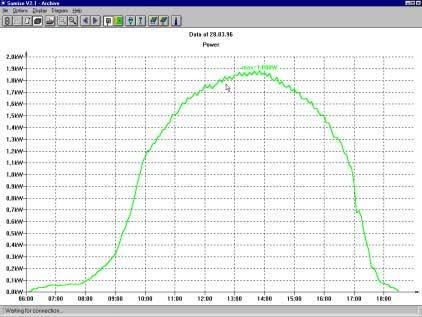
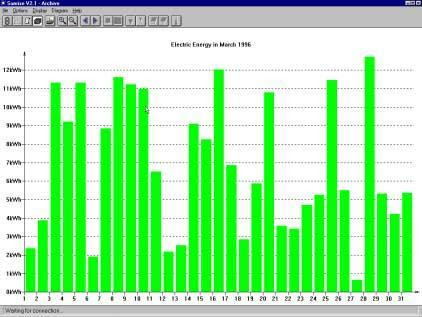
Even though he received a prototype inverter and proposed replacing what would become the final version of the Fronius Sunrise, Franz did not want to get rid of the equipment, which has remained in operation ever since. Therefore, the idea that a photovoltaic system has a short lifespan and that the inverter or even the modules need to be replaced every 10 years is not proven by real-world applications.
It must also be said that the manufacturer's history, the rigor of the tests carried out, the longevity of the brand and the quality of the components that make up the equipment are items that must always be taken into consideration when choosing the inverter to integrate the photovoltaic system, in order to always guarantee the best performance and a long useful life for your investment.
Click here to see an interview with Franz showing his PV system with the Fronius Sunrise inverter and better understand his passion for renewable energy, especially photovoltaic solar energy.

Comments (2)
Comments are moderated before publication.Comments should be respectful and contribute to a healthy debate. Offensive comments may be removed. The opinions expressed here are those of the authors and do not necessarily reflect the views of the author. Canal Solar.
Dear Ivan Gomes, I have been studying power electronics and there is indeed a field of improving heat exchange to be explored.
Excellent initiative, as we don't like calling equipment suppliers in call centers. Today I research and try to develop
heat exchangers according to each inverter, exchanger, exhaust fan, limiter and alarms.
Big hug.
Maurício, Campinas SP
Great article, here in my house I use two inverters, to increase their useful life I use an inverted photocell with contactor, this only turns on the AC input in the presence of natural light and another provision was a thermostat and cooler to cool the inverters when they reach a certain temperature . It has been in operation for over a year, so far so good!