
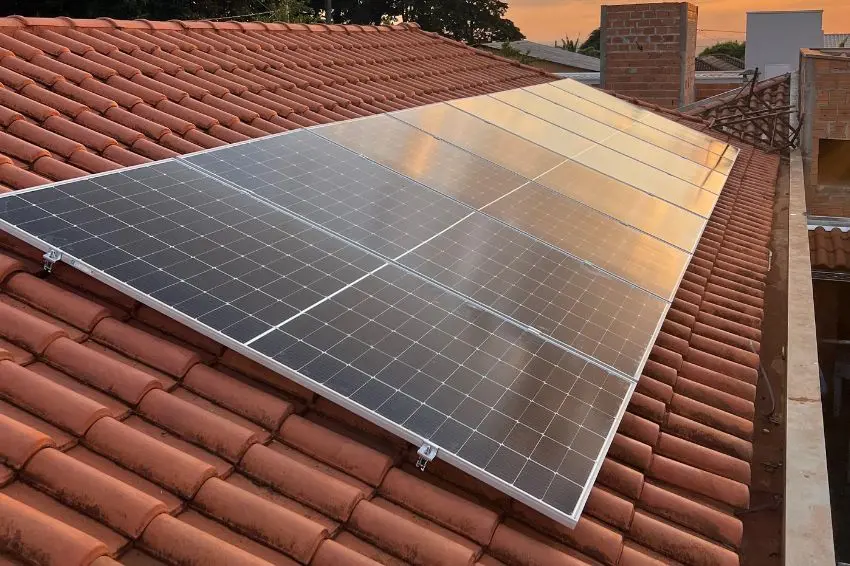
Brazil celebrates Independence Day this Monday (7), a date that marks the official break with Portugal in 1822 after the proclamation by Dom Pedro I, then Prince Regent, on the banks of the Ipiranga Stream, in São Paulo (SP).
In the electricity sector, however, the term "independence" has taken on a different meaning in recent years: the possibility for consumers to produce, store, and manage their own energy, reducing their dependence on the electricity grid.
This movement has already reached millions of Brazilians. Data from ANEEL (National Electric Energy Agency) shows that distributed generation (DG) ended the month of August with approximately 4,7 million consumers benefiting in the country.
In addition to self-generation, technologies such as batteries, hybrid systems, and energy management solutions are expanding the alternatives available for homes, condominiums, businesses, industries, and rural properties.
On this September 7th, the Canal Solar It shows how various technologies available on the market can increase the energy autonomy of different consumer profiles and how each of them can contribute to reducing dependence on conventional supply.
Homes: rooftop solar power and batteries
For homes, solar energy is one of the established ways to increase energy independence. Since 2012, Brazilian consumers have been able to generate their own energy and inject the surplus into the grid for later compensation of consumption.
In this model, the consumer remains connected to the distributor but begins to produce part of the energy they use. Currently, Brazilian distributed generation (DG) has accumulated more than 54 GW of installed capacity, practically double the approximately 27 GW registered three years ago, according to data from [source missing]. ANEEL.
For those also seeking protection against power outages, hybrid systems and all-in-one solutions combine energy generation, storage, and management. With batteries integrated into or associated with the system, it is possible to store electricity for later use and maintain selected loads during a power failure.
Apartments: compact backup solutions
The lack of dedicated space for installing modules can limit individual power generation in apartments. In this scenario, all-in-one systems and portable power stations emerge as alternatives for those primarily seeking backup and greater autonomy for specific loads.
These solutions can keep equipment such as lighting, routers, computers, and other selected devices running during a power outage. Runtime varies depending on battery capacity, the power consumption of connected devices, and energy consumption.
For the condominium as a whole, other possibilities also arise, such as the use of solar energy in common areas, shared generation, and larger-scale storage systems.
Businesses and companies: batteries go beyond backup.
In commercial establishments and companies, self-generation and storage can be used not only for backup...but also to manage energy consumption and demand.
BESS systems can be used in applications such as peak shaving, reducing peak demand, and load shifting, storing energy for use at a later time.
For activities where an interruption represents a loss of production, batteries can also keep critical loads running, provided the system is sized for that purpose.
Agribusiness: Hybrid systems for critical loads
In the agricultural sector, energy autonomy takes on another function: ensuring greater security for activities that depend on a continuous supply, such as irrigation, water pumping, refrigeration, and product storage.
Hybrid systems combine renewable energy generation and batteries, allowing some of the energy produced to be stored for later use. In remote or isolated properties, the technology can also complement or replace other generation sources, depending on the configuration.
Industries: generation, storage and supply management
For large consumers, increasing autonomy can involve different strategies. Self-production, energy contracting, renewable generation, and storage can be combined according to consumption profiles and operational needs.
In industries, batteries can be used to control peak demand, shift consumption, and provide backup for critical processes, reducing the operation's exposure to interruptions or fluctuations in supply.
Storage has also gained regulatory ground in Brazil. In 2026, the ANEEL It has made progress in regulating these systems and is currently discussing the bidding rules for the country's first auctions of large-scale batteries.
Ultimately, there is no single technology capable of guaranteeing greater energy autonomy for all consumers. The path depends on the consumption profile, the loads that need to be met, and the objective of each project, whether it's to reduce costs, keep equipment running, or increase the use of self-generation.
all the content of Canal Solar is protected by copyright law, and partial or total reproduction of this site in any medium is expressly prohibited. If you are interested in collaborating or reusing part of our material, please contact us by email: redacao@canalsolar.com.br.


Comments
Comments are moderated before publication.Comments should be respectful and contribute to a healthy debate. Offensive comments may be removed. The opinions expressed here are those of the authors and do not necessarily reflect the views of the author. Canal Solar.