
ABNT (Brazilian Association of Technical Standards) published, this Friday (17), NBR 17258:2025, which defines technical criteria for electroluminescence (EL) inspection in crystalline silicon photovoltaic modules.
The document standardizes the use of the electroluminescent imaging method as a quality control tool in the Brazilian solar industry.
Prepared by the GT2 working group, which is part of the Photovoltaic Solar Energy Study Commission (ABNT/CEE-253), the standard is based on IEC TS 60904-13:2018, IEC TS 61836:2016, ABNT NBR 10899 and several technical articles related to the subject.
The text was submitted for national consultation between August 1 and September 1, 2025, and consolidates practices that had been applied unevenly by various manufacturers.
According to ABNT, the objective is to “determine acceptance parameters for the quality of cells and their interconnections that make up the photovoltaic modules supplied on the Brazilian market”.
According to the association, standardization should favor the comparability of results between laboratories, manufacturers and importers, strengthening the traceability of processes. product certification.
Visual diagnosis of defects
The electroluminescence technique consists of applying electric current to the photovoltaic module, causing the cells to emit infrared light captured by cameras with specialized lenses.
Is Flash Test Enough? The Importance of Electroluminescence in Photovoltaic Modules
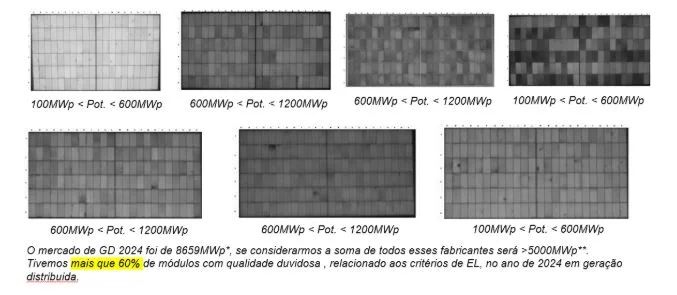
The images reveal microdefects, such as microcracks, stains, and interruptions in the conductive tracks, which are not visible to the naked eye but can reduce the equipment's performance and lifespan. Furthermore, the test allows us to identify differences in the performance of photovoltaic cells based on the hue of the emitted light.
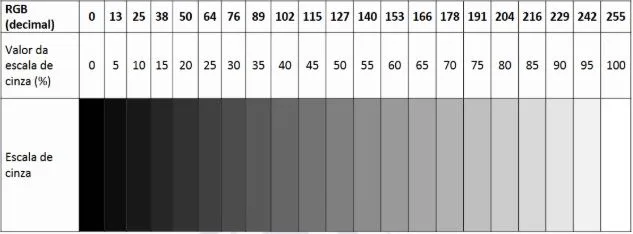
The standard provides tables and grayscales for classifying observed defects and defines acceptance or rejection criteria based on the extent and location of the defects. The types of anomalies listed include "grayscale difference," "black corner," "black spot," "black core," and "broken corner."
International harmonization and impacts
Industry experts see the publication of the standard as an important step towards the convergence of quality practices in the Brazilian market.
According to participants who actively participated in the creation of the standard, the publication of ABNT NBR 17258 is extremely important and was created due to the large number of photovoltaic modules with problems in the Brazilian market, according to studies carried out in 2024.
The standard is voluntary, but may be cited in technical regulations or certification programs, which in practice may make it mandatory to comply with in some stages of module manufacturing and marketing.
The standard is available on the ABNT website, click here to access.
Deepen your knowledge further
all the content of Canal Solar is protected by copyright law, and partial or total reproduction of this site in any medium is expressly prohibited. If you are interested in collaborating or reusing part of our material, please contact us by email: redacao@canalsolar.com.br.



Comments (2)
Comments are moderated before publication.Comments should be respectful and contribute to a healthy debate. Offensive comments may be removed. The opinions expressed here are those of the authors and do not necessarily reflect the views of the author. Canal Solar.
Congratulations on the content, it's very good and enlightening.
Is it possible to rent this equipment for measuring electroluminescence? Are there any suppliers that rent it?
Could you share this presentation from PHB?
Dear friends, I hope you are all well!
I always read your articles, and through this one I'm sharing a very bad experience I'm having with TSUN modules. The diodes at the cable connections are overheating, in some cases even melting, indicating a high risk of fire. Contacting the company responsible hasn't shown any interest in the matter. Can you give me any suggestions for this? Thank you all.