
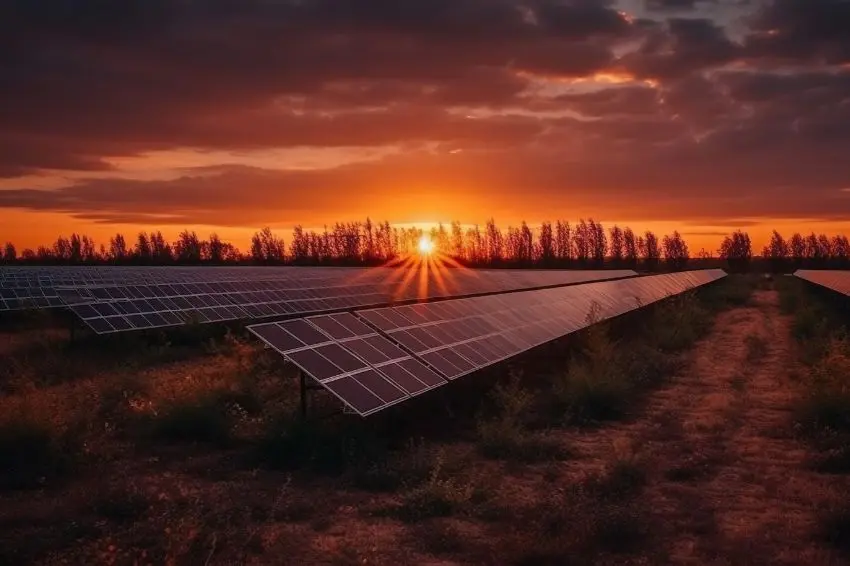
Attending a lecture by Leandro Florenzano from AWS (Amazon Web Services) during Caldeira Week in Porto Alegre was an opportunity to see the energy transition from a perspective that goes far beyond replacing fossil fuels with renewable sources.
What is happening is a profound transformation in the very way energy will be produced, distributed, consumed, and managed.
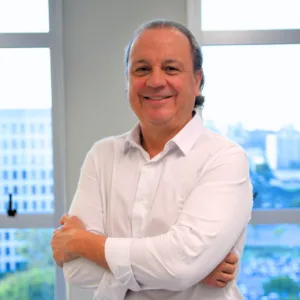
Florenzano is a Senior Solutions Architect at AWS for the public sector, working with clients in the Power & Utilities vertical in Brazil. His work lies precisely at the intersection of technology, cloud computing, data, and the challenges of the electricity sector.
In works published by AWS itself, he addresses applications of high-performance computing, artificial intelligence, and digitization for smart grids, power transmission, and distribution.
The lecture was part of the Caldeira Week 2026 program, held from September 21st to 25th at the Caldeira Institute. In its fifth edition, the event brought together hundreds of speakers and an extensive program focused on innovation, technology, entrepreneurship, and new businesses. The Institute itself defines the Week as an annual moment for its community to connect, learn, connect, and transform.
Within this environment, the meeting promoted by EQT Lab, the innovation hub of the Equatorial Group which maintains a center at the Caldeira Institute, gained special importance. The laboratory works with open innovation, bringing together companies, startups, research institutions and other stakeholders to develop solutions applied to the real challenges of the electricity sector.
What Florenzano presented shows that artificial intelligence could profoundly change the way energy operates. Data from sensors, smart meters, equipment, consumers, distributed generation, batteries, and other devices could be processed virtually in real time. AI thus moves from an analytical tool to a technology capable of supporting decisions about where, when, and how to use energy.
This transformation also needs to be understood within the context of Amazon's own evolution. Since Jeff Bezos' commitment to the Climate Pledge, the company has set a goal of achieving net-zero carbon emissions by 2040.
Amazon reports that, by 2025, it will have matched 100% of the electricity consumed globally by its operations to renewable sources for the third consecutive year. This includes AWS operations and its data centers.
Here's a particularly interesting point: technology companies are among the biggest consumers of electricity in the new digital economy. Data centers, artificial intelligence, and cloud computing demand enormous amounts of energy. At the same time, these same companies are developing technologies capable of making the electrical system more efficient, predictable, and flexible.
This is where another strategic dimension of Amazon emerges. The Climate Pledge Fund was created with US $ 2 billion to invest in companies and technologies focused on decarbonization and sustainability. Therefore, this is not a R$2 billion AWS grant, but a US$2 billion Amazon fund aimed at accelerating sustainable solutions.
This logic helps to understand the ecosystem that is forming. New companies will not necessarily be created to produce energy. Many will be in the technological layer: artificial intelligence, sensors, software, batteries, demand management, electric vehicle charging, automation, weather forecasting, and systems capable of transforming data into decisions.
During discussions related to the EQT Lab, a central issue arose: technology is advancing faster than regulation and infrastructure can keep up.
Brazil already has public consultations, pilot projects, and regulatory sandboxes. A sandbox is, in essence, a controlled environment in which new technologies or business models can be tested for a specific period, under specific rules and regulatory supervision.
A ANEEL The National Electric Energy Agency uses this instrument to allow experiments that can produce evidence before the consolidation of new rules. But perhaps the biggest challenge lies in the networks.
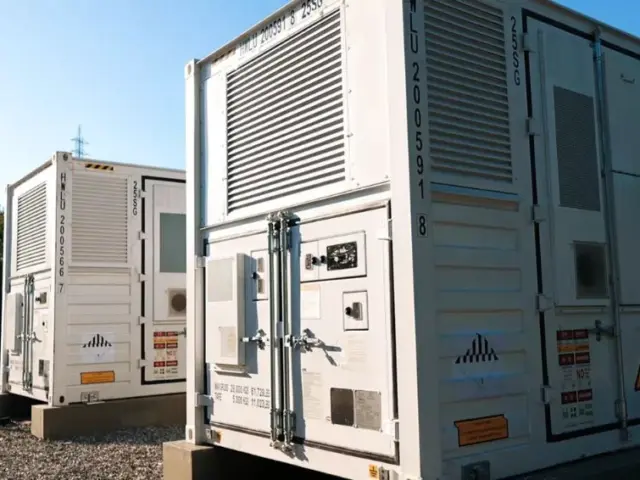
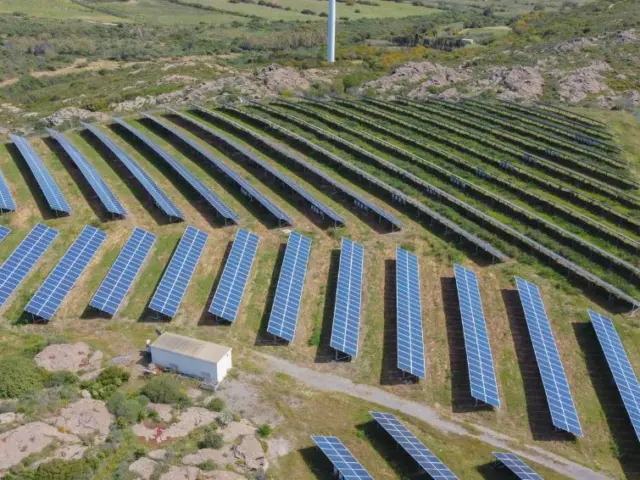
We are entering an era where the flow of energy is no longer predominantly unidirectional. A solar panel can produce energy during the day; a battery can store it; an electric car can consume or, in certain models, return energy to the grid; a residence can alter its consumption; an industry can respond to price signals; and all of this equipment can be digitally connected.
It is in this context that the discussion about arises. DSO (Distribution System Operator) The Distribution System Operator. Studies by the MME (Ministry of Mines and Energy), EPE (Energy Research Company), ANEEL The Brazilian National System Operator (ONS) is already addressing the need for an evolution in network operation to handle Distributed Energy Resources (DERs). The ONS has even been studying the interface between the transmission operator and future distribution operators.
In practice, a DSO could play a key role in coordinating resources connected to the distribution network. We are not just talking about large power plants, but millions of small resources scattered across the territory: solar panels, batteries, electric vehicles, chargers, smart equipment, and loads capable of altering their consumption.
Artificial intelligence can help manage this complexity. If a particular region is experiencing higher demand, the systems can identify available resources in other locations and optimize flows. The network ceases to be merely a passive infrastructure for transporting electricity and begins to function as an intelligent platform.
My vision is that this future will require a discussion about the very governance of distribution. Any eventual DSO should have sufficient independence to operate the network in an optimized way, coordinating the interests of producers, distributors, consumers, and new players. The regulatory discussion is still under construction, but the technological problem is already upon us.
Among the participants in these discussions was also Wolf Rowell, a professional with extensive experience in the electricity sector and in new technologies. Rowell served as managing partner of Engineering and Finance at Noale Energia and, more recently, has focused his efforts on research and development of artificial intelligence applied to weather forecasting and risk management. He recently completed his master's degree in Computer Science with an emphasis on AI from PUCRS and is working on building a deeptech company in this area.
It is precisely this type of trajectory that is beginning to shape the new energy economy. Engineers, data scientists, artificial intelligence specialists, entrepreneurs, and traditional professionals in the electricity sector are all starting to work on the same problem.
Just as happened with telephony and, later, with the internet, the time has come for electrical grids to definitively incorporate new digital technologies. It's not just about modernizing equipment. It's about building an infrastructure capable of responding to a society that will consume more electricity, have millions of new connected devices, and face increasingly challenging weather events that will test its resilience.
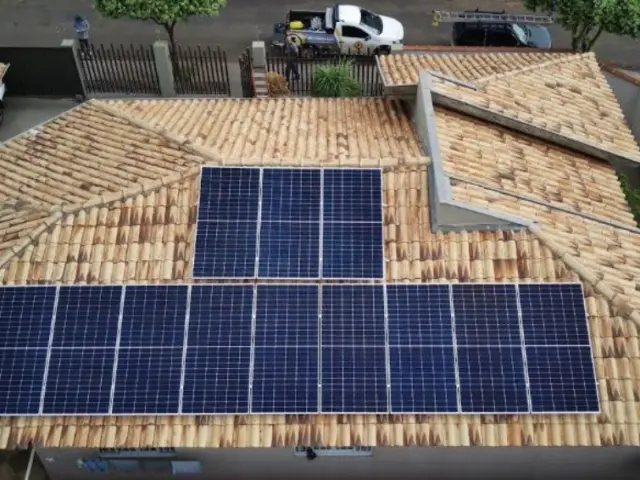
The future of energy will not be built solely in large power plants. It will also be found on rooftops with solar panels, in batteries, in electric cars, in sensors, in smart meters, in chargers, in software, and in companies that don't even exist yet.
Technology has already begun to build this new reality. Now we need to build the networks, the regulations, and, most importantly, a society capable of understanding and participating in this transformation.
The opinions and information expressed are the sole responsibility of the author and do not necessarily represent the official position of the author. Canal Solar.

Comments
Comments are moderated before publication.Comments should be respectful and contribute to a healthy debate. Offensive comments may be removed. The opinions expressed here are those of the authors and do not necessarily reflect the views of the author. Canal Solar.