
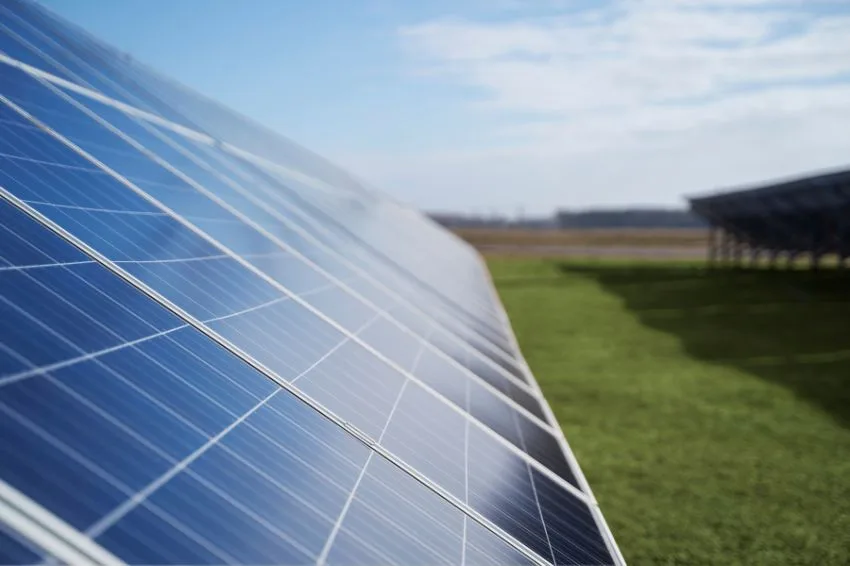
Photovoltaic solar plants are becoming increasingly larger, with billion-dollar investments and a robust installed base in Brazil.
This new scenario poses an immediate challenge: ensuring efficiency and reliability in operations and maintenance. This is where artificial intelligence begins to establish itself as an essential tool for plant management and maintenance, as discussed on the third and final day of Intersolar South America in São Paulo, Brazil.
Researcher João Lucas Silva, from Unicamp, emphasized that continuous monitoring is essential to preserving the performance of power plants throughout their useful life. According to him, the application of AI algorithms allows anomalies—deviations from expected behavior—to be identified before they become failures that reduce generation.
However, there are obstacles such as data fragmentation, poor sensor quality, and the difficulty in standardizing information from different inverter models. "We still need the expert's perspective, but AI is already a fundamental ally in troubleshooting," he emphasized.
Along the same lines, consultant Henrique Ribeiro of S&P Global noted that the scale of Brazilian plants requires solutions that combine data analysis and predictive intelligence to reduce operating costs. He reinforced that AI-supported preventive maintenance is more effective than traditional models, which are still largely based on historical data.
Rodrigo Dias, a researcher at Solextron, presented the application of digital twins (digital twins), mathematical models that allow for real-time simulation of power plant performance. This technology, he says, enables faster and more accurate detection of failures such as string disconnections or shading losses.
"While conventional methods rely on historical averages, the digital twin projects expected performance in real time, giving the operator a much more accurate view of the plant's condition," he explained.
The consensus among experts is that, as photovoltaic plants expand, technologies such as AI, machine learning, and digital twins will be crucial to ensuring not only the profitability of investments but also the reliability of large-scale electricity generation.
all the content of Canal Solar is protected by copyright law, and partial or total reproduction of this site in any medium is expressly prohibited. If you are interested in collaborating or reusing part of our material, please contact us by email: redacao@canalsolar.com.br.
Comments
Comments are moderated before publication.Comments should be respectful and contribute to a healthy debate. Offensive comments may be removed. The opinions expressed here are those of the authors and do not necessarily reflect the views of the author. Canal Solar.