The board of ANEEL (National Electric Energy Agency) will assess, this Tuesday (28), the opening of a public consultation on the notice of the first national auction aimed at contracting energy storage systems in batteries.
A The proposal The guidelines were prepared by the Auctions Secretariat and the Superintendency for the Regulation of Generation Services and the Electricity Market of the Agency. The technical areas recommend that the consultation be carried out between July 30 and September 14, for a period of 46 days.
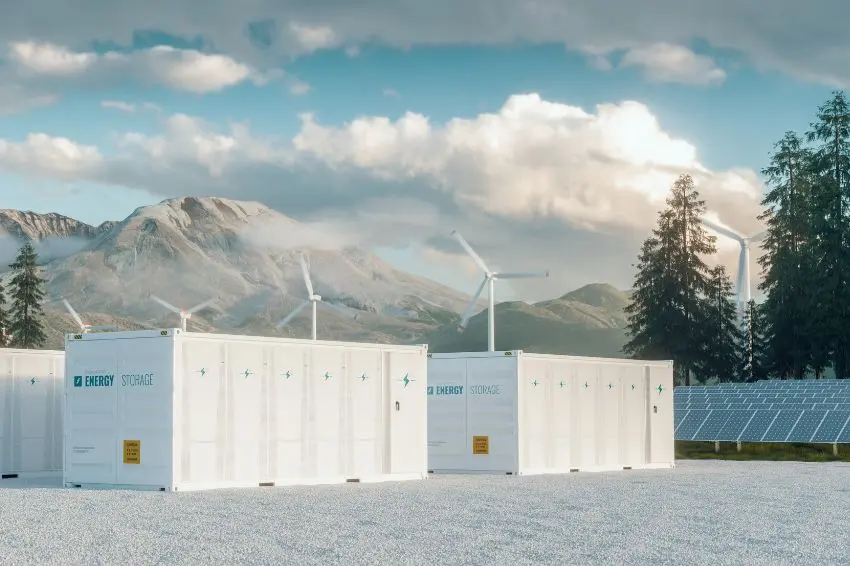
Scheduled for December 2, 2026, the 2026 Capacity Reserve Auction in the form of Power will contract systems capable of storing energy and delivering it to the SIN (National Interconnected System) when there is an operational need.
The start of the supply is scheduled for August 1, 2028. Winning projects will receive a fixed annual income for 15 years, paid in monthly installments and subject to reductions based on equipment performance.
Initially, ANEEL He had suggested to the Ministry of Mines and Energy (MME) reducing the contract term from 15 to 10 years and changing the bidding system. However, the proposals were not incorporated into the guidelines published by the ministry.
Project requirements
According to the draft of the tender, only autonomous systems will be able to participate in the auction. This means that the projects must have their own authorization, metering, and operational structure, even if they share the connection point and restricted-interest facilities with a generating plant.
Co-located systems, installed within a generation plant and linked to the same concession, will not be eligible to participate in the bidding process.
The connection between a stand-alone battery and a power plant will be permitted, provided it does not limit the charging and discharging commands determined by the ONS (National System Operator). It also cannot interfere with contracts already signed in the regulated market.
Each project must have a minimum power output of 30 MW and a continuous discharge capacity for at least four hours. The systems must achieve a full recharge within six hours and maintain a minimum energy efficiency of 85%.
The operation may reach two complete cycles per day, limited to 366 cycles annually. The projects must also meet technical requirements for connectivity, operational safety, and grid-forming.
The draft also stipulates that the cells, inverters, and bidirectional converters must be new, with no prior commercial use, reconditioning, or remanufacturing. Reuse will only be permitted for civil installations and auxiliary or transmission equipment.
Those interested have until 12:00 PM on July 31st to register their projects with EPE (Energy Research Company) and obtain the necessary technical qualification to participate in the auction.
Costs will be paid by the generators.
The costs of contracting the batteries will be shared exclusively among the generating agents, through the Capacity Reserve Charge in the form of Power. CCEE (Chamber of Electric Energy Commercialization) will represent the generators in the contracts signed with the winners.
The charge will also cover the energy used to charge the batteries, assuming a minimum efficiency of 85%. If internal consumption exceeds the limit equivalent to 15% of the energy used, the excess cost will be the responsibility of the system owner and will be deducted from their fixed monthly revenue.
The seller will also be responsible for any electrical losses verified between the individual battery metering point and the connection point to the National Interconnected System (SIN).
According to the technical area of ANEELThis division prevents the generators responsible for paying the charge from bearing the costs arising from any inefficiencies in the contracted systems.
Penalties for non-compliance
The contract stipulates different penalties for operational failures. Failure to comply with ONS (National System Operator) load or discharge commands may result in a charge equivalent to 1,15 times the fixed unit revenue associated with the undelivered power.
For failure to meet the contracted power availability, the proposed penalty is equivalent to 1,10 times the fixed unit revenue.
Scheduled power outages must be reported to the ONS (National System Operator) in advance. During these periods, the project will be exempt from delivering the contracted power. However, a forced outage will not waive the obligation nor the application of penalties.
Failure to meet the minimum nationalization requirements may also lead to contract termination. Projects must use equipment accredited in the CFI system, maintained by BNDES (National Bank for Economic and Social Development).
The draft also proposes preventing the replacement of the contracted system or the delivery of power by another battery, generating plant, or CCEE agent. The measure seeks to ensure that the ONS (National System Operator) has predictability regarding the resources effectively available for the operation of the electrical system.
all the content of Canal Solar is protected by copyright law, and partial or total reproduction of this site in any medium is expressly prohibited. If you are interested in collaborating or reusing part of our material, please contact us by email: redacao@canalsolar.com.br.