
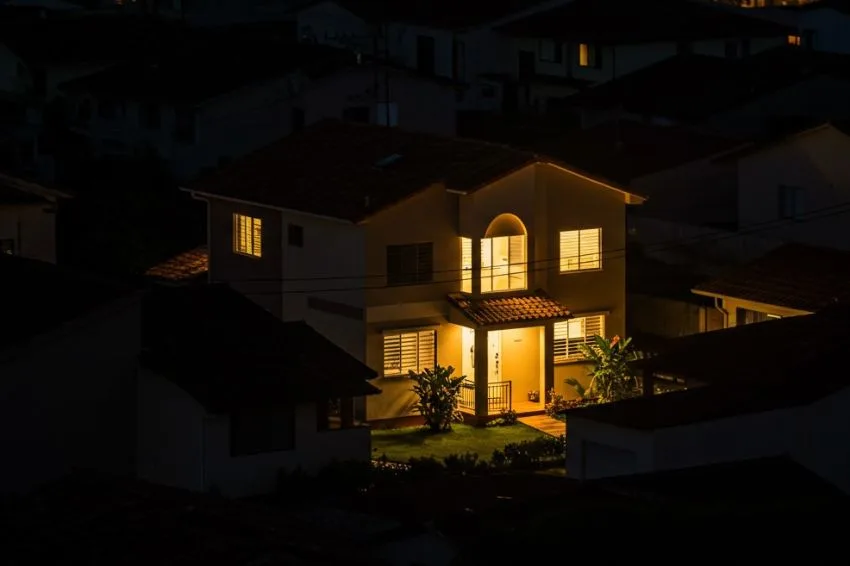
With blackouts and power fluctuations becoming increasingly frequent in Brazil, the demand for solutions that guarantee electrical autonomy is growing. One of these is the use of storage systems, whose performance in different types of residence has just been analyzed by the Energytech Descarbonize Soluções group.
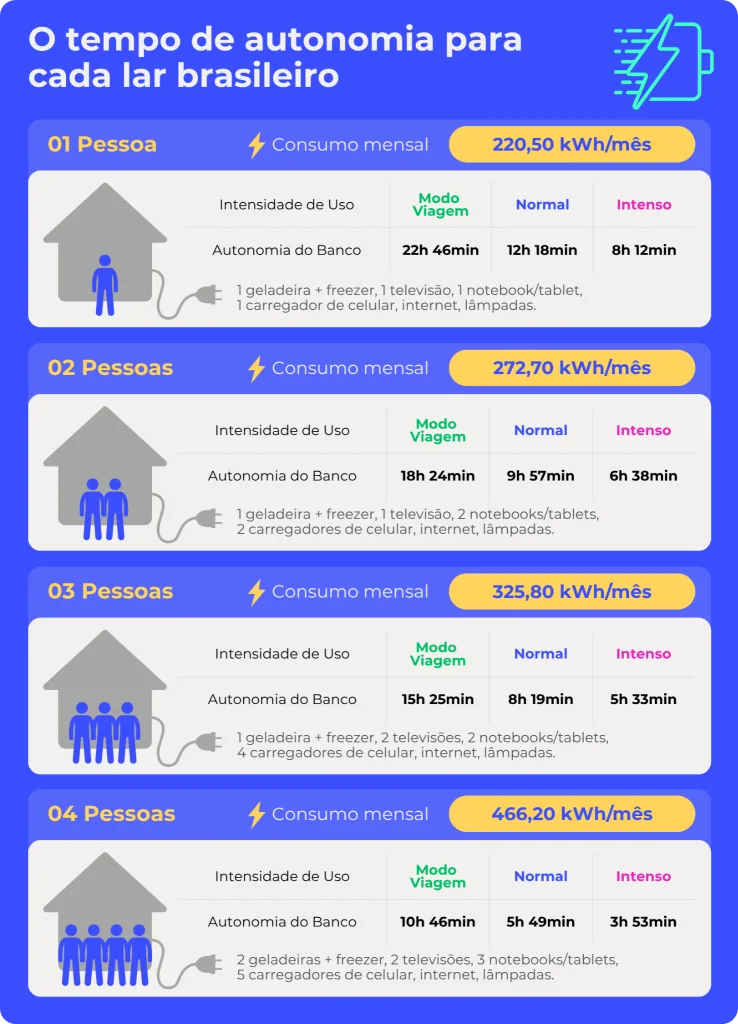
The study provides unprecedented data on battery autonomy in Brazilian homes, based on demographic and energy consumption profiles. The analysis shows, for example, how long a 4,8 kWh solution can keep essential appliances running in homes with one to four residents, considering three scenarios: normal mode, travel mode and high consumption mode.
According to ANEEL, Brazilians were, on average, without electricity for ten hours in 2024 – with some regions recording up to 190 hours of interruption. In 2025, a year that marked a new record for electricity consumption, the number of blackouts and their duration increased.
Consumption scenarios and household profiles
The simulation of Decarbonize Group took into account data from IBGE (Brazilian Institute of Geography and Statistics), which show the most common distribution of residents per household:
- 1 person (19%)
- 2 people (27%)
- 3 people (27%)
- 4 people (19%)
Based on these profiles, the following usage scenarios were defined:
- Travel Mode: 46% lower consumption than normal, with most equipment turned off.-
- Normal Mode: Average usage throughout the week.
- Intense Mode: 50% higher consumption, simulating moments when the house is most occupied.
Equipment considered
The most common and essential electronics, such as refrigerators, televisions, notebooks/tablets, cell phone chargers, internet and lighting, were included in the analysis. High-consumption equipment, such as electric showers, air conditioning and induction stoves, were left out of the simulation because they exhaust the battery quickly.
Battery model and methodology
The simulated battery was the LiFePO₄ (lithium iron phosphate) type, with a capacity of 4,8 kWh and a useful life of 6.000 cycles, with a depth of discharge limited to 80%, as per recommended practice to preserve the equipment.
The simulation considered the average power of the devices, usage time per scenario and system performance. The estimated autonomy times represent the maximum period of continuous battery operation and may vary depending on actual use and the operating time of the devices.
For Antônio Lombardi Neto, Technology Director at Descarbonize, batteries play a strategic role in the current context. Until now, power outages were solved with uninterruptible power supplies, unplugging appliances, candles and flashlights.
Today, technology allows this scenario to be overcome with greater comfort and safety. “With the increasing frequency of fluctuations in the electrical grid, thinking about energy autonomy is no longer something distant,” he said.
For the director, batteries provide consumers with a viable solution, especially when “associated with renewable sources, such as solar, and help protect the home against losses and unforeseen interruptions,” he highlighted.
According to the company, the simulation results reinforce the strategic importance of batteries in the current scenario of the Brazilian energy transition. In addition, the company highlights that in a context of greater instability in the electrical grid, the search for solutions that guarantee autonomy and security in the energy supply has gained ground, especially among residential consumers and integrators in the solar sector.
The technologies used in the simulation, such as lithium-iron batteries, are already available on the national market through Aldo by Descarbonize. The offer reinforces the group's commitment to democratizing access to advanced storage systems and supporting integrators in delivering more complete and efficient projects.
See below the representative graph that shows the battery autonomy time for different monthly consumption profiles in Brazilian homes, varying according to the number of residents:
[elementor-template id="562104″]
all the content of Canal Solar is protected by copyright law, and partial or total reproduction of this site in any medium is expressly prohibited. If you are interested in collaborating or reusing part of our material, please contact us by email: redacao@canalsolar.com.br.
Comments
Comments are moderated before publication.Comments should be respectful and contribute to a healthy debate. Offensive comments may be removed. The opinions expressed here are those of the authors and do not necessarily reflect the views of the author. Canal Solar.