
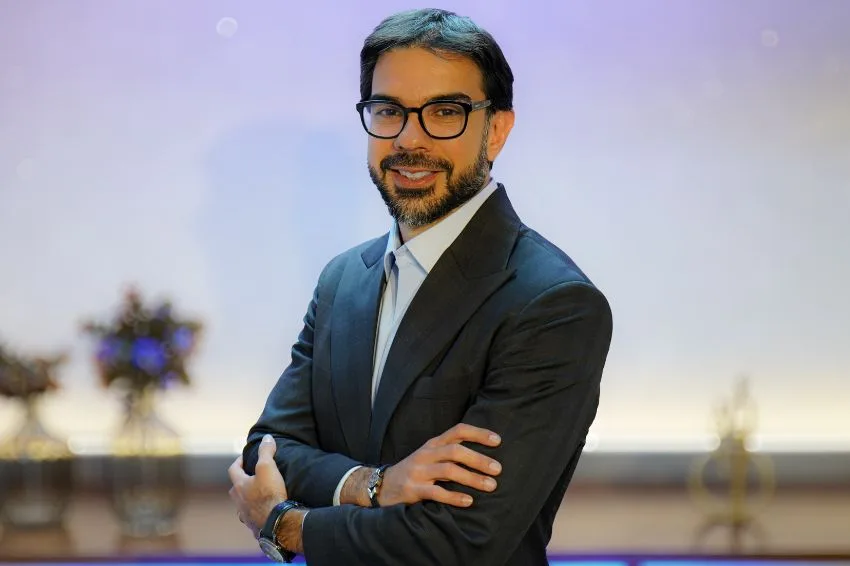
Executive Bernardo Marangon, formerly of Prime Energy (Shell Group), is the new partner of Canal Solar. With a consolidated trajectory in the energy sector, he brings his expertise to strengthen the production of strategic content and expand the company's consulting activities.
In an exclusive conversation, Marangon analyzes the future of the energy market, the role of communication in the transition to a sustainable model and the challenges that Brazil needs to face to accelerate the expansion of renewables.
Bernardo, your career in the energy sector is consolidated and includes a stint at Prime Energy, a Shell Group company. What attracted you to the Canal Solar and what does this change represent for your career?
My relationship with the Canal Solar is not new. Since 2019, I have been contributing as a teacher and participating in several live sessions and classes, so I already know the company and the people who are part of it well, including Bruno Kikumoto, a partner in the company. And when you think about a partnership, the first point to consider is the alignment of values – something I have always seen clearly in Canal Solar.
Furthermore, I believe that the future of business is directly linked to media and influence. The electricity sector, due to its complexity, still lacks vehicles that can translate technical information in a clear and accessible way, promoting knowledge in a deep and strategic way.
O Canal Solar stands out precisely for this: it combines quality journalism with professional training, through its courses. This model not only adds value to the market, but has enormous growth potential.
Another factor that influenced this decision was consulting, an area in which the Prime Group already worked, through Exact Energy. On Canal Solar, my mission will be to strengthen this front, integrating my expertise in investment analysis, business structuring and M&A operations.
The market already recognizes the technical excellence of the consultancy Canal Solar, and now we will have the opportunity to combine this technical knowledge with an even more robust strategic and financial vision. This will undoubtedly be a great competitive advantage.
O Canal Solar operates on three fronts: communication, consulting and education. In an increasingly dynamic and competitive sector, how can these areas drive the energy transition in Brazil?
As I mentioned earlier, the electricity sector is becoming increasingly complex and distributed, with a growing number of companies operating in this market. In this scenario, communication and education play an essential role in making the development of the sector more structured and sophisticated.
Our goal is to ensure that companies have access to qualified information, avoiding mistaken decisions and increasing their chances of success. In the field of more in-depth strategies, we offer technical and financial consultancy, providing specialized support for those seeking a more detailed and assertive view of the market.
Furthermore, something that has always been present in my career is the search for opportunities. I want to actively contribute to helping the market see new paths and business models, helping to unlock the potential of the energy transition in Brazil. After all, this transformation requires creativity, sophistication and professionalism. And it is exactly this approach that we want to strengthen within our consulting area.
Communication has been a determining factor in the evolution of complex markets, such as energy. How much can quality information impact investors and consumers in the renewable energy sector?
Information has always been of significant value, but over time its role has changed. In the past, the difference was in the speed at which it reached people – whoever had access to relevant information first had an advantage.
A classic example of this is the case of the Rothschilds at the Battle of Waterloo, they say that they received news of Napoleon's defeat in advance and, with this information, invested in English bonds, making a considerable profit.
Today, information is available more quickly and easily, but this brings with it a major challenge: the quality of this information. In an environment saturated with data and sources, it is increasingly difficult to discern what is reliable. The big difference now lies in the ability to rely on sources of information that are truly reliable, such as an institution or reference channel.
If you read a news story on any digital platform – be it on Instagram, TikTok or other means – it is difficult to be sure if it is true. And that is where the role of serious platforms comes in, such as Canal Solar, which, as a consolidated reference, offers accurate and well-founded information. The quality of information has become essential for investors and consumers to be able to make informed and safe decisions.
Therefore, quality communication becomes even more relevant, not because of the speed, but because of the depth and veracity of the information offered, allowing more assertive decisions in a sector as dynamic as renewable energy.
You come from a highly strategic and competitive environment. How does your experience in the free energy market and your time at Prime Energy shape your vision for the future of the sector?
This question is actually very much related to a fundamental principle that drew me to both Prime Energy and the Canal Solar: the conviction that knowledge is power.
Knowledge is the foundation for building a successful business. When you work solely on intuition, without a solid structure and knowledge base, it is difficult to maintain a sustainable business over time.
In a strategic and competitive market like ours, what really sets companies apart is the quality of the decisions they make. If you base your choices on concrete information and a deep understanding of the sector, your business is much more likely to thrive and remain relevant in the long term.
So what motivates me in Canal Solar is precisely the possibility of sharing this knowledge with our clients, readers and students. I believe that by offering high-quality information, we can build an authority in the sector, becoming a reliable partner for those seeking success in the market.
Our role is to help the electricity sector grow sustainably, ensuring that both we and our customers continue to prosper, always in a strategic and structured manner. This is the principle that shapes not only the electricity sector, but any business that aims to be long-lasting and successful.
Brazil has one of the most promising energy markets in the world, but it still faces regulatory and structural challenges. What is your take on the current situation and what barriers need to be overcome to accelerate the energy transition?
I believe that Brazil is not the only country facing these regulatory and structural challenges, nor is it exclusive to the electricity sector. We are living in a time of great uncertainty, with the speed of technological evolution and the flow of information becoming increasingly rapid.
This requires greater agility to analyze data and make assertive decisions. Technology advances without waiting, rapidly changing the status quo, and those who do not keep up with this speed end up being left behind.
With regard to the energy transition, Brazil has great potential, especially with solar and wind energy, which have competitive costs and enormous growth capacity.
However, one of the main challenges of these renewable sources is intermittency, something that traditional sources, such as hydroelectric and thermal energy, do not face in the same way. Hydroelectric power, for example, has a reservoir that allows generation to be controlled, while thermal power depends on fuel, which ensures greater predictability.
Renewable sources, such as solar and wind, are more unpredictable, which requires solutions to guarantee a stable energy supply. The big hurdle we need to overcome is energy storage. We need to find optimized forms of storage so that intermittent sources can be used to their full potential.
Another major challenge is the integration of the electrical matrix with the energy matrix, which includes other forms of demand, such as transportation and industrial processes, which still depend on polluting sources.
I believe that the most promising technology to create this connection is hydrogen, but in Brazil, we have alternatives such as ethanol and biofuels, which can also contribute significantly to this transition.
In my view, the biggest challenge lies in the energy matrix, not so much in the electricity matrix. If we can solve the storage issue, the electricity matrix, with the use of renewable sources, has the potential to contribute to a cleaner and more sustainable energy matrix as a whole.
O Canal Solar has been expanding its coverage to other renewable sources besides solar. Is the market ready for this diversification? Which sources have the greatest growth potential in the coming years?
Yes, I believe that the Canal Solar is ready to expand its coverage and address other renewable sources. One of my goals is to help bring more attention to these sources, in addition to solar. Brazil, for example, has a long history with hydropower, which continues to be fundamental in our energy sector.
I am currently participating in an event about small hydroelectric plants, which have characteristics similar to solar plants, being made up of smaller companies and often with national suppliers, which is a major differentiator. Brazil has been a world reference in the development of hydroelectric plants, especially small ones.
In addition, we have biogas, which is gaining ground in various sectors, from large projects to agricultural initiatives and even the use of waste from landfills. Biomethane, derived from biogas, has enormous potential, especially in a country with a large agricultural production like Brazil.
Although the Canal Solar has this name that directly refers to solar energy, it is important to highlight that “solar” here is not limited to the sun, but to the principle of clean energy. The sun, in fact, is the primary source of energy on our planet, as it directly influences other renewable sources.
It triggers the evaporation of water, which powers hydroelectric plants, and also causes photosynthesis in plants, which fuels the cycle of life. Therefore, all renewable energy sources have some relationship with the sun, and the Canal Solar has a natural vocation to cover all these sources.
As for growth potential, I believe that solar energy continues to be the main technology available today. However, it needs to be accompanied by solutions that help mitigate intermittency, such as batteries and other solutions that complement the Brazilian matrix.
Hydroelectric power, for example, has the ability to function as a “natural battery,” with plants that can regulate the flow of water according to the energy needed. There are also technologies such as reversible hydroelectric plants, which use excess solar energy at certain times to pump water and generate energy when solar production is lower.
So, without a doubt, solar will be the main driver, but it will need these other technologies and sources to ensure the sustainability and continued growth of the sector.
Many experts point to energy storage and green hydrogen as the key players in the next decade. Do you agree? Where are the real opportunities for Brazil in this context?
Yes, I agree that both storage and green hydrogen have great potential to play a leading role in the next decade. I have already mentioned the crucial role of storage, which I believe will start to gain significant relevance between 2025 and 2030.
In order to advance in the energy transition, solar is the source that drives this process, but without a robust storage solution, it will be impossible to guarantee a balanced and efficient electrical system. Brazil and the world will increasingly demand storage as an essential tool to deal with the intermittency of renewable sources, especially solar.
On the other hand, green hydrogen, although essential, will still take longer to become viable on a large scale. I believe that it will only be around 2030 or even 2035 that we will see a reality closer to its large-scale application.
Green hydrogen plays an important role, mainly as a bridge between the electricity matrix and the energy matrix, and also as a substitute in sectors that still depend on polluting sources. It will be crucial to “clean up” the global energy matrix, but its impact will be progressive.
Therefore, for Brazil, the real opportunities lie in the development and implementation of energy storage solutions, which can be the engine for a more accelerated expansion of solar energy and other renewable sources.
Hydrogen, in turn, will be a key player in the future, especially in sectors such as transport and industry. The energy transition will be driven by a combination of these technologies, but storage and solar energy are expected to be the protagonists in the coming years.
You have always worked with data and strategic analysis. In your opinion, what do investors still not realize about the renewable energy market?
Although my experience with data and strategic analysis is more recent, I believe that experience and in-depth knowledge of the market are essential to identify future trends.
What investors haven’t realized about the renewable energy market, in my view, is how quickly trends are changing. They often look at the market as something that’s already established, hoping to get in when the opportunities are running out – when in fact the key is to anticipate trends and position yourself before the “wave”.
A clear example of this is energy storage. There are still many investors who do not see this area as an imminent disruption in the renewable energy market. Storage, in particular, will be the next big change and will bring with it new business models and innovative companies.
I believe that the solar energy ecosystem has everything it needs to take advantage of this opportunity, but it needs to abandon a more conservative vision and open itself up to new things. Companies that are able to adapt quickly to changes and identify these opportunities will be the ones that will prosper in the future.
So, for me, the big challenge for investors is to understand the latency of this revolution in storage and how it can transform the market as a whole.
There is a change in the profile of professionals in the sector. Today, it is not enough to just have technical knowledge—you need to understand the market, innovation and even communication. How do you see this new generation that is entering the energy sector?
Ericka, you touched on an essential point. I wouldn't say there has been a radical change in the professional profile, but rather an adaptation to the way the economy and the market are currently organized.
Today, we see a predominance of small businesses, much more than large corporations, and this demands professionals with a more comprehensive profile.
These professionals need to have a solid technical base to coordinate specialized teams, but they must also have a financial vision to identify opportunities in the market, as well as a legal notion to coordinate legal aspects when necessary.
In short, the professional of the future in the energy sector needs to be more generalist, capable of managing different areas and coordinating specialists to perform efficiently.
Furthermore, the ability to quickly learn new technologies and adapt to new ways of working is crucial. Today, for example, I see artificial intelligence gaining more and more ground, and those who do not adopt it will probably be left behind.
Professionals need to be aware of new trends, such as social media, to stay up to date and also be more active in this environment, which is a growing trend in all sectors.
Therefore, professionals in the energy sector need to be dynamic, flexible and aligned with market innovations, becoming a point of reference for the teams and projects in which they are involved.
Investors are increasingly aware of opportunities in the energy sector. What are the biggest mistakes they make when entering this market?
Look, Ericka, the main mistake I see, especially among new investors or those from smaller companies wanting to enter the sector, is the lack of preparation and the attempt to do everything on their own.
The energy market, especially solar, is very complex and requires detailed analysis and in-depth knowledge. When investors do not seek qualified advice or try to enter without training, the risk of making mistakes becomes much greater.
The biggest mistake, in my view, is a lack of due diligence. Investing in renewable energy is not like investing in any other sector—it is a long-term business with numerous rules, regulations, and variables involved. Ignoring these can lead to significant losses. Knowledge is undoubtedly the key to avoiding these mistakes.
The cost of obtaining this information is very small compared to the loss that an investment error can cause. Therefore, anyone who wants to enter this market needs to value specialized knowledge and ensure that they are well advised. A wrong investment, due to lack of preparation, can be much more expensive than the cost of training before acting.
If you could leave a strategic insight for companies and professionals who want to grow in the energy market, what would it be?
Look, the main insight I leave you with is: invest in knowledge and training. Today, information is more accessible than ever, with courses and content that accelerate learning. When I started, it wasn't like that. I had to chase after information and learn on my own. Now, the learning process can be much faster, so take advantage of this opportunity.
Another important point is to surround yourself with good professionals. There is no point in trying to do everything yourself, especially in a sector like energy, which is complex and requires a lot of technical and regulatory knowledge. Assembling a good team is crucial. This reduces the chances of mistakes and increases the chances of success, because you will be surrounded by people who know what they are doing.
I would also say that knowledge is not expensive. People often think that investing in consulting, courses or training is an expense, when in fact it is an investment that can prevent much greater losses in the future.
Furthermore, a more personal aspect that I see as fundamental is the issue of consistency. The energy market is a long-term one, and success does not come overnight. Therefore, it is important to be present every day, doing what needs to be done, without expecting immediate rewards. Success comes when you are consistent and believe in your potential, even without seeing immediate results.
Finally, I would say that the secret is to be patient and resilient. A career and the market are a marathon, and those who persevere will go far. So, my advice is: invest in knowledge, be consistent and have confidence in yourself.
all the content of Canal Solar is protected by copyright law, and partial or total reproduction of this site in any medium is expressly prohibited. If you are interested in collaborating or reusing part of our material, please contact us by email: redacao@canalsolar.com.br.

Comments
Comments are moderated before publication.Comments should be respectful and contribute to a healthy debate. Offensive comments may be removed. The opinions expressed here are those of the authors and do not necessarily reflect the views of the author. Canal Solar.