
The fastening of photovoltaic modules is one of the most critical structural elements in solar power plants, especially in regions subject to extreme weather events. A recent case involving ARaymond fasteners demonstrated in practice how fastening engineering can be decisive for the integrity of the photovoltaic system.
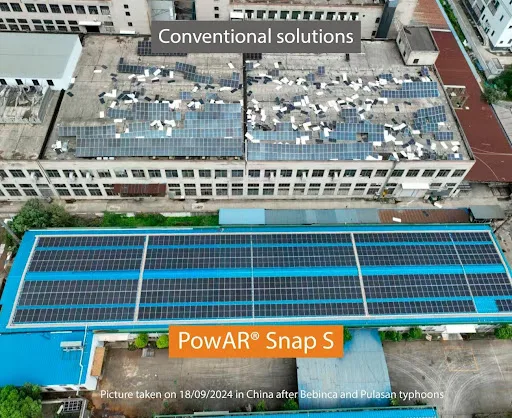
During the passage of typhoons Bebinca and Pulasan, which hit China in 2024, different types of plants were exposed to intense winds that tested the resistance of the anchoring systems used. Among the projects monitored were:
- A flat roof power plant located in Changzhou;
- A metal roof system in Wuxi;
- A photovoltaic carport installed in Zhenjiang City.
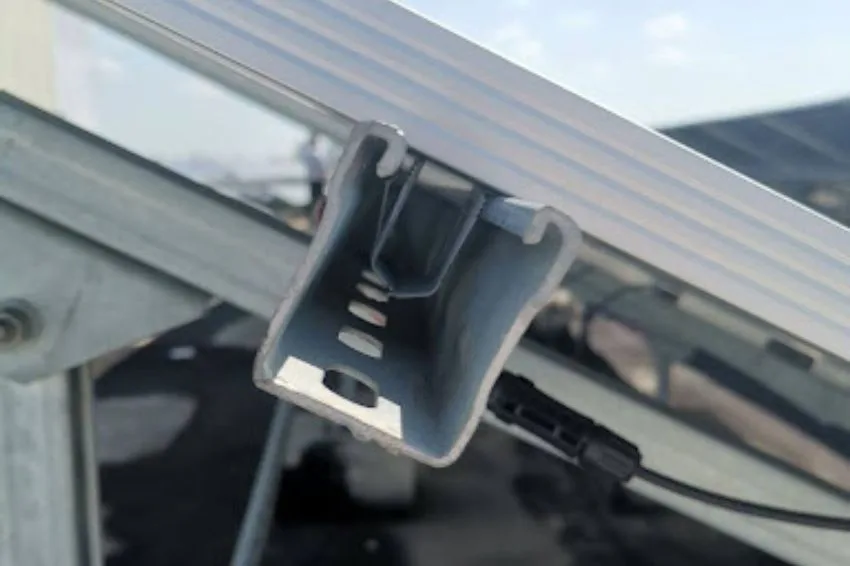
In these three cases, clips were used ARaymond, such as the PowAR Snap model, which showed superior structural performance against wind loads generated by tropical cyclones.
Elastic fixing: mitigation of localized stresses and dissipation of vibration
Unlike conventional systems based on clamps, nuts and bolts, ARaymond clips feature elastic fastening engineering, which more efficiently distributes mechanical stresses caused by gusts of wind.
This type of fixing reduces localized voltage peaks and minimizes the vibration amplitude of the modules, which directly contributes to the stability and durability of the photovoltaic structure.
Furthermore, the materials used to manufacture the clips — such as high-resistance metal alloys and anti-corrosive treatments — guarantee excellent performance even in aggressive environments, with the presence of salinity or sharp temperature variations.
Results observed in the field
After the typhoons, it was found that the systems fixed with ARaymond clips did not show any type of loosening, displacement or structural deformation in the modules. The fixing points remained intact, even in areas that suffered wind speeds exceeding 150 km/h.
In contrast, similar structures equipped with traditional fastening systems presented:
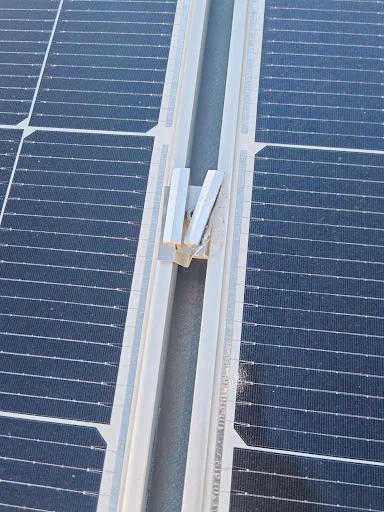
- Visible deformations in clamps and rails;
- Misaligned or partially loose modules;
- Damage to the metal tile sealing system.
These damages not only represent a structural risk, but can also compromise energy generation, increase maintenance costs and expose the system to electrical risks.
Elimination of post-event re-tightening: an operational differentiator
Another relevant technical benefit of ARaymond solutions is the elimination of the need for post-event retightening, a step normally recommended by traditional fastener manufacturers after the occurrence of high winds. This represents significant operational savings, reducing the need for corrective inspections and field interventions.
The absence of retightening also avoids the risk of accidental overtightening, which can cause microcracks or inadequate tension in the modules — a common problem in installations where there is less qualified labor or the absence of a calibrated torque wrench.
Fastening engineering as a key factor in reliability
Extreme weather events in China in 2024 have shown that the choice of fasteners in a PV system cannot be treated as a secondary design item.
The performance of ARaymond clips proves that higher-level engineering solutions, based on elastic fastening and high-performance materials, are capable of protecting solar assets even in the most adverse conditions.
For regions subject to strong winds — such as the Brazilian coast, open country areas or regions with a history of severe storms — investing in high-performance fastening systems can be the difference between preserving assets and the occurrence of structural and financial losses.
The opinions and information expressed are the sole responsibility of the author and do not necessarily represent the official position of the author. Canal Solar.

Comments
Comments are moderated before publication.Comments should be respectful and contribute to a healthy debate. Offensive comments may be removed. The opinions expressed here are those of the authors and do not necessarily reflect the views of the author. Canal Solar.