

Deputies federal and institutions, such as INEL (National Institute of Clean Energy), elaborated this Tuesday (12) a application to open a CPI (Parliamentary Commission of Inquiry) with the aim of investigate the acting the distributors of electrical energy in the GD market (distributed generation).
Parliamentarians seek, with the measure, to be able to analyze possible irregularities that were being committed by the concessionaires with regard to the non-compliance with deadlines for distributed micro and mini generation connections and also in relation to the numerous flow reversal rejections of orders for the installation of own generation systems.
“Electricity distributors have repeatedly failed to comply with the deadlines set out in the rules related to MMGD connection requests, causing immense losses to consumers with connection requests”, highlights the request for the creation of the CPI.
The document also points out that distributors would be using, indiscriminately, always the same justification (that of inverting power flow) to deny thousands of requests for connection to DG systems.
All this, without presenting “the necessary technical studies that demonstrate that the alleged inversion of power flow causes disturbances or significant disturbances in the distribution network, as stipulated by the standard”, highlights the document, referring to Resolution 1.059, published by ANEEL (National Electric Energy Agency), in February of this year.
When should the CPI be instituted?
To open the CPI against distributors, the application prepared by deputies will need to collect at least 171 signatures of a total of 581 deputies. To date, almost 100 parliamentarians have signed the document.
Behind the scenes, the The expectation is that the number will be easily reached in the coming days. “We shouldn’t have any difficulties in reaching the total number of signatures required, because when we discuss the matter with the deputies they agree to sign immediately”, said deputy Lafayette de Andrada (Republicanos/MG), one of the authors of the request.
However, the parliamentarian analyzes that the CPI is unlikely to be installed in 2023, once document needs a visa from the President of the Chamber of Deputies, which, according to Lafayette, It usually takes, on average, around 20 days to occur.
As the Chamber of Deputies goes into recess on December 23, 2023, the document will most likely only receive the approval of the President of the House in February 2024, when parliamentarians return from their collective vacation period. “There will be a recess, so forget about (the creation of the CPI this year)”, said Lafayette.
Understand the controversy
Since ANEEL regulated the Law 14.300 / 2022, through Resolution 1.059, in February this year, several companies in the solar energy sector began to record losses.
According to professionals, distributors would be making it difficult to install photovoltaic systems on roofs, facades and small plots of land by improperly using Article 73 of the new Resolution.
In several cases, distributors began to issue connection quotes with the imposition of energy injection limitations, under the allegation that this practice was necessary to overcome problems that could be caused by power flow inversion.
In the state of Minas Gerais, for example, almost all integrators now have requests for their customers' photovoltaic projects suspended for an indefinite period by Cemig (Companhia Energética de Minas Gerais) under the allegation that there is “network saturation”.
The accusation that the concessionaire was engaging in unfair competition in the state with projects in the solar energy sector also still generates criticism from the photovoltaic sector, which demands greater transparency from the concessionaires in the analysis of failed processes and from the competent authorities a solution to the problem.
Public Hearing
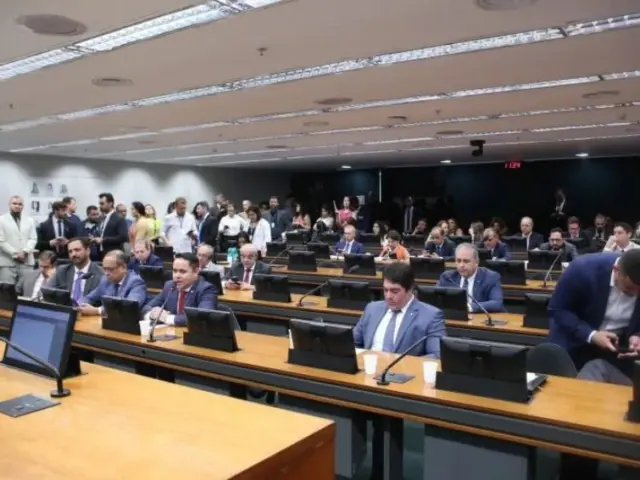
On Wednesday last week (6), the Consumer Protection Committee of the Chamber of Deputies discussed the issue of missing deadlines when connecting DG systems (distributed generation) and the problems caused by distributors with flow reversal.
During the hearing, Congressman Lafayette de Andrada and other professionals in the solar energy sector questioned the ANEEL and also to distributors about what technical justifications could support the existence of disturbances as a result of flow reversal in the electrical system, making new connection requests in the transmission networks impossible.
According to a survey by the ombudsman's office itself ANEEL, questions involving problems related to the connections of deactivated micro and mini-generation systems are currently the second largest source of consumer complaints, behind only power outages.
In the last 12 months, for example, there were more than 16 thousand complaints related to GD connections, which represents an average of more than 43 complaints per day to the Agency's ombudsman alone.
all the content of Canal Solar is protected by copyright law, and partial or total reproduction of this site in any medium is expressly prohibited. If you are interested in collaborating or reusing part of our material, please contact us by email: redacao@canalsolar.com.br.

Comments
Comments are moderated before publication.Comments should be respectful and contribute to a healthy debate. Offensive comments may be removed. The opinions expressed here are those of the authors and do not necessarily reflect the views of the author. Canal Solar.