
• Friday, July 17, 2026
Facebook X-twitter Instagram Youtube LinkedIn Spotify
  • GC Solar: 22,51 GW
  • GD Solar: 49,74 GW
  • advertise here
  • About Us
  • Expedient
logo site solar channel
  • News
    • Market & Investments
    • International market
    • Politics & Regulation
    • Projects & Applications
    • Renewable
    • Sustainability & ESG
    • Technology & Innovation
    • Electric Vehicles
  • Articles
    • Opinion Article
    • Manufacturer's Article
    • Technical Article
  • Latam
  • Batteries
  • Blog
  • Solar Energy Companies
    • Integrators
  • Magazine
    • Magazine Canal Solar
    • Conecta Magazine
  • Firmare
  • Courses
  • News
    • Market & Investments
    • International market
    • Politics & Regulation
    • Projects & Applications
    • Renewable
    • Sustainability & ESG
    • Technology & Innovation
    • Electric Vehicles
  • Articles
    • Opinion Article
    • Manufacturer's Article
    • Technical Article
  • Latam
  • Batteries
  • Blog
  • Solar Energy Companies
    • Integrators
  • Magazine
    • Magazine Canal Solar
    • Conecta Magazine
  • Firmare
  • Courses
  • News
    • Market & Investments
    • International market
    • Politics & Regulation
    • Projects & Applications
    • Renewable
    • Sustainability & ESG
    • Technology & Innovation
    • Electric vehicles
  • Articles
    • Opinion
    • technicians
    • Manufacturer Items
  • Latam
  • Blog
  • Solar Energy Companies
  • Integrators
  • Magazine
    • Conecta Magazine
  • About Us
  • Advertise Here
  • CS Consulting
  • Courses
  • International market
  • News
    • Market & Investments
    • International market
    • Politics & Regulation
    • Projects & Applications
    • Renewable
    • Sustainability & ESG
    • Technology & Innovation
    • Electric vehicles
  • Articles
    • Opinion
    • technicians
    • Manufacturer Items
  • Latam
  • Blog
  • Solar Energy Companies
  • Integrators
  • Magazine
    • Conecta Magazine
  • About Us
  • Advertise Here
  • CS Consulting
  • Courses
  • International market
logo site solar channel
Home / Articles / Manufacturer's Article / DAH Solar presents photovoltaic modules with a composite frame.

DAH Solar presents photovoltaic modules with a composite frame.

Composite framing is a lower-cost alternative with greater structural strength.
Follow on Whatsapp
  • Photo by Lucas Santos Lucas Santos
  • February 25, 2026, at 10:46 PM
4 min 46 sec read
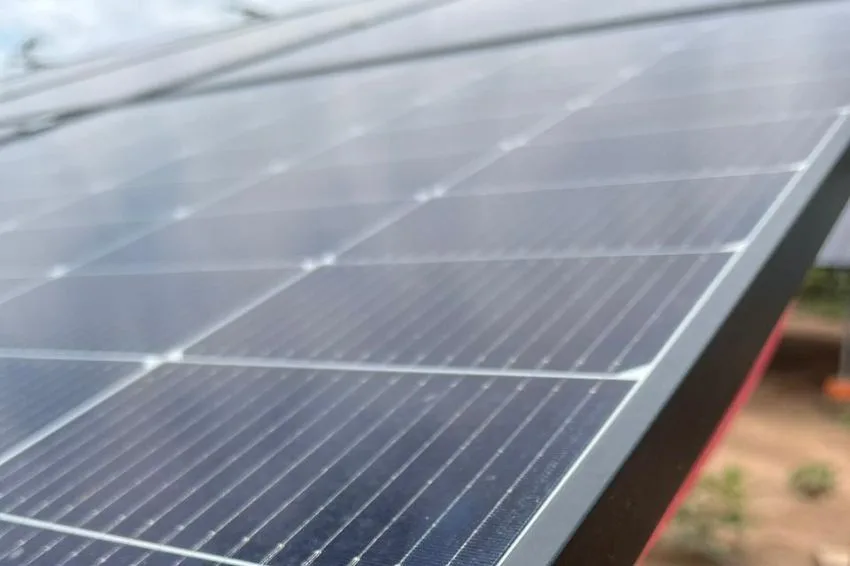
DAH Solar presents photovoltaic modules with a composite frame.
Photo: DAH Solar/Disclosure

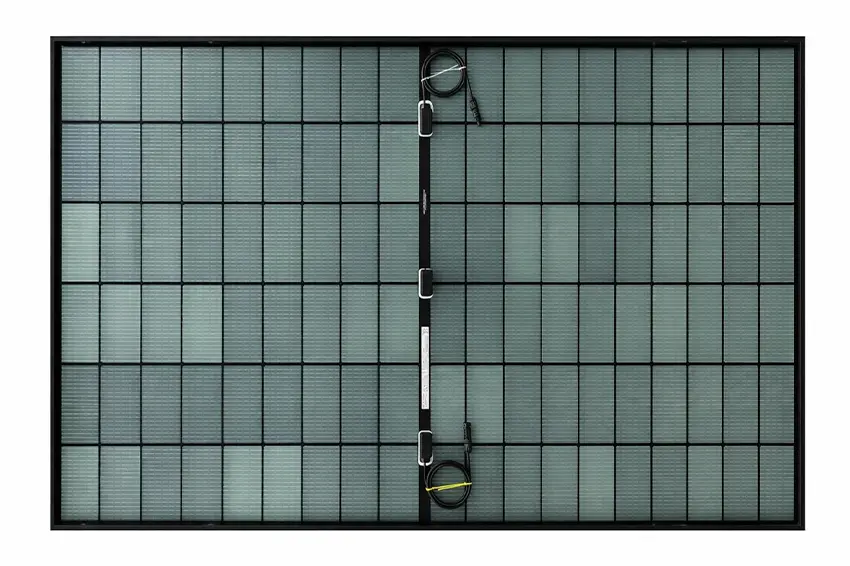
Modules with high mechanical strength, high electrical insulation performance and excellent anti-PID performance: DAH Solar has also been offering its customers in Latin America the option of modules with a composite frame.

Today, the current situation regarding aluminum frames for photovoltaic modules is influenced by rising aluminum prices, which can have significant variations in price per ton, leading to increased costs for the final product. Reducing the weight of the aluminum frame can directly decrease material costs, thus reducing the total cost of the module.

However, offering this type of product to the market can be dangerous. After reducing the weight of the aluminum frame, the structure will not be able to effectively withstand strong winds and snow, as well as the mechanical stresses that may occur during installation and maintenance.

In this sense, the idea is not to stop working with aluminum frame modules, but rather to offer a more competitive alternative with excellent mechanical and electrical characteristics, namely composite frame modules.

Composite materials are modern products obtained through the controlled combination of two or more materials with distinct properties, resulting in a final material with superior characteristics. These composites are generally formed by three main components: matrix, reinforcement, and adhesive.

  • Matrix: can be made of metals, metal alloys, rubber, plastics, resins or ceramics;
  • Reinforcement: includes glass fibers, carbon fibers, boron fibers, whiskers, and other elements that provide mechanical strength and stability;
  • Adhesive: responsible for joining the components, and can be volatile or self-adhesive.

Therefore, composites are materials formed by combining a matrix (continuous phase) with a reinforcement (fibers, particles) to create improved properties, and the application of these materials is widespread in other sectors, such as aerospace and automotive, brake and engine parts, and products that are often subjected to high temperatures.

Composite materials offer advantages such as cost savings, lightweight yet high-strength products, flexible design, high-grade electrical insulation, excellent corrosion resistance, and low carbon emissions during production, making the supply chain even more sustainable.

Composite frames can be made of high-strength fiberglass, modified acrylic resin, modified polyamide (coating), and high-strength polyphenylene oxide (frame corners).

These combined elements provide high strength and corrosion resistance, high tensile strength and high thermal distortion temperature, improved performance by reducing water absorption, and high weather resistance.

Furthermore, the performance advantages of composite frames for photovoltaic modules include:

  • The tensile strength of the composite material structure is 6 times greater than that of the traditional aluminum structure, reaching 1600 MPa; the flexural strength is 5 times greater than that of the traditional aluminum structure, reaching 1500 MPa;
  • The composite material structure has already undergone tests for resistance to aging, flame retardancy, mechanical properties, etc.;
  • After optimization, the composite material of the structure exhibits excellent resistance to UV rays and is suitable for prolonged exposure to sunlight.
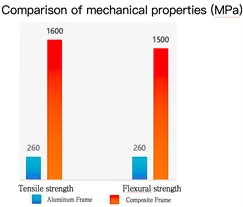

The composite frame offers significantly greater resistance to static and dynamic loads compared to the IEC standard, with 100% resilience and no irreversible deformation. Its safety factor against salt spray corrosion is superior to that of metallic structures.

Furthermore, both the materials and the photovoltaic modules with composite frames comply with the relevant regulations.
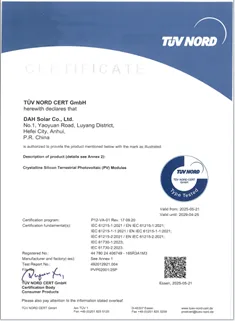
Here are some tests conducted for certification that can be highlighted in this article:

  • Accelerated aging test;
  • Heat deflection temperature;
  • Tensile strength;
  • Impact resistance;
  • Sulfur dioxide test;
  • Ammonia resistance test;
  • Water absorption rate;
  • Salt spray test;
  • Compatibility test between the frame and the silicone;
  • Damp heat test;

In summary, the performance advantages of composite frames for photovoltaic modules are:

  • Flexural strength is more than 6 times greater than that of aluminum alloy, and its axial tensile strength is more than 7 times that of traditional aluminum alloy materials;
  • Weather resistance, as the composite frame has high resistance to moisture and heat, acids and alkalis, and salt spray.
  • It maintains stable performance in harsh environments, making it suitable for coastal areas, high humidity environments, and salt spray;
  • High insulation performance, since the composite structure has insulating properties, with a volume resistivity of up to 1×10^14 Ω·cm, eliminating the need to ground the modules after installation;
  • Anti-PID performance, as the composite frame resists the PID (Potential Induced Degradation) phenomenon, which helps reduce module performance degradation and improve its long-term energy generation efficiency;
  • The fire resistance performance of the composite frame meets the flame retardancy requirements of class B1, increasing the safety performance of the module.

You might also be interested in!

DAH Solar outlines perspectives for the future of solar energy in Brazil.

The opinions and information expressed are the sole responsibility of the author and do not necessarily represent the official position of the author. Canal Solar.

Dah Solar photovoltaic modules solar panels
Photo by Lucas Santos
Lucas Santos
Lucas Santos has worked in the solar energy sector for seven years, accumulating solid experience with integrators, distributors, manufacturers, as well as in the design and execution of photovoltaic plants. With eight years of experience in project, product, and portfolio management, he holds a degree in Electrical Engineering from Unochapecó, an MBA in Project Management from USP/ESALQ, and a specialization in Negotiations from the University of Pennsylvania.
PreviousPrevious
NextNext

Leave a comment Cancel reply

Your email address will not be published. Required fields are marked with *

Comments should be respectful and contribute to a healthy debate. Offensive comments may be removed. The opinions expressed here are those of the authors and do not necessarily reflect the views of the author. Canal Solar.

News from Canal Solar in your Email

Posts

Retrofitting and fire safety: how evolving standards are transforming the photovoltaic market.

Retrofitting and fire safety: how evolving standards are transforming the photovoltaic market.

Key features of a good structure for ground-mounted plants

Key features of a good structure for ground-mounted plants

More news

Read More
ZNSHINE Solar partners with Solmais to expand distribution of photovoltaic modules in Brazil.

ZNShine Solar partners with Solmais to expand distribution of photovoltaic modules in Brazil.

DAH Solar launches a new line of hybrid inverters with activation times as low as 4 milliseconds.

Talesun Solar expands operations in Brazil with BC photovoltaic technology.

Talesun Solar expands operations in Brazil with BC photovoltaic technology.

It is a news and information channel about the photovoltaic solar energy sector. Channel content is protected by copyright law. Partial or total reproduction of this website in any medium is prohibited.

Facebook X-twitter Instagram Youtube LinkedIn Spotify

Site Map

Categories

  • News
  • Articles
  • Interviews
  • Consumer Guide
  • Authors
  • Videos
  • Projects
  • Magazine
  • Electric Vehicles

Channels

  • About Us
  • Contact
  • Privacy
  • Quality Policy
  • Work with us
  • Expedient
  • advertise here

Membership and certifications

Copyright © 2026 Canal Solar, all rights reserved. CNPJ: 29.768.006/0001-95 Address: José Maurício Building – Mackenzie Avenue, 1835 – Floor 3, – Vila Brandina, Campinas – SP, 13092-523

We use cookies to make your experience on this site better Find out more about the cookies we use or turn them off in your .

Receive the latest news

Subscribe to our weekly newsletter

Fill in the information above and receive your free copy of Canal Solar magazine.

Canal Solar
Powered by  GDPR Cookie Compliance
Privacy

This website uses cookies so that we can provide you with the best user experience possible. Cookie information is stored in your browser and performs functions such as recognizing you when you return to our website and helping our team to understand which sections of the website you find most interesting and useful.

Cookies strictly required

Strictly Necessary Cookie should be at all times so that we can save your preferences for cookie settings.

Cookies for third parties

This website uses Google Analytics to collect anonymous information such as the number of visitors to the site, and the most popular pages.

Keeping this cookie enabled helps us to improve our website.