
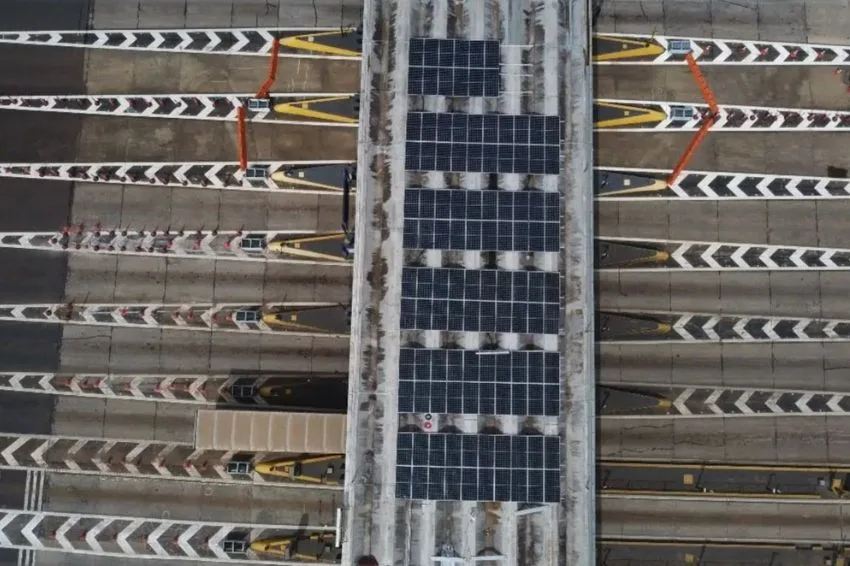
The increasing digitalization of toll systems on Brazilian highways, with more electronic barriers and new digital payment methods, has required concessionaires to further reinforce their security and energy supply structure.
It is no coincidence that companies have been investing in solar power plants to meet the new demand for electricity in their operations. An example of this growth is SP axis, responsible for one of the largest highway concessions in the country.
The company manages more than 1.200 km of network, made up of 12 São Paulo highways that pass through 62 municipalities, from Piracicaba, in the central region of the State of São Paulo, to Panorama, in the far west, on the border with Mato Grosso do Sul.
The concessionaire has an ongoing project to implement 42 mini solar power plants in several locations, with a good part of them already completed.
The photovoltaic projects, which include mini-plants on the ground, photovoltaic modules on roofs and remote contracting of nearby projects, are being developed by TTS Energy.
At the concessionaire's toll booths alone, eight solar systems have been installed on the roofs since 2021, totaling 2 photovoltaic modules and 831 kW of power, between the cities of Piracicaba and Cabrália Paulista.
In the SAUs (User Service Centers), there are 32 solar energy generation systems on the roofs, in a project that began in 2022 and is scheduled for completion in 2025.
Around 53% of the systems have already been delivered and are in operation. Together, they total 2,3 photovoltaic modules and 1,21 MWp of power.
The plants delivered to Eixo SP also include a remote ground-based photovoltaic plant, where the energy produced is transferred to other consumer units of the concessionaire. In this case, the project has 1,2 solar panels and 660 kWp.
The concessionaire also has a solar system on the roof of its administrative headquarters in São Carlos (SP). The smaller project has 224 photovoltaic modules and 91,84 kWp.
For Jacques Hulshof, CEO of TTS Energia, the use of solar energy by highway concessionaires is a major trend, as it offers clean and competitive energy to supply increasingly digitalized and automated operations.
“The outlook is that we will have even more robust growth next year, since photovoltaic technology is one of the main energy security and supply solutions for this type of activity, in addition to the requirements of tenders in Brazil, which include sustainability initiatives on the part of contracted bidders,” he said.
Anhanguera-Bandeirantes System
In addition to Eixo SP, other highway concessionaires in São Paulo are also looking to adopt solar energy to supply their operating bases.
An example is the CCR AutoBAn, which signed, at the end of last year, a contract with the electricity company EDP to supply solar energy to 58 consumption units in the Anhanguera-Bandeirantes system, including toll booths and support points.
The agreement, lasting ten years, foresees the delivery of 1.460 MWh per year, coming from photovoltaic plants located in Iperó, Pirangi and Leme, in the interior of São Paulo.
With this initiative, the concessionaire estimates savings of approximately R$160 per year, in addition to reducing emissions of 56 tons of CO₂ per year through the distributed generation.
Anhanguera and Bandeirantes highways will have toll booths powered by solar energy
all the content of Canal Solar is protected by copyright law, and partial or total reproduction of this site in any medium is expressly prohibited. If you are interested in collaborating or reusing part of our material, please contact us by email: redacao@canalsolar.com.br.





Comments
Comments are moderated before publication.Comments should be respectful and contribute to a healthy debate. Offensive comments may be removed. The opinions expressed here are those of the authors and do not necessarily reflect the views of the author. Canal Solar.