
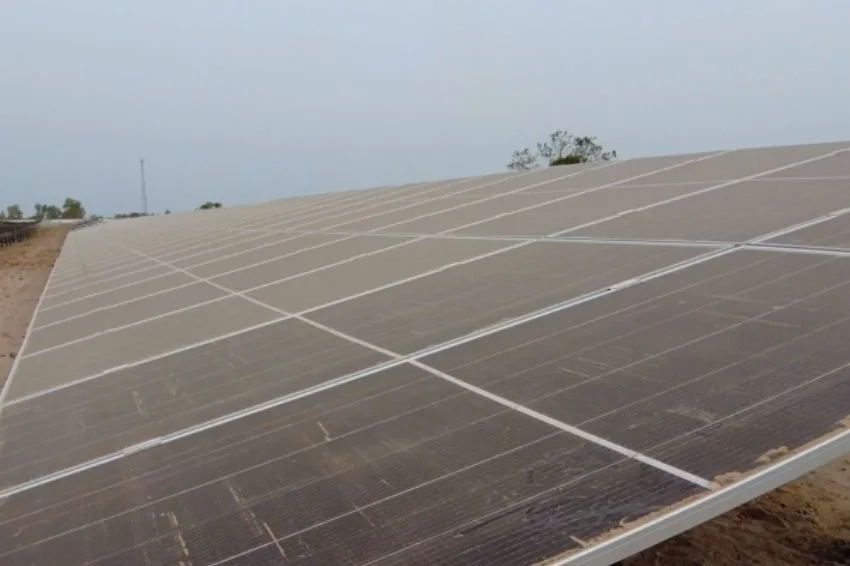
A lack of proper maintenance can compromise the efficiency and profitability of solar plants. But in practice, how can specialized O&M (Operation & Maintenance) services prevent this scenario?
A study by UFSC (Federal University of Santa Catarina) indicates that photovoltaic plants can lose up to 15% efficiency due to failures that could be prevented.
Another survey, published by the EngSolar Portal in 2023, indicates that dirt (soiling) is one of the main causes of losses, and can reduce energy generation by 5% to 20%.
In practice, this means lower energy production and a direct drop in the profitability of projects. A second study, also conducted by UFSC, analyzed the impact of dirt and pollution on solar systems. After cleaning, inverter power increased by up to 25%.
In an interview with Canal Solar, Rodrigo Kimura, energy director of the CESBE and Giya Group, comments the results of the UFSC research and explains, in practice, how maintenance influences the performance of solar plants.
Check out the full interview below:

The UFSC study indicates that photovoltaic plants can lose up to 15% of their efficiency due to preventable failures. What is your analysis of this data, and what does it reveal about the operation of photovoltaic systems in Brazil today?
This data confirms the importance of maintaining photovoltaic plants to ensure they always operate at maximum capacity and ensure investors consistently receive the expected revenue. However, without proper operation and maintenance, this decline in performance is not evident.
The plant continues to operate, seemingly without problems, but the technical team detects the loss in the indicators—and this could mean millions of reais in wasted generation potential. Therefore, in addition to designing and building, our focus is on offering a structured periodic maintenance service to eliminate these avoidable losses.
Are there significant differences in soiling losses between systems with fixed structures and those with solar trackers?
The losses are the same, but dirt at the plant site can have an even greater impact on systems with trackers. Because this type of structure follows the sun's movement throughout the day, from east in the morning to west in the late afternoon, a mechanical failure caused by physical barriers or even dirt in the mechanical system can leave the module "stuck," compromising maximum solar radiation utilization.
Tracker-based systems can generate up to 20% more energy on average than fixed systems. However, it's important to remember that regular cleaning and maintenance are also essential for fixed systems to avoid generation and revenue losses.
In your view, do distributed generation system owners often underestimate the importance of system cleaning?
This can often occur due to a lack of knowledge and guidance. Investors don't always have a specialized company to assist them throughout the entire process and educate them on the importance of operations and maintenance, as we do at Giya.
Furthermore, the offering focuses heavily on energy bill discounts and self-sufficiency, neglecting the importance of system performance. Without regular maintenance and cleaning, losses accumulate and compromise the return on investment.
How can the integrator calculate or estimate soiling losses during the design phase?
There's already a predicted percentage of loss due to soiling, and this estimate should be considered from the design stage in the energy simulation process. Today, it's possible to use sensors that measure the degree of soiling in modules to assess the impact on performance.
When dust levels begin to affect generation, the operator can decide to perform cleaning. Furthermore, it's crucial to analyze historical climate and dust data for the region to determine the expected loss rate and calculate the ideal maintenance interval, always evaluating the cost-benefit of each cleaning frequency.
Are lack of technical qualifications, lack of after-sales support from the integrator, and consumer carelessness in cleaning the main causes of these losses? Is there another important factor you would highlight?
These factors contribute significantly to losses, but there's another critical point: the lack of constant monitoring. Connecting the plant to an operations center allows real-time signals to be received from all equipment, pinpointing the exact sectors and components experiencing failures, and activating the team with the correct diagnosis and tools.
This drastically reduces the time between failure and repair, preventing plant downtime and lost revenue. Our operations center team at Giya monitors dozens of real-time indicators for all our clients' plants.
In addition to regular cleaning, what additional precautions can be taken to reduce dirt buildup on modules and other equipment?
It's essential to follow proper maintenance procedures, including using controlled water pressure during cleaning and regularly inspecting modules and structures for damage or wear. In some regions, adjusting the module angle also helps reduce dust and debris buildup.
Another essential precaution is to have a monitoring system connected to an operations center. This allows you to monitor the plant's performance in real time, quickly identify any anomalies, and contact the field team with the diagnosis ready, preventing minor failures from worsening and reducing the impact of downtime on generation.
Is manual cleaning still efficient, or is there already a real trend toward migrating to automated and robotic solutions in Brazil?
Manual cleaning remains the most efficient and safe method for module maintenance. At the same time, technology is advancing to ensure that automated cleaning is safe and does not damage the modules.
Furthermore, it is always very important that, when opting for automated cleaning, the owner ensures that the equipment is approved by the module manufacturer, to avoid voiding the warranty.
Do you believe the Brazilian market is more aware today of the impacts of dirt on systems? Has this perception changed in recent years?
I believe that perception is improving, but we still have a long way to go. Large plants already understand that the cost of proper maintenance is less than the revenue lost due to reduced generation.
Awareness has increased thanks to more information available, but the problem is still largely underestimated. We need to continue providing concrete data and technical information to demonstrate the impacts, reinforcing that maintenance and monitoring are investments that extend the system's lifespan, preserve equipment warranties, and maximize project returns.
all the content of Canal Solar is protected by copyright law, and partial or total reproduction of this site in any medium is expressly prohibited. If you are interested in collaborating or reusing part of our material, please contact us by email: redacao@canalsolar.com.br.


Comments
Comments are moderated before publication.Comments should be respectful and contribute to a healthy debate. Offensive comments may be removed. The opinions expressed here are those of the authors and do not necessarily reflect the views of the author. Canal Solar.