

After the ONS (National Electric System Operator) activated, for the first time, its emergency plan for managing surplus energy in distribution networks this Sunday (7), sector entities began to demand structural measures to prevent similar situations from becoming increasingly frequent in the country.
Among the most prominent positions are those of ABSOLAR (Brazilian Photovoltaic Solar Energy Association) and INEL (National Institute of Clean Energy), which advocate for increased investments in energy storage, modernization of electrical infrastructure, and expansion of transmission. Apine (Brazilian Association of Independent Electricity Producers), on the other hand, assesses that the national electrical system is operating close to its limits.
A ABSOLAR The organization stated that the situation observed this past weekend is not something new, but rather a scenario already experienced by countries that have advanced in the energy transition. However, the main difference is that these countries have already incorporated adequate instruments for energy flexibility and storage. "The Brazilian government, on the other hand, has not yet delivered what the electricity sector has been demanding for years," the organization points out.
ONS performs initial power cuts at plants connected to the distribution network.
Rodrigo Sauaia, CEO of ABSOLARHe states that the activation of the ONS emergency plan demonstrates that the operation of the SIN (National Interconnected System) has reached a tipping point. "The national electricity system has grown in renewable generation – solar, wind, run-of-river hydro, biomass and biogas – but without corresponding investment in flexibility mechanisms, electricity storage and load control," he said.
According to the executive, the imbalance is not a result of the expansion of just one source, technology, or generation method, but rather "the lack of adequate structural public policy to support this natural expansion."
Storage and infrastructure improvement
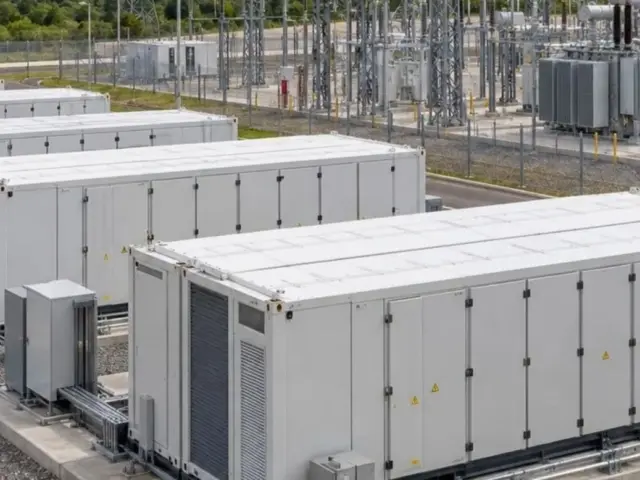
In this sense, both ABSOLAR Both INEL and others advocate for the need for investments to modernize Brazil's electrical infrastructure and adapt the system to the advancement of renewable energy sources.
Heber Galarce, president of INEL, highlighted that micro and mini-distributed generation has played an important role in diversifying the electricity matrix, reducing losses, and democratizing access to clean energy.
"What we need now is to accelerate investments in storage, modernization of networks and systemic planning, ensuring that the advancement of renewables occurs safely, predictably and with respect for the investments made by consumers and entrepreneurs," he said.
Already ABSOLAR He identified three main bottlenecks for the evolution of the Brazilian electricity sector: high taxation on storage systems, delays in holding specific auctions for batteries, and the slow pace of regulatory modernization.
According to the organization, the tax burden exceeding 70% on energy storage systems hinders the adoption of a technology considered essential for increasing the security and flexibility of electrical operations.
"While sports betting, alcoholic beverages, and weapons receive more favorable tax treatment than equipment essential for the safety of the electrical system, society suffers unnecessary operational risk due to this distortion," Sauaia points out.
Another point highlighted by the association is the delay in holding LRCAPs (Auctions for Reserved Storage Capacity). "Brazil has not yet held any specific auction for the large-scale contracting of batteries capable of handling surplus renewable generation during periods of low load," it emphasized.
For ABSOLARThe absence of these tenders prevents the large-scale contracting of battery systems capable of absorbing surplus renewable generation during periods of low demand.
This association still needs to make urgent progress in Brazil: improving revenue recognition mechanisms for batteries; modernizing tariffs, a topic discussed without progress since December 2018; and regulating electricity storage systems, also at the consumer level, behind the meter.
Finally, the ABSOLAR advocates for a coordinated agenda between the Ministry of Mines and Energy (MME), ANEEL (National Electric Energy Agency) and ONS (National System Operator) to accelerate the integration of energy storage into the Brazilian electrical system.
System nearing its limit, warns Apine.
Apine also assessed that the episode highlights the need for urgent measures to adapt the electricity sector to the new profile of energy generation and consumption in the country. According to the association, the activation of the emergency plan demonstrates that the instruments currently available to the ONS (National System Operator) are approaching their limits.
"The plan to cut generators by electricity distribution companies, implemented by the National Electric System Operator last Sunday, is clear proof that the Brazilian electrical system has reached its limit. If nothing is done in the short term, this last resource available to the ONS will quickly be exhausted."
According to the organization, one of the solutions involves regulatory adjustments focused on micro and mini-distributed generation and expanding the use of storage systems. ANEEL "It has the competence and capacity to resolve this issue quickly and efficiently," the organization states.
all the content of Canal Solar is protected by copyright law, and partial or total reproduction of this site in any medium is expressly prohibited. If you are interested in collaborating or reusing part of our material, please contact us by email: redacao@canalsolar.com.br.

Comments
Comments are moderated before publication.Comments should be respectful and contribute to a healthy debate. Offensive comments may be removed. The opinions expressed here are those of the authors and do not necessarily reflect the views of the author. Canal Solar.