
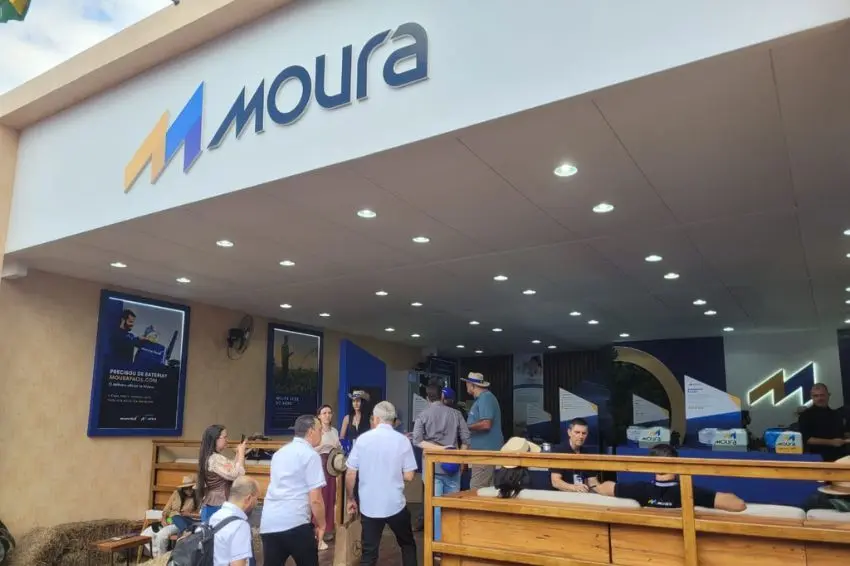
Energy management is beginning to assume an increasingly strategic role in farms, agribusinesses, and small businesses linked to the sector that drives Brazil's GDP (Gross Domestic Product).
In a scenario of increased pressure for productivity, predictability, and cost control, the management of energy infrastructure ceases to be a support issue and becomes central to operational efficiency.
According to Baterias Moura, a developer and manufacturer of energy storage solutions, this movement represents a natural evolution of the market. The company states that Brazilian agriculture is already digital, mechanized, and energy-intensive, with the next leap in efficiency coming through intelligent management of this resource.
The company explains that in the field, energy not only impacts the availability of tractors, harvesters, and support vehicles, but also sustains irrigation systems, water pumping, storage, refrigeration, agro-industrial units, farms with solar power generation, off-grid structures, and operations with high downtime costs. When there is a failure, the impacts affect production windows and result in operational losses.
It is in this context that Moura reinforces its portfolio, which includes everything from heavy-duty batteries for vehicles and agricultural machinery; stationary batteries to support photovoltaic generation; energy storage systems; and the Energy as a Service model.
In the latter case, the goal is to support the client on a more comprehensive journey, encompassing technical diagnosis, sizing, supply, installation, assisted operation, monitoring, maintenance, and management of the energy infrastructure.
“Each operation has its own reality. The challenge, often, is not just acquiring a piece of equipment in isolation, but understanding which solution makes sense for that consumption profile, level of criticality, integration with renewable sources, supply failures from the conventional electricity grid, exposure to risks, performance expectations, and downtime costs. In this equation, correct sizing becomes as strategic as the embedded technology,” says Felipe Godoy, Director of Corporate Business and New Markets at Rede Moura.
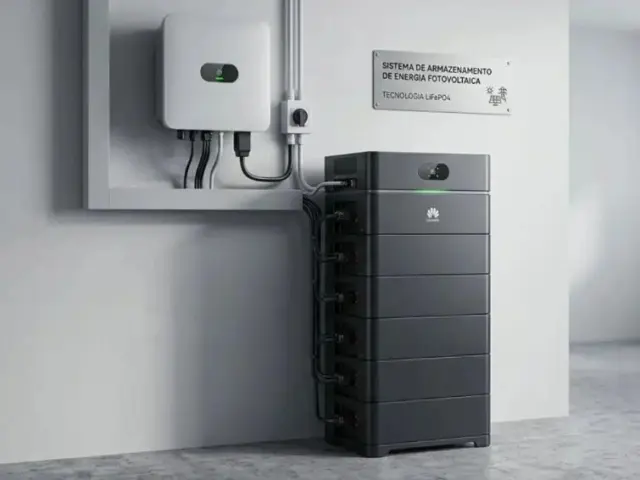
The company also highlighted that it is working on the pre-launch of a small-scale energy storage system aimed at these applications. The solution is geared towards self-consumption and also towards shifting energy use to more strategic times.
all the content of Canal Solar is protected by copyright law, and partial or total reproduction of this site in any medium is expressly prohibited. If you are interested in collaborating or reusing part of our material, please contact us by email: redacao@canalsolar.com.br.



Comments
Comments are moderated before publication.Comments should be respectful and contribute to a healthy debate. Offensive comments may be removed. The opinions expressed here are those of the authors and do not necessarily reflect the views of the author. Canal Solar.