
Over the last two decades, the Brazilian Electricity Sector (SEB) has been undergoing a major structural transformation.
Historically anchored in the hydroelectric power model, known for its ability to offer clean energy on a large scale through flexible dispatch, the SIN (National Interconnected System) is undergoing a progressive diversification of its generating base.
In my scientific article “Historical milestones of the Brazilian hydroelectric sector” I demonstrated that the relative participation of hydroelectric plants in the Brazilian Electricity Sector fell from 83,3% in 2001 to 62,5% in 2020, making the system's dispatch less dependent on hydroelectric power¹.
This transition introduced a crucial operational variable. Unlike regulated hydroelectric plants, whose reservoirs act as a "battery" capable of adjusting energy production to fluctuations in demand, wind and solar power sources are characterized by intermittency.
In 2022, I noted in the same work that, if massive investments in such sources persist, "(...) the dispatch flexibility of the SIN will become increasingly dependent on thermal power plants (...)"¹.
Not long after, time confirmed this prediction: in 2024, generation cuts due to operational restrictions affected 1.445 solar and wind power plants, totaling approximately 400 hours of interruption, of which 330 were in the Northeast, according to a survey by Volt Robotics based on restrictions imposed by the ONS (National System Operator)².
At the institutional level, ONS itself began to treat the issue as a structural matter, with the publication, in 2025, of a report on the current situation and generation restriction scenarios in Brazil and a technical note on criteria for managing generation surpluses³.
In 2025, curtailment reached 20,6% of the solar and wind energy available in the year, according to a survey by Volt Robotics4.
Thus, in addition to the challenge of expanding the supply of clean energy on a large scale, the Brazilian Electricity Sector (SEB) faces the need to reconcile energy dispatch with the operational limitations of the system.
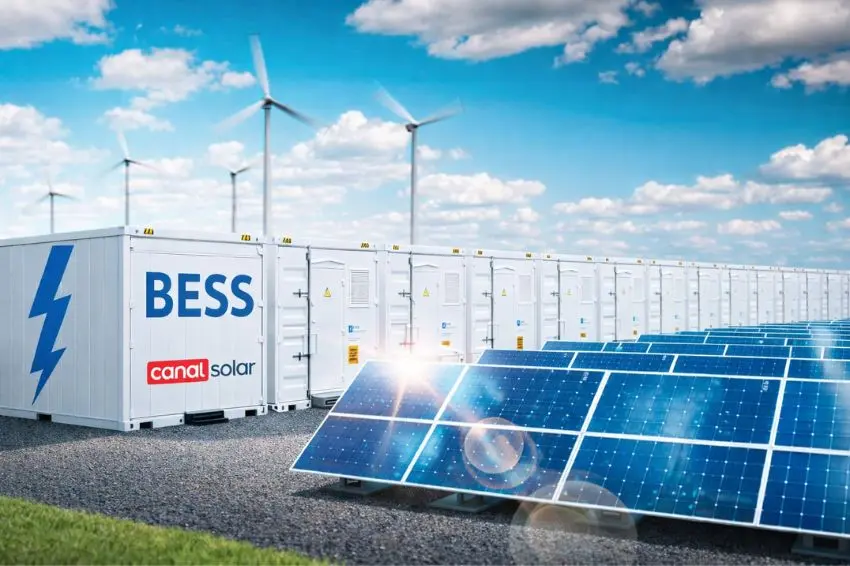
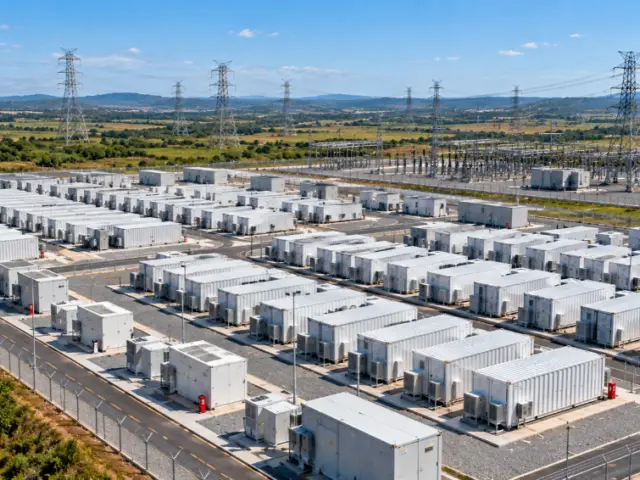
It is precisely in this context that battery energy storage systems (BESS) assume a strategic role. BESS allows energy to be stored at one time and released at another.
This results in its main operational functions: peak shaving, grid stabilization, frequency and voltage support. It is, therefore, a system infrastructure capable of performing, to a certain extent, functions historically associated with the flexibility of hydroelectric and thermoelectric power plants.
This systemic nature explains the advancement of institutional recognition of BESS in Brazil. Law No. 15.269, of November 24, 2025, modernized the regulatory framework of the electricity sector and established guidelines for the regulation of electricity storage activity, including specific incentives for BESS.
At the sub-legal level, the Ministry of Mines and Energy opened a public consultation in November 2025 for the "Auction of Reserve Capacity in the form of Power, through new battery energy storage systems, in 2026", explicitly stating that these systems should contribute to the stability and security of supply.
The false promises of "simple" environmental licensing.
Despite its structuring potential in the Brazilian Sector (SEB), BESS is not yet codified in current environmental legislation at the federal level, in most states, and in almost all Brazilian municipalities.
Given this scenario of legal and regulatory uncertainty, sector agents tend to reproduce a logic known in Brazil: that, because they are not comparable to traditionally more complex projects, the environmental licensing of battery storage systems will tend to be simple.
Historical precedents in the electricity sector, however, suggest caution regarding this expectation of simplicity.
In 1995, within the context of the National Privatization Program (PND), Federal Law No. 9.074 reintroduced private initiative into the Brazilian Electricity Sector (SEB) after more than 60 years by establishing the figure of the Independent Power Producer.
To attract investors, the classification criteria for smaller hydroelectric projects were relaxed: projects that were limited, at the time, to a maximum power of 1 MW (a limit currently set at 5 MW) were reclassified as CGH (Hydroelectric Generating Plants), a typology subject only to obtaining registration with the granting authority.
Precisely because it is the smallest regulated hydroelectric power plant in the country, its reduced socio-environmental disruption has come to be seen as an advantage, fueling the expectation to this day that its environmental licensing would, by definition, be simpler.
However, with the expansion of small hydroelectric plants, previously underestimated cumulative impacts came to light. Meanwhile, environmental agencies expanded their territorial knowledge base.
Thus, as administrative experience became more established and environmental licensing became more sophisticated, the levels of technical requirements imposed on small hydroelectric power plants (CGHs), small hydroelectric power plants (PCHs), and even large hydroelectric power plants (UHEs) surprisingly converged.
A similar phenomenon occurred with wind and photovoltaic sources. The initial sectoral interpretation was that the licensing of these types of projects would tend towards simplicity, since these activities, in principle, would not reproduce the complexity traditionally attributed to hydroelectric plants.
However, the course of administrative practice pointed in another direction. With the dissemination of sources and the technical "improvement" of environmental agencies, the licensing analysis began to incorporate, with greater rigor, the cumulative and synergistic impacts of the implemented complexes, emptying the usefulness of the artificial fragmentation of processes.
Not surprisingly, in both cases, depending on the size, location, and environmental sensitivity of the area, the licensing process may go beyond the simplified procedure and even require an Environmental Impact Assessment/Environmental Impact Report (EIA/RIMA).
The lesson from the sector is unequivocal: in Brazil, small size or low impact does not necessarily mean simple licensing, even if it is referred to, normatively, as "simplified".
What do the first BEES licensing agreements in Brazil reveal?
BESS will probably not strictly repeat the trajectory of small hydroelectric plants, photovoltaic plants, and wind farms, but neither will it escape the Brazilian logic according to which the initial promise of regulatory simplicity is strained by the technical maturation of the public sector, the federative heterogeneity of licensing, and the progressive revelation of new environmental variables.
The General Environmental Licensing Law (Law No. 15.190/2025) gave greater normative importance to the distribution of powers between the Union, states, the Federal District and municipalities that are part of SISNAMA, so that the classification of storage may vary significantly according to the interpretation of the licensing body.
Decentralization, while promising greater local adherence and procedural speed, also widens the technical and decisional asymmetries between the competent entities.
The unique aspect of BESS is that this potential increase in complexity will tend to focus less on land occupation and more on operational safety, hazardous materials, and battery lifecycle management.
Consequently, the apparent locational simplicity of the project does not eliminate the risk that the licensing process, instead of being simple, becomes haphazard, unequal, and territorially uncertain. The first Brazilian experiences with BESS licensing confirm, in practical terms, this still open and experimental scenario.
In Piauí, the Secretariat of Environment and Water Resources announced, in November 2025, the issuance of the first specific environmental licenses for energy storage projects, qualifying the movement as pioneering in the country.
The most relevant data, however, is not quantitative, but institutional: storage has come to be recognized, at the state level, as a self-sufficient energy activity, in a territory marked by the rapid expansion of wind and photovoltaic sources.5 In Rio Grande do Sul, experience points to different arrangements.
In November 2025, FEPAM announced the licensing of battery storage systems linked to the state's preparation for the federal capacity auction. In this formulation, BESS appears less as an isolated undertaking and more as strategic infrastructure for security of supply and the integration of renewables.
In São Paulo, the paradigmatic case is the Registro Substation, by ISA Energia Brasil, whose project began operating in 2022 and gained widespread public attention in 2023.
With 30 MW of power and 60 MWh of capacity, and designed to act as a reinforcement to the grid during seasonal consumption peaks on the southern coast of São Paulo, the project highlights a third model: storage treated as a component of an already existing transmission infrastructure, and not as an autonomous energy undertaking.7
In addition to these specific cases, there are states that have not yet consolidated licensing, but have already begun the normative construction of the subject. In Rio Grande do Norte, for example, CONEMA began analyzing, in November 2025, a specific proposal to regulate the licensing of battery storage systems.8 In Bahia, INEMA itself, when addressing the topic in December 2025, acknowledged that the state is already discussing advances and adjustments in the environmental licensing of BESS systems.9
Final considerations: forecast for the licensing of Bess
Taken together, these developments do not allow us to state that Brazil has already consolidated a regulatory standard for licensing storage. However, they do allow us to infer that BESS will not be absorbed homogeneously by the Brazilian environmental system.
Conversely, in this initial phase, it has been framed according to different arrangements (autonomous, strategic or integrated) depending on the systemic function it performs, the interpretation of the licensing entity and the degree of technical maturity of the licensing agencies.
The possible provisional conclusion is this: Brazil has already begun licensing BESS systems, but it is still doing so under a regime of institutional experimentation.
The issue becomes more sensitive because its expansion coincides with a reformulation of environmental licensing itself. Law No. 15.190/2025 regulated licensing on a national scale, amended Law No. 6.938/1981, and consolidated new general rules for the entities of SISNAMA (National Environmental System).
In November 2025, Congress overturned a significant portion of the presidential vetoes, and in February 2026, the new law came into effect amidst legal challenges before the Supreme Federal Court.
Finally, there is an environmental dimension that cannot be underestimated. Lithium-ion battery-based BESS systems carry known operational risks (such as thermal runaway, fire, and potential chemical leaks) and, at the end of their useful life, become electrochemical waste whose environmentally sound disposal requires reverse logistics, recycling, and industrial reprocessing. This point remains weak in Brazil.
The sectoral debate has progressed more rapidly in the electricity sector than in building a robust post-use supply chain for large batteries. It is precisely there that the environmental governance of storage tends to become more demanding.
In light of initial experiences and ongoing regulatory discussions, the most plausible scenario for consolidating BESS licensing in Brazil appears to be hybrid. Systems directly associated with solar power plants, wind farms, or transmission facilities tend to be licensed in an integrated manner with the main project.
Standalone projects, especially those focused on providing power and services to the system, tend to fall under the autonomous classification.
The consolidation of this design will depend on the experience accumulated by environmental agencies, sectoral regulations on storage, and the institutional maturation of the General Law on Environmental Licensing itself.
Ultimately, the challenge lies in reconciling energy innovation, operational flexibility of the electricity system, and environmental governance before administrative practice, given insufficient regulatory consolidation, once again assumes a defining role in the regulatory framework.
You might also be interested in
Environmental Licensing: Chamber of Deputies approves new set of rules
The opinions and information expressed are the sole responsibility of the author and do not necessarily represent the official position of the author. Canal Solar.

Comments (1)
Comments are moderated before publication.Comments should be respectful and contribute to a healthy debate. Offensive comments may be removed. The opinions expressed here are those of the authors and do not necessarily reflect the views of the author. Canal Solar.
Congratulations on the article!