

Spain won their second World Cup title by defeating Argentina 1-0 in the final of the 2026 World Cup, played this Sunday (19). The Spanish team dominated much of the match, but only confirmed the victory in extra time, with a goal by Ferran Torres.
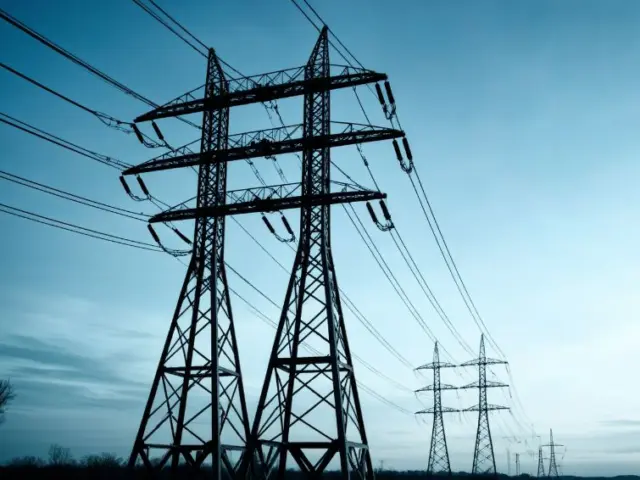
In Brazil, data from the ONS (National System Operator) shows that the decision mobilized fans and caused significant fluctuations in electricity consumption. At the start of the match, at 16 pm, the load reached its lowest level of the period, at 65.518 MW.
From that time onwards, consumption began to gradually increase. At 16:59 PM, shortly after the end of the first half, the ONS (National System Operator) recorded a ramp-up of 3.257 MW in just ten minutes.
The movement repeated itself at the end of regulation time. At 18:16 PM, there was an increase of 3.444 MW in nine minutes, a volume equivalent to the average load of the state of Pará.
The largest variation occurred after the extension ended. At 19:03 PM, the load increased by 6.479 MW in 24 minutes, an amount comparable to the average consumption of the state of Rio de Janeiro.
During the period of greatest impact, the reduction in load reached 6,6%. This percentage is noteworthy because the match was played on a weekend, when energy consumption is naturally lower.
Throughout the World Cup, the ONS (National System Operator) adopted a special plan to monitor the effects of the games on the operation of the SIN (National Interconnected System).
Generally, about two hours before matches, demand begins to fall due to the reduction or halt of commercial and industrial activities, as well as people traveling to watch the games. This movement causes a downward slope in load, which usually lasts until the end of the first half.
During halftime, the behavior reverses. When fans momentarily leave the television to prepare food, open refrigerators, turn on lights, or use other appliances, there is a rapid and simultaneous increase in demand.
As expected, the Brazilian national team's games had a more intense impact on the load, due to the greater mobilization of the population to watch the matches.
See below how the electrical system performed during each of Brazil's matches.
all the content of Canal Solar is protected by copyright law, and partial or total reproduction of this site in any medium is expressly prohibited. If you are interested in collaborating or reusing part of our material, please contact us by email: redacao@canalsolar.com.br.


Comments
Comments are moderated before publication.Comments should be respectful and contribute to a healthy debate. Offensive comments may be removed. The opinions expressed here are those of the authors and do not necessarily reflect the views of the author. Canal Solar.