
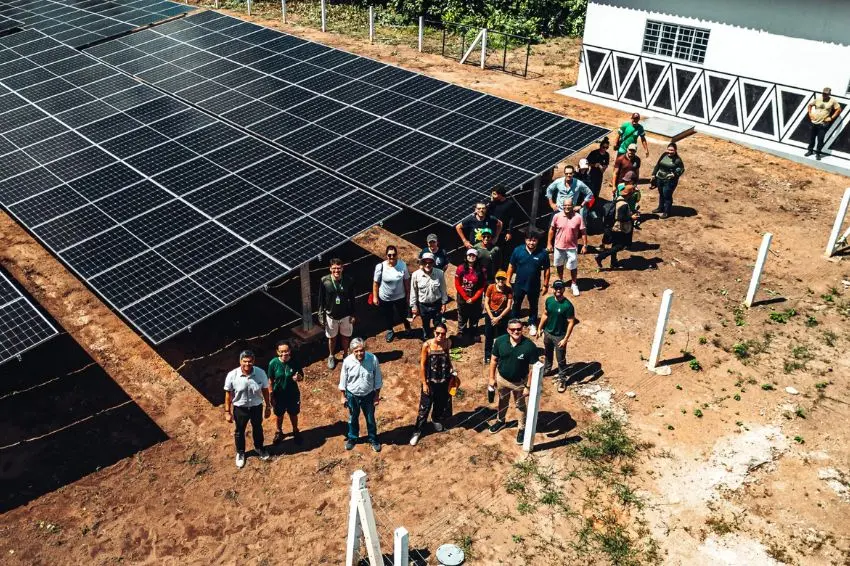
The expansion of solar microgrids, the creation of permanent financing mechanisms, and the strengthening of community participation in project management are among the main recommendations presented by IEMA (Institute of Energy and Environment) to expand access to electricity in the Pan-Amazon region, which includes areas in Brazil, Peru, Colombia, Bolivia, Suriname, and Ecuador.
In a recently released study, the institution argues that universal access to the service should be treated as a state policy, with institutional continuity, regulatory predictability, and solutions adapted to the characteristics of the most isolated regions.
The proposals stem from a worrying diagnosis that indicates that around 5 million people still live without access to public, renewable, and quality electricity in the region.
According to the survey, geographic isolation, low population density, high costs of expanding conventional networks, and dependence on fossil fuels remain among the main obstacles to universal access to the service in the region.
Experiences serve as a reference.
To formulate the recommendations, IEMA gathered and analyzed experiences developed in the six Amazonian countries, which directly or indirectly benefited more than 70 people in 223 communities.
The study also compares public electrification policies adopted in other South American countries, seeking to identify models capable of expanding access to energy in remote areas.
The results point to benefits that go beyond the provision of electricity. In some indigenous communities, there was a reduction of up to 50 hours of manual labor per week. In initiatives focused on local production, family income increased by an average of US$361 per month – the equivalent of more than R$1800,00 at the current exchange rate.
Environmental benefits were also observed, with a reduction in diesel consumption in 99,7% of the communities analyzed and complete elimination of this fuel in about a third of them.
The challenge remains in Brazil.
Although Brazil has achieved electricity coverage in 99,8% of households, the study highlights that pockets of exclusion persist, concentrated mainly in rural areas and isolated Amazonian communities, including indigenous peoples and traditional populations.
In proportional terms, the country has one of the lowest rates of electricity exclusion in the Pan-Amazon region, but it remains among those with the highest absolute number of people without access to the service due to its population size.
The report also points to specific difficulties for the advancement of electrification in Brazilian territory, such as the limited expansion of conventional networks in the Amazon, the persistence of isolated diesel-powered systems, the lack of detailed information about the population not yet served, and limitations of public policies directed at the most remote regions.
Development tool
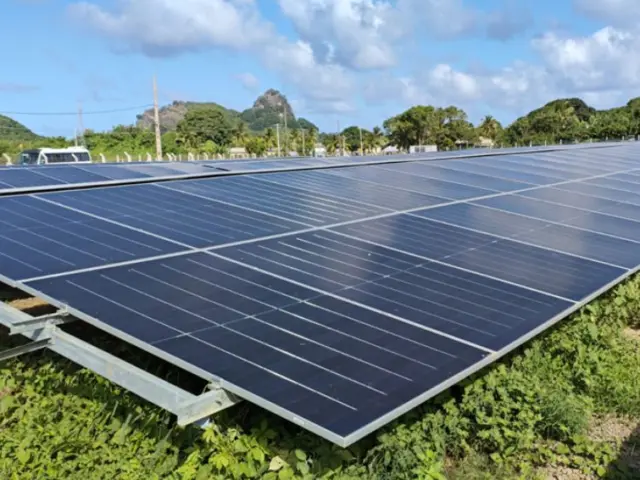
In addition to expanding photovoltaic microgrids and creating permanent sources of financing, the study recommends integrating energy access policies with the areas of health, education, sanitation, and productive development.
It also advocates for greater community involvement in the operation and management of the systems, a strategy that, according to the analysis, contributes to increasing the reliability and sustainability of the projects over time.
According to IEMA's assessment, the combination of decentralized solutions, continuous funding, and community management can expand access to electricity in a way that is more suited to the characteristics of the Pan-Amazon region, reducing the energy exclusion that still exists in the largest tropical rainforest on the planet.
all the content of Canal Solar is protected by copyright law, and partial or total reproduction of this site in any medium is expressly prohibited. If you are interested in collaborating or reusing part of our material, please contact us by email: redacao@canalsolar.com.br.
Comments
Comments are moderated before publication.Comments should be respectful and contribute to a healthy debate. Offensive comments may be removed. The opinions expressed here are those of the authors and do not necessarily reflect the views of the author. Canal Solar.