

In southern Pará, in the heart of the Amazon, a project is combining technology, sustainability, and social justice to transform the reality of indigenous Kayapó communities.
Kayapó Connection is promoting the installation of photovoltaic systems with batteries in villages located in the Menkragnoti, Baú, Capoto/Jarina, and Panará Indigenous Lands, considered critical regions of the Arc of Deforestation. The initiative is led by Comerc, with support from the AYA Institute, the Kabu Institute, and the A Gente Transforma Institute.
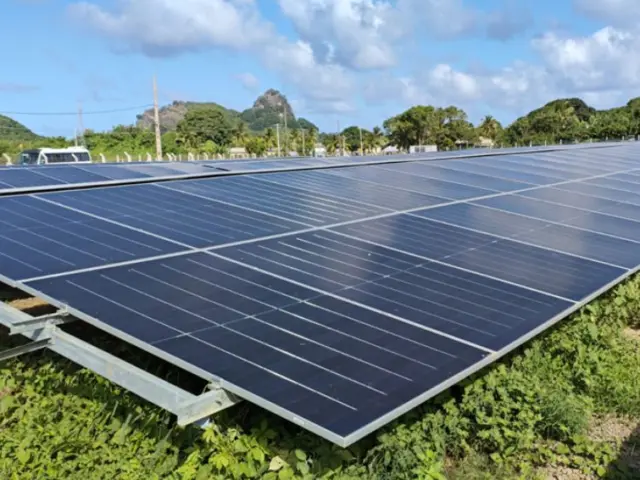
The pilot phase of the project, developed by Comerc through its joint venture with Micropower, was completed in December 2024 in the Pykany village, with an investment of R$2 million. During this phase, 35 systems were installed, providing 24-hour power to homes, a school, a health center, and surveillance bases.
In total, the initiative will benefit more than 1,5 people, with the installation of solar energy in more than 160 homes, distributed across 18 villages and seven territorial monitoring bases. The estimated cost of expanding the project to all villages served by the Kabu Institute will be over R$7 million.
According to Comerc, more than just providing electricity, the project brings energy autonomy and promotes structural transformation in communities. Activities that were previously restricted to daytime hours, such as classes, meetings, and craft production, now continue into the night as well.
The arrival of electricity also enabled satellite internet access and strengthened integrative initiatives in education, technical training, and the use of technologies that facilitate daily life in villages. Young people, children, and women are at the center of these initiatives, with a focus on developing new leaders and strengthening gender equality.
In addition to boosting local development, photovoltaic energy has become an essential tool for environmental protection. A continuous supply strengthens surveillance systems and increases response capacity to illegal activities such as deforestation and mining.
In 2021, the Baú and Menkragnoti Indigenous Territories together recorded more than 1.500 km² of deforestation—an area equivalent to the city of São Paulo. Continuous monitoring now allows for more effective defense of the territory and the life that sustains it.

Importance of partnership
The AYA Institute is responsible for bringing together companies interested in supporting the project, which emerged within the Community-Based Tourism Project, developed by the A Gente Transforma Institute.
Two other institutes operate directly in the impacted areas: the Kabu Institute, responsible for 18 villages, 7 surveillance bases, and more than 160 residences; and the Raoni Institute, with 15 villages, 3 surveillance bases, 1 production unit, and 164 residences.
Cristopher Vlavianos, founder of Commerce Energy and one of the project's creators, highlighted that the participation of new partners is essential to expand the reach and accelerate the impact of the Kayapo Connection.
"There is great potential for replicating this project to other Indigenous Lands with similar needs. The more people and companies join forces, the faster we can scale the initiative and extend it to other locations, protecting our Indigenous people and our forests," he emphasized.
International recognition and expansion potential
Conexão Kayapó was nominated for the Earthshot Prize, one of the world's most prestigious environmental awards, created by Prince William to promote high-impact solutions.
In 2025, for the first time, the ceremony will take place in Latin America, in the city of Rio de Janeiro, reinforcing Brazil's leading role in the global climate agenda, precisely in the year in which the country is preparing to host COP30.
An estimated 79 Indigenous people still live without access to electricity in the Legal Amazon. About 30% of them live in regions that could be covered by future phases of the CKayapó connection, in the states of Pará and Mato Grosso
"Kayapó Connection goes beyond electrification: it is a force for social, environmental, and cultural transformation in the Amazon. With indigenous leadership and clean energy, it strengthens communities, protects the forest, and promotes access to education, healthcare, and connectivity. It is a concrete model for a just energy transition, with potential for expansion and international recognition," concluded Vlavianos.
all the content of Canal Solar is protected by copyright law, and partial or total reproduction of this site in any medium is expressly prohibited. If you are interested in collaborating or reusing part of our material, please contact us by email: redacao@canalsolar.com.br.

Comments
Comments are moderated before publication.Comments should be respectful and contribute to a healthy debate. Offensive comments may be removed. The opinions expressed here are those of the authors and do not necessarily reflect the views of the author. Canal Solar.