
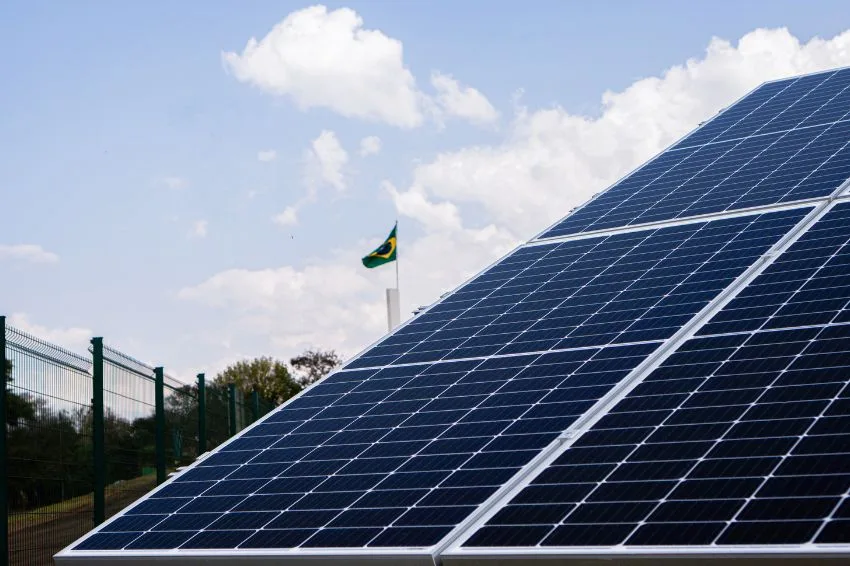
“Demand will always exist, the market is sovereign. The photovoltaic solar source is a trend that is no longer a trend, it is already a reality”. This is the analysis of Philip Santos, LATAM sales director at Dah Solar.
During the last episode of the third season of the Papo Solar podcast, broadcast on Tuesday (17), the director highlighted that despite the withdrawal of nine ex-tariffs of the Government and the exhaustion of import exemption quotas, the price factor is not the most important factor in generating demand and generating the market.
At the end of the year, the Federal Government announced the revocation of ex-tariffs for the products: Photovoltaic modules (NCM 8541.43.00) and Photovoltaic inverters (NCM 8504.40.90) and the exhaustion of quotas granted for the import of photovoltaic modules without the application of taxes.
With the end of the general quota, all photovoltaic modules imported into the national market that did not benefit from the quotas will be subject to a 25% tax rate.
For GD (Distributed Generation), which mainly serves residential consumers and small businesses, the impact is considered to be smaller. Studies indicate that the tax increase can extend the return on investment period by up to three months, which still keeps the payback within acceptable limits.
As for the big projects, GC (Centralized Generation), the impact is more significant and may discourage new investments. Despite this, “large projects suffer more, but the market is sovereign and must find solutions”, stated Santos during the chat.
Despite the announcements made on the eve of the end of the year, the director emphasizes that the cost of solar energy in Brazil is still competitive when compared to other sources and that there is the possibility of adaptation through the restructuring of projects and renegotiation of contracts.
Do increasing import taxes solve the problem of the national industry?
“I don’t think so! It’s much faster to import the product, it will arrive here cheaper than waiting for the entire chain to be produced,” says Santos.
“Any country that decides to implement this as a strategy for its local industry must first develop a basic industry. It must have a polysilicon industry, a wafer industry, a cell industry. So, first, it is necessary to have the entire chain,” he explains.
Despite the adversities faced, Santos states that “the market is like a river: we put up a dam, but it finds another way to flow”.
Will we still have “leftovers” of the global quota available?
The quota system was structured to distribute 70% of imports among all market players and the remaining 30% exclusively to the largest importers.
“What has now ended is the global quota, which is intended for all importers. However, the top 15 still have until March to regularize their operations and ensure the use of the special quota. If these reservations are not made, the volumes may be redistributed to the general market starting May 1st,” explains the director.
Technological evolution
In 2024, photovoltaic modules will show the development of increasingly efficient solutions. The most prominent modules on the market are the 610 Wp and 585 Wp ones, and bifacial cells have made bifacial modules cheaper to produce, further optimizing costs.
In addition, the decline in PV module prices was driven by technological advancement, reduction in commodity costs, scale production capacity, Chinese government incentives and changes in the global market.
Fake power
In 2024, the term fake power gained prominence as one of the most worrying challenges for installers, distributors and end consumers, a term that refers to photovoltaic modules that deliver a real power lower than that specified on the label or datasheet.
According to Felipe Santos, until May 2023, Inmetro regulations allowed a negative tolerance of up to 5% in photovoltaic modules. This means that, for example, a 555 Wp module could legally deliver only 527 Wp. “We can't say that a 530 Wp module was illegal at the time, it was within the rules.”
With the update to Inmetro Ordinance 140, this negative tolerance was eliminated, allowing only positive results. Despite this, “the Brazilian market today is one of the most competitive in the world in terms of price, which leaves room for questionable practices,” Santos pointed out.
The expert also pointed out that to solve the problems faced with fake power, it is necessary to inspect the product upon receipt, require certificates and partner with reliable manufacturers. “It is no use just talking about price. We have to move away from this superficial conversation and seek quality, innovation and commitment to the end consumer,” he points out.
Energy Storage
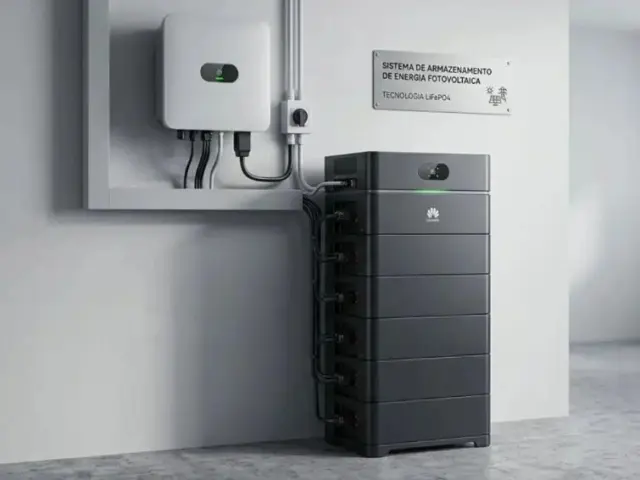
O energy storage It is one of the main trends in the photovoltaic sector, especially for smaller systems, such as residential and commercial ones.
For the director, with the increase in cases of energy insecurity, the adoption of batteries may become essential, even in urban areas. “We are not talking about the countryside; we are talking about São Paulo, the capital. Experiencing energy insecurity in the largest city in Latin America is complicated.”
“This type of solution is not trivial. Before simply installing batteries, it is necessary to understand the customer’s needs, the required load and the correct sizing. Otherwise, the cost of the project can escalate quickly, reaching values such as R$70 or more.”
“Integrators need to specialize, understand the nuances of storage and offer a differentiator to the market. It is a sector that is maturing and, with that, the bar is being raised,” concludes Santos.
Watch the full episode
all the content of Canal Solar is protected by copyright law, and partial or total reproduction of this site in any medium is expressly prohibited. If you are interested in collaborating or reusing part of our material, please contact us by email: redacao@canalsolar.com.br.


Comments (1)
Comments are moderated before publication.Comments should be respectful and contribute to a healthy debate. Offensive comments may be removed. The opinions expressed here are those of the authors and do not necessarily reflect the views of the author. Canal Solar.
Dear Sirs,
The market is sovereign and does not accept any kind of sophistry. These tax increases on imports with the vain intention of protecting the national industry have already proven to be inefficient and have resulted in past times as if they were "donkeys in water". See the attempt to protect the shipbuilding industry, the oil industry with the infamous presidential decree of 65% national content. We have to invest in the obvious way out, which is education, especially in the training of mid-level technicians. The international assessment exams for basic education put us in a shameful position. See the OECD's PISA exam! We are always in last place. There is no way out if we do not have the teacher as the protagonist of the complex teaching/learning process. An engineer, professor, master in electrical engineering sciences, designer in photovoltaic generation, energy efficiency and electric vehicle charging stations.