

The advantages of photovoltaic solar energy are known. From an environmental point of view, photovoltaic energy offers a viable alternative to the use of fossil resources – such as coal, oil and natural gas. From the consumer's point of view, solar energy provides savings and, in some cases, energy independence.
However, the potential of photovoltaic systems is often not fully exploited and, instead, most of the solar energy produced is fed into the electricity grid, subject to taxes and grid usage fees. With intelligent energy management, it is possible to maximize the benefits of photovoltaic systems.
Intelligent energy management can be done through several strategies: using energy at the same time it is generated, using energy at times when the tariff is cheaper, shifting the availability of solar energy to coincide with the time of day of consumption through a storage system or avoid injecting excess photovoltaic energy into the electrical grid.
Some of these strategies are closely related. For example, to avoid the daytime injection of excess energy, it is necessary to store it in batteries. The energy stored in the batteries can be used at night.
Depending on the case, the generation of the photovoltaic inverter can be intentionally limited to avoid injection into the grid – this last strategy is less desirable, since it wastes a quantity of energy that could be used elsewhere or stored. Whatever the energy management strategy adopted in an installation, a necessary component is the smart energy meter, as exemplified in Figure 1.
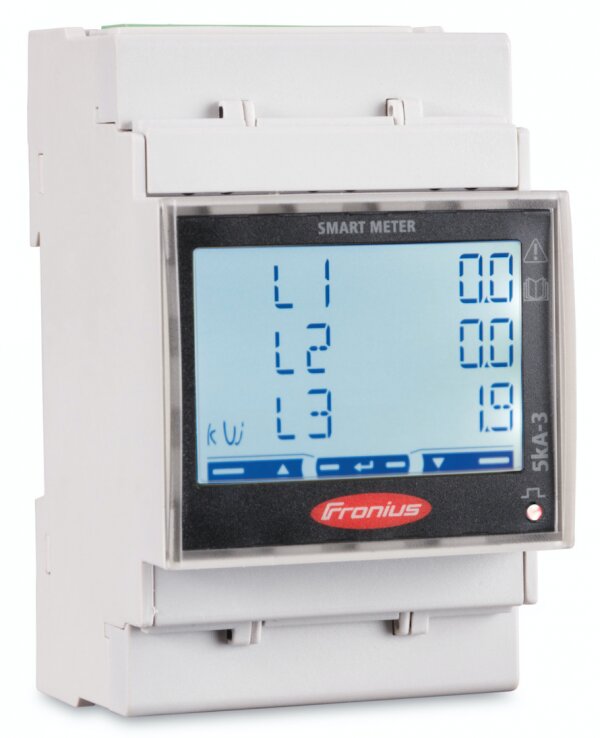
The function of the smart meter is to record bidirectional power flow and communicate with other equipment such as inverters or control centers, among other things. The meter shown in Figure 1 is a Fronius smart meter bidirectional, which has a Modbus communication port for exchanging information with inverters and has the ability to record the consumer's load curve.
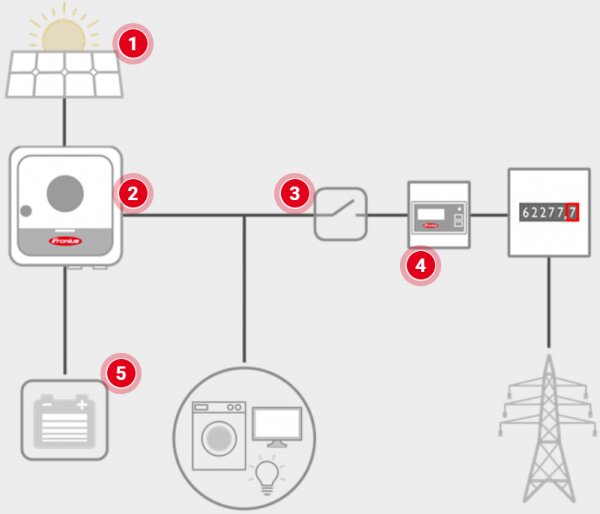
Figure 2 shows a simplified diagram of a microgeneration system with batteries and a smart meter. The energy produced by the photovoltaic panels (1) is processed by the inverter (2), which can inject the energy in the form of alternating current at the point of coupling with the electrical grid (3) or store it in a battery bank (5).
The smart meter (4) is installed at the border between the microgeneration system and the power grid, recording the bidirectional flow of energy (i.e. the energy that is injected into the power grid and the energy that is consumed from the grid). The energy produced by the photovoltaic system is recorded by the inverter. The combination of the values of the energy generated by the photovoltaic system and the energy injected into the power grid makes it possible to determine the amount of excess energy.
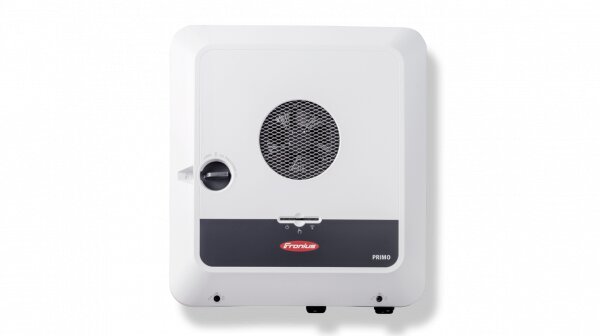
There are basically two ways to build a system with the functionalities of the system illustrated in Figure 2. In the first option, two types of inverters can be used: a pure grid-tie inverter (which only injects energy into the grid) and a battery inverter (which charges and discharges the batteries in connection with the grid). In the second option, preferable in smaller systems, a multiport hybrid inverter can be used, such as the one shown in Figure 3, which can simultaneously connect to the electrical grid and to a battery bank.
Intelligent use of energy
From an energy management point of view, the most important feature of the system illustrated in Figure 2, as well as of the hybrid inverter illustrated in Figure 3, is the ability to operate simultaneously with solar panels, batteries and the electrical grid, allowing the control of different energy flows, as illustrated in Figure 4. In addition, intelligent energy consumption is increased with the possibility of selectively powering loads through priority rules that can be configured in the inverter, depending on the availability of solar energy or energy in the batteries.
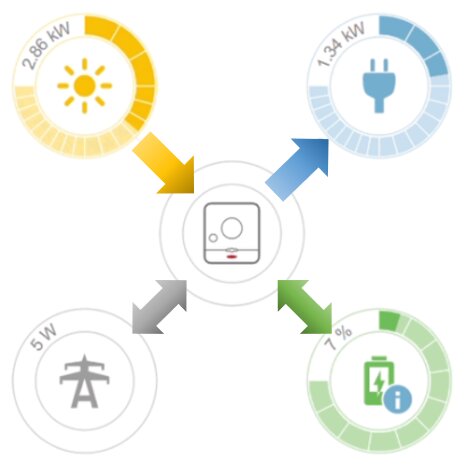
In Figure 4 we observe the following possible energy flows:
- Orange: unidirectional – from solar panels to inverter;
- Gray: bidirectional – energy injected into the grid or consumed from the grid;
- Green: bidirectional – energy stored or consumed from batteries;
- Blue: unidirectional – energy consumed by local loads.
By combining the orange, gray and green flows, it is possible to implement the energy management strategies mentioned above. The GEN 24 inverter in Figure 3 can be configured with the following intelligent energy use strategies:
- Optimization of internal consumption: The inverter is always controlled by the zero power criterion at the measuring point. In automatic operating mode (factory setting), the coupling point with the power grid, where the smart meter is installed, is automatically set to 0 W (maximum own consumption of solar energy);
- Priority setting: If battery components are present in the system, the priorities for using the stored energy can be set. The equipment with the highest priority will be activated first and the others will be activated later, if there is still excess energy;
- Load management: Different rules can be defined for selective power supply of loads, which can be switched on or off via the inverter's digital I/O (input and output) ports.
Comments (2)
Comments are moderated before publication.Comments should be respectful and contribute to a healthy debate. Offensive comments may be removed. The opinions expressed here are those of the authors and do not necessarily reflect the views of the author. Canal Solar.
I would like to set up a solar panel plant. Can you guide me and manage the generation of this plant?
Good afternoon, Arthur, how are you? We recommend that you first take the Regulation and Market course to find out which area you best fit into, after that, we have a consultancy program to help you. Discover the course: https://cursos.canalsolar.com.br/curso/regulacao-mercado-e-modelos-de-negocios-em-energia-solar-acr-e-acl-online-e-ao-vivo/