
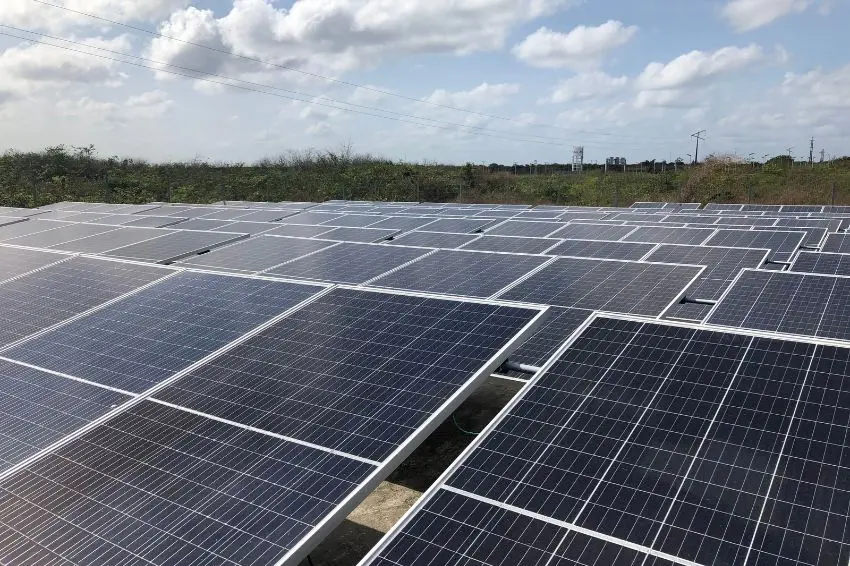
1. Distributed generation in the face of a new regulatory paradigm
The Brazilian electricity sector is undergoing a structural transformation that demands attention from investors, generators, consortia, cooperatives, associations, and companies operating in distributed generation.
Public Consultation ANEEL Notice No. 044/2026 discusses the experimental implementation of the Intermediate Activation Mechanism (MAI), proposed by the ONS (National System Operator), to coordinate operational commands on distributed energy resources. The announced deadline for contributions is January 31, 2027.
The discussion incorporates the possibility of operational restrictions on distributed generation due to systemic needs, with economic, contractual, and legal repercussions. System security must be reconciled with the legal security of investments.
2. What is MAI and what are its technical effects?
MAI stands for Intermediate Activation Mechanism, not Immediate Activation Mechanism. The name stems from the proposed operational architecture: the ONS (National System Operator) issues operational guidelines or commands, and the distributor acts as an intermediary in coordinating and executing them with the energy resources connected to its network, according to the conditions of the regulatory experiment.
The possibility of real-time commands does not change this nomenclature. Photovoltaic expansion and periods of low load motivate the discussion about coordination and security instruments for the National Interconnected System.
From a technical standpoint, the observability of resources, objective criteria for temporary generation reduction, communication between the National System Operator (ONS) and distributors, identification of affected agents, and full traceability of commands are essential. For companies, this intermediation makes it especially important to define responsibilities, document occurrences, and ascertain the economic effects of each restriction.
3. Scope of the regulatory experiment
The proposed 24-month experiment covers concession areas of Cemig Distribuição, Copel Distribuição, CPFL Paulista, Energisa Mato Grosso, and Neoenergia Elektro, according to the specific criteria of the draft submitted for consultation.
It is essential to differentiate participation in the experiment from a definitive rule applicable to all national distributed generation. The scope of the obligations will depend on the approved standard and operational procedures.
4. Absence of financial compensation and its legal limits
The anticipated absence of specific financial compensation for restrictions during the experiment is one of the most sensitive points in the discussion. Preserving operational safety does not negate the principles of legality, proportionality, reasonableness, justification, transparency, and legal certainty.
Law No. 14.300/2022 regulates the SCEE (Electric Energy Compensation System), but the right to compensation for energy actually injected does not automatically equate to the right to compensation for all energy not produced.
The absence of automatic compensation does not eliminate the possibility of discussing liability for illegal, discriminatory measures or measures carried out in violation of applicable procedures.
5. Economic impacts on power plants and shared generation structures
A restriction can reduce available credit for participants, compromise revenue projections, and affect financing and performance commitments. The analysis should consider the contractual model of each project.
For illustrative purposes only: in a power plant with a projected generation of 300 MWh per month, a 15% reduction would represent 45 MWh of energy not generated or injected. With a hypothetical economic value of AR$ 500/MWh, the estimated gross effect would be R$ 22.500 per month, not including any compensation calculation.
6. How can companies protect themselves?
Contract review: examine equipment rental, management, consortia, cooperative, and association agreements, as well as instruments with beneficiary consumers, especially regarding risk allocation, regulatory changes, and economic rebalancing. Not every restriction constitutes force majeure.
Preservation of evidence: recording historical generation, inverter data, measurements, communications from distributors, timing and intensity of commands, estimates of wasted energy and impacts on credits.
Financial management: testing scenarios for reduced generation, debt coverage indicators, and cash flow sensitivity.
Regulatory participation: submitting contributions to the public consultation accompanied, whenever possible, by technical data, impact studies, and legal justifications.
7. Priority points for contributions to ANEEL
Objective criteria for triggering actions, equality among agents, proportionality of cuts, auditable records of commands, appeal procedures, economic treatment of restrictions, and protection of existing investments should be discussed.
The governance of the experiment should also include public indicators, results evaluation, and technical justification before any potential expansion of the mechanism.
8. Relationship with other regulatory discussions
The MAI (Management Impact Assessment) should be analyzed in conjunction with initiatives on shared generation and the accounting treatment of surplus distributed generation, without confusing their objectives. An integrated assessment allows for the identification of cumulative effects on contracts, operation, and economic viability.
9. Conclusion: From risk exposure to business protection strategy
The experimental implementation of the MAI (Intermediate Activation Mechanism) imposes a concrete risk management agenda on distributed generation.
The business response should not be limited to the expectation of eventual future compensation: it must begin with a legal and regulatory diagnosis of the power plants and corporate structures, identification of sensitive contractual obligations, and technical quantification of exposure to generation restrictions. Operational security and legal protection of investments must advance together.
The preventive solution involves an integrated plan across four fronts: (i) regulatory and contractual audit of lease agreements, consortia, cooperatives, associations, and instruments with beneficiaries; (ii) implementation of an evidence protocol, with records of commands, measurements, estimated losses, and communications with the distributor; (iii) simulations of financial scenarios and review of risk allocation; and (iv) preparation of technical and legal contributions to the Public Consultation. ANEEL No. 044/2026, within the applicable deadline.
If there is a concrete restriction, the documented history will allow for the evaluation of administrative measures, contractual negotiation and, when legally applicable, judicial protection. None of these measures presupposes an automatic right to compensation.
For investors, developers, power plant managers, and shared generation companies, specialized legal counsel can transform regulatory uncertainty into documented decisions: mapping exposure per project, adjusting contracts before conflicts arise, structuring governance for responding to claims, and defending technical positions before the relevant authorities. ANEEL and the distributors. Anticipating risk means preserving cash flow, contractual predictability, and investment value.
Normative and regulatory references
Federal Constitution; Law No. 9.427/1996; Law No. 14.300/2022; Law No. 13.848/2019; Law of Introduction to the Norms of Brazilian Law.
ANEEL — Public Consultation No. 044/2026, process No. 48500.033895/2025-11. Check the draft and Technical Note No. 183/2026-STD/ANEEL before final publication.
Institutional statement: https://www.gov.br/aneel/pt-br/assuntos/noticias/2026/consulta-publica-discutira-proposta-de-sandbox-para-coordenar-acionars-de-mmgd-entre-ons-e-distribuidoras
The opinions and information expressed are the sole responsibility of the author and do not necessarily represent the official position of the author. Canal Solar.

Comments
Comments are moderated before publication.Comments should be respectful and contribute to a healthy debate. Offensive comments may be removed. The opinions expressed here are those of the authors and do not necessarily reflect the views of the author. Canal Solar.