
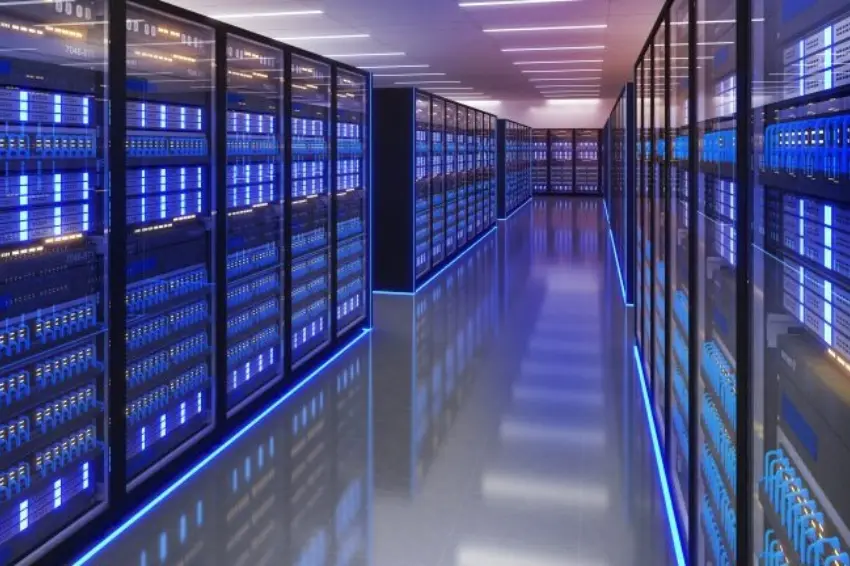
Brazil needs to transform Redata into a policy that companies can actually use. The approval of the regime opened an opportunity to bring digital infrastructure and clean energy closer together. However, the delay in defining its operational conditions prolongs uncertainty precisely when investors need to choose where to install equipment, contract electricity, and commit capital for several years.
Law No. 15.504, of September 15, 2026, established the regime. Authorization is the responsibility of the Federal Revenue Service, and the regulation of entry requirements is the responsibility of the Executive Branch.
The existence of the law, therefore, does not equate to automatic access to the benefits. As of this consultation, the operational decree has not been located; the Brazil Journal report from November 4th also notes this pending issue.
The warning gained momentum with the original analysis from Rystad Energy. The consultancy considers approximately 21 GW in announced projects and arrives at about 7 GW after weighing risks. Its assessment incorporates regulatory uncertainties, grid congestion, and difficulties in accessing a reliable supply.
This is a risk-dependent estimate, not one based on lost installed capacity or proven cancellation of two-thirds of investments. Even so, the contrast highlights the gap between announcements and execution.
This difference deserves attention because an investment decision involves interdependent commitments. The tax treatment of equipment affects the budget. The eligibility of the contracted energy influences the supply structure. The connection deadline conditions the start of operations.
When this information remains open, the investor can postpone contracts, demand a higher return, or choose another location. These are plausible economic risks, not a quantification of losses already incurred.
The calendar makes the uncertainty even more serious. The law sets December 31, 2026 as the limit for the effects of PIS/Pasep, Cofins, and IPI benefits, including import contributions; the general deadline is five years. A uniform window for all taxes should not be announced.
The time consumed by regulation reduces the practical usefulness of incentives with legal deadlines approaching. Changing these limits requires the appropriate legal instrument, not an administrative promise.
In the electricity sector, the opportunity goes beyond additional consumption. Viable projects can support long-term contracts with generators, stimulate infrastructure investments, and create opportunities for energy storage and management solutions.
For solar energy, contracts with intensive consumers can expand the market, provided that the supply design considers the variation in generation throughout the day and the needs for continuity of service.
We must avoid the idea that any new load will automatically solve the renewable generation cuts. The effect depends on the location, consumption times, and the grid's transport capacity.
A connected business located far from a bottleneck may do little to alleviate that problem. Planning digital expansion alongside electrical infrastructure is necessary to convert the opportunity into a real benefit, without transferring undue costs to other consumers.
The definition of low-emission energy also needs to be technically verifiable. The law allows for renewable or low-emission sources; it does not, by itself, automatically classify all natural gas generation as such. The regulations must clarify limits, calculation methodology, documentation, and oversight.
Our proposal is that the assessment considers the relevant emissions from the supply chain and prevents the term from becoming a generic authorization, thus preserving the competitive value of renewables.
The first step is to publish an integrated schedule for the necessary actions, with identified responsibilities and deliverables. The Federal Revenue Service must have clear qualification procedures. The Ministry of Finance and the Ministry of Development, Industry and Foreign Trade (MDIC) need to coordinate tax and industrial implementation.
The Ministry of Mines and Energy (MME) should contribute to the energy criteria, while ANEEL ONS and ONS, within their respective areas of expertise, address the regulatory and operational conditions for network access. This coordination is a proposed implementation; the tax incentive does not replace the connection procedures.
The second step is to compile the requirements into consistent, public guidelines. Investors need to understand the assets involved, the evidence accepted, and how transitional situations are handled before undertaking irreversible obligations.
Objective consultations and well-founded decisions can resolve disagreements without creating an indefinite sequence of new steps. Verification of counterparties must be proportionate, auditable, and sufficient to protect the public interest.
The third step is to assess, with fiscal transparency and congressional participation when necessary, whether the legal deadlines still allow for the implementation of the policy. If adjustments are needed, they must be accompanied by impact estimates and measurable obligations. Legal certainty presupposes consistency between the duration of the incentive, the eligibility period, and the reality of project implementation.
The country has the potential to link the expansion of digital services to new investments in clean energy. To achieve this, it needs to offer regulations that allow for cost comparisons, fulfillment of counterpart obligations, and operational planning.
Each month of uncertainty prolongs the gap between the announced potential and the contracts actually signed. Regulating Redata with clear criteria is an industrial and energy policy decision that should no longer remain without a timetable.
The opinions and information expressed are the sole responsibility of the author and do not necessarily represent the official position of the author. Canal Solar.

Comments
Comments are moderated before publication.Comments should be respectful and contribute to a healthy debate. Offensive comments may be removed. The opinions expressed here are those of the authors and do not necessarily reflect the views of the author. Canal Solar.