
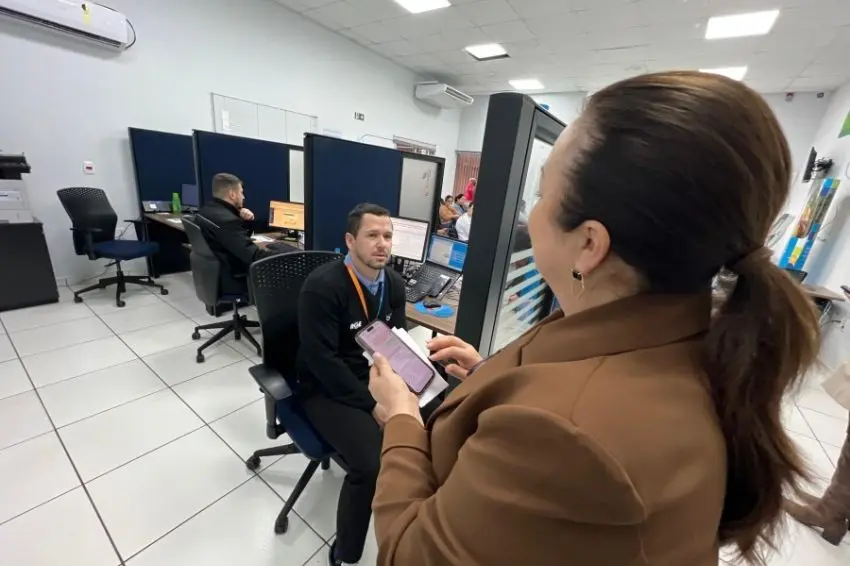
The first complete billing cycle after the tariff readjustment by RGE (Rio Grande Energia) has raised doubts and increased the demand from consumers in Rio Grande do Sul for consumer protection agencies.
With the average increase approved by ANEEL (National Electric Energy Agency) on July 19th reported a 14,93% increase for residential customers – a percentage almost three times higher than the accumulated inflation over the last 12 months – residents in the interior of the state were surprised by the significant rise in electricity bills due in August.
In Erechim (RS), the municipal Procon reported that, given the volume of complaints received, it notified RGE on August 3rd, requesting clarifications regarding the price increases reported by consumers and the adoption of urgent measures within a period of up to 10 days.
Despite this, Procon advises that, before filing a complaint about a possible billing error, it is important for the consumer to analyze their own bill to verify whether the increase is due to a tariff adjustment, an increase in consumption, or other factors related to billing.
Roseli Battisti, director of Procon in Erechim, explains that analyzing the invoice is the first step in identifying the source of the price discrepancy.
“It is very important for consumers to check their bill and compare their kWh consumption with previous months. We need to identify whether there has actually been an increase in consumption or if the difference is related to tariff adjustments or other factors,” she stated.
What should the consumer do?
Before filing a complaint, Procon recommends that consumers analyze their own bill.
The main guidelines are:
- Compare the consumption in kWh with that recorded in previous months;
- Check if there have been any changes in habits or the use of new electrical equipment;
- Check if the billing cycle is similar to previous bills.
If the amount continues to be considered inconsistent with your consumption history, you should contact RGE, request clarification, and keep the service request number.
If the distributor's response does not resolve the situation, the consumer can contact Procon, presenting:
- Identification document;
- Electricity bill;
- Current photograph of the energy meter;
- Service protocol provided by RGE, if you have already contacted the utility company.
Each situation is analyzed individually by the agency, which maintains a direct communication channel with RGE to forward and monitor the demands presented by consumers.
Note from RGE
"It's common for average household energy consumption to fluctuate during periods of extreme temperatures—both on the coldest and hottest days. This happens mainly due to the more frequent use of appliances such as heaters, electric showers, fans, air conditioners, and even refrigerators, which need to work harder to maintain the ideal temperature."
CPFL RGE clarifies that this scenario may be the result of a combination of factors typical of the season. In addition to the natural increase in consumption, the annual readjustment, authorized by the National Electric Energy Agency (Aneel) in June, also impacts the bill amount.
On June 19th, the tariff adjustment for CPFL RGE, approved by Aneel, came into effect. The average rate applied to residential consumers was 14,98%.
In calculating tariffs, Aneel (Brazilian Electricity Regulatory Agency) considers the projected costs of energy purchase (generation), transmission system, and sector charges, according to the rules established for the sector. For the distribution of electricity, the only part that CPFL RGE manages, the ANEEL It establishes the efficient recipe for the company.
How to understand your bill: Your electricity bill shows your consumption history for the last 12 months, allowing you to compare periods and check if there has been an increase in energy use. Changes in habits during the winter — such as longer showers and prolonged use of heaters — can generate significant variations in the final amount.
Check out the energy consumption of the main appliances and suggestions for small steps you can take to save money:
- The electric shower is the appliance that consumes the most energy in a home. When used in "winter" mode, consumption increases by up to 30% compared to "summer" mode. Showers can account for 25% to 35% of electricity bills on colder days. To save energy, reduce your shower time.
- The use of dryers is also increasing, and the appliance consumes between 80 and 100 kWh per month when used once a day. Cold weather also contributes to increased use of washing machines, which consume about 36 kWh monthly, 5% of a household's total consumption, when used twice a week. Ironing, when done for one hour a day for 12 days, can represent 12 to 20 kWh at the end of the month. The tip here is to accumulate laundry to wash and dry everything at once. This advice also applies when using an electric iron.
- Space heaters are also common, and the average monthly consumption of the appliance can reach 160 kWh. Therefore, when buying a heater, make sure its size and power are suitable for the room where it will be used. This avoids unnecessary energy consumption. Another tip is to choose models with a timer, so that when the room is at the ideal temperature, the appliance turns off. If you choose to use air conditioning, a viable option is to install an inverter model, which saves up to 40% compared to conventional equipment.
Other tips that will help save energy:
- One appliance that is widely used at this time when people are spending more time at home is the television. Monthly electricity consumption ranges from 10 to 30 kWh, and it can account for 5% to 10% of your bill. Therefore, remember to turn off the TV when no one is watching. Don't leave the device on while you are sleeping; use the timer or sleep function for automatic shutdown. If you are going to buy one, choose more energy-efficient televisions; more modern models have lower consumption.
- Light bulbs also play an important role in consumption; lighting accounts for 5% to 15% of your energy bill. It's good to avoid turning on lights during the day and take advantage of natural light whenever possible. Always remember to turn off lights in unoccupied rooms and opt for LED bulbs. They provide better lighting, last longer, and consume less energy.
all the content of Canal Solar is protected by copyright law, and partial or total reproduction of this site in any medium is expressly prohibited. If you are interested in collaborating or reusing part of our material, please contact us by email: redacao@canalsolar.com.br.



Comments (1)
Comments are moderated before publication.Comments should be respectful and contribute to a healthy debate. Offensive comments may be removed. The opinions expressed here are those of the authors and do not necessarily reflect the views of the author. Canal Solar.
I'm sorry to hear about the electricity bill during the winter. In other years it was cold, appliances were used, so why didn't the bills triple? How can we pay for something that isn't justified?