
With the collaboration of Bianca Wolf
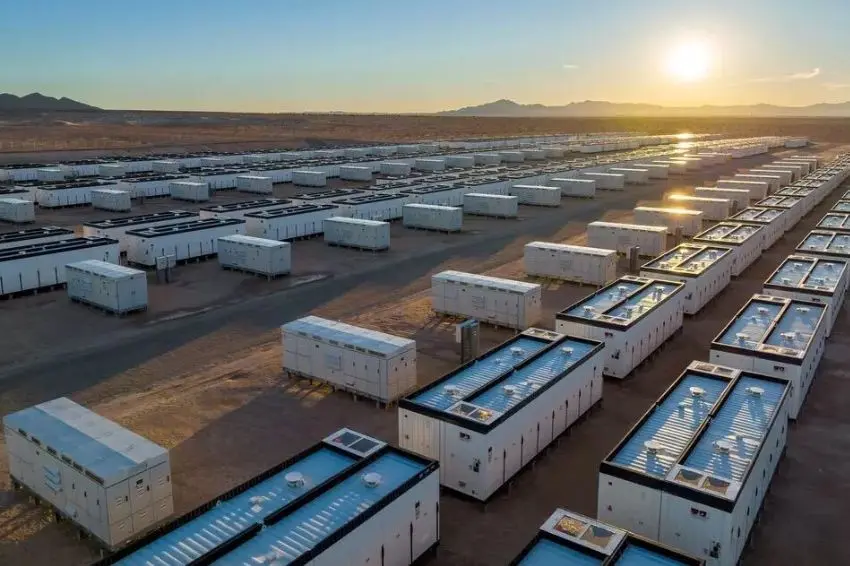
The rules governing the financing of contracting battery energy storage systems through capacity reserve auctions have been the subject of discussion since the enactment of Law No. 15.269/2025, which amended the legal framework applicable to capacity reserves and established a specific allocation rule for this type of contracting.
With the upcoming Capacity Reserve Auctions for storage systems, scheduled for December 2026, the topic has gained greater relevance.
In this context, the Superintendency for the Regulation of Generation Services and the Electricity Market of ANEEL (National Electric Energy Agency) presented, on August 24, 2026, Technical Note No. 101/2026 and Regulatory Impact Analysis Report No. 5/2026, within the scope of Process No. 48500.021812/2026-21.
The documents present a proposal to regulate the Capacity Reservation Charge associated with the contracting of battery storage systems (ERCAP-SAE), in addition to identifying legal controversies still submitted to the Federal Attorney's Office. ANEEL.
Legal framework and scope of the proposal
Article 3-A of Law No. 10.848/2004 establishes that the costs of contracting reserve capacity will be shared among the end users of the SIN (National Interconnected System), including self-producers in the portion of energy resulting from interconnection to the system, and among generators in the cases provided for in the legislation.
For the contracting of battery storage systems, paragraph 6 of the provision introduced a specific rule, namely, that the respective costs should be shared only among the energy generators, according to the regulations of ANEEL.
The legislation, however, did not detail the calculation basis, the allocation methodology, the frequency of charges, or the classification of specific agents. The proposal under discussion seeks to regulate these aspects, without directly addressing the general rules of ERCAP or the requirements applicable to new access providers as stipulated in Article 8-A of Law No. 9.074/1995.
Proposed allocation methodology
With this in mind, the technical area of ANEEL three alternatives were analyzed: (i) universal allocation without differentiation between generators; (ii) allocation restricted to projects classified as inflexible; and (iii) universal allocation with graduation according to the flexibility of each plant.
The recommended alternative keeps all generators included in the cost base, but applies different coefficients according to four levels, as follows:
P1 — inflexible: coefficient of 1,00.
P2 — low flexibility: coefficient of 0,75.
P3 — high flexibility: coefficient of 0,50.
P4 — very high flexibility: coefficient of 0,25.
The model does not establish a full exemption for the most flexible projects. The differentiation applies to the contribution amount, preserving its share in the allocation base.
The methodology preferentially considers the energy actually generated during the assessment period. Thus, the absence of generation in a given cycle may preclude billing for that period, without excluding the enterprise from the universe of agents subject to the charge.
Flexibility indices would be defined according to the characteristics of each source: production modulation for hydroelectric plants; operational parameters, such as ramps and start-up times, for thermal power plants; and the ability to control or shift generation, including through associated storage, for wind and solar power plants.
Key legal and regulatory controversies
Defining the universe of payers is one of the central points of the discussion. The technical proposal considers the inclusion of generation agents linked to CCEE (Chamber of Electric Energy Commercialization), including holders of concessions or registration, according to the applicable regime.
In this context, the classification of self-producers remains under analysis, especially when they also act as generation agents. It is also being debated whether the charge should apply to the total generation of the enterprise or only to the portion exported to the grid.
In self-production structures based on equivalence, there is also a need to distinguish the equivalent consumer from the company holding the concession or registration of the generating plant, a circumstance that may influence the identification of the party responsible for payment.
Another controversy involves the relationship between ERCAP-SAE and Article 8-A of Law No. 9.074/1995. This provision establishes that projects requesting access to transmission or distribution systems after its publication must pay for the capacity reserve, in proportion to the energy generated, until they meet the control, capacity, flexibility, and storage requirements defined in the regulations.
The coexistence of these rules raises questions about the autonomy of the regimes, the possibility of simultaneous application, and the mechanisms necessary to avoid double taxation.
The extent of the authority also remains under discussion. ANEEL to differentiate the amounts due according to the flexibility, source, or operational profile of the projects.
Beyond the legal aspects, the implementation of the methodology will depend on defining the applicable parameters, the availability of information, and the coordinated action of... ANEEL, from CCEE and ONS (National System Operator).
The proposal also considers that micro and mini-distributed generation, subject to the regime of Law No. 14.300/2022, and autonomous storage systems are not included in the ERCAP-SAE payer base.
Composition of the charge and contractual implications.
The LRCAP-SAE funding is integrated into the existing structure of ERCAP and the Power Account for Capacity Reserve (CONCAP). In accordance with MME Normative Ordinance No. 136/2026, the energy used for charging and the energy injected by storage systems will be settled in the Short-Term Market at the PLD (Price of Energy in the Spot Market), with the respective results allocated to CONCAP, subject to applicable limits.
The technical analysis stems from this discipline and emphasizes that the need for funding will not only be associated with the Fixed Revenue of the contracts, but will also be influenced by the results of the operation, which vary according to the PLD (Price of Energy in the Spot Market) and the dispatch determined by the ONS (National System Operator).
In this context, the AIR also examines possible repercussions of the new charge on already concluded marketing contracts, especially those containing clauses for readjustment due to the creation of sectoral charges.
The Technical Note also addresses the potential effects of the charge on CCEARS (Energy Trading Contracts in the Regulated Environment) and CERs (Reserve Energy Contracts) that contain readjustment clauses related to the creation of new sector charges.
In these scenarios, the possibility of regulatory allocation of funds to buyers, proportionally to the contracted amounts, is considered, through operational procedures by CCEE. The application of this solution will depend on the identification of the contracts covered and their respective contractual provisions.
Next stages
SGM recommended opening a specific public consultation period of 30 days, in addition to holding a workshop to discuss the eligibility criteria and the allocation methodology.
The proposal is still subject to approval by the Federal Attorney's Office, review by the Board of Directors, and revision of Normative Resolution No. 1.009/2022, followed by the necessary adjustments to the Rules and Procedures for Commercialization.
The discussion regarding ERCAP-SAE should not be confused with Public Consultations No. 22/2026 and No. 23/2026, which deal with the bidding documents for the auctions scheduled for December 2nd and 4th, 2026.
Until the regulatory process is complete, the following remain pending: the definitive delimitation of the responsible agents, the treatment of self-production, the interaction with the rules applicable to new accessors, the criteria for differentiating between projects, and the contractual implications of the methodology to be adopted.
The opinions and information expressed are the sole responsibility of the author and do not necessarily represent the official position of the author. Canal Solar.

Comments
Comments are moderated before publication.Comments should be respectful and contribute to a healthy debate. Offensive comments may be removed. The opinions expressed here are those of the authors and do not necessarily reflect the views of the author. Canal Solar.