
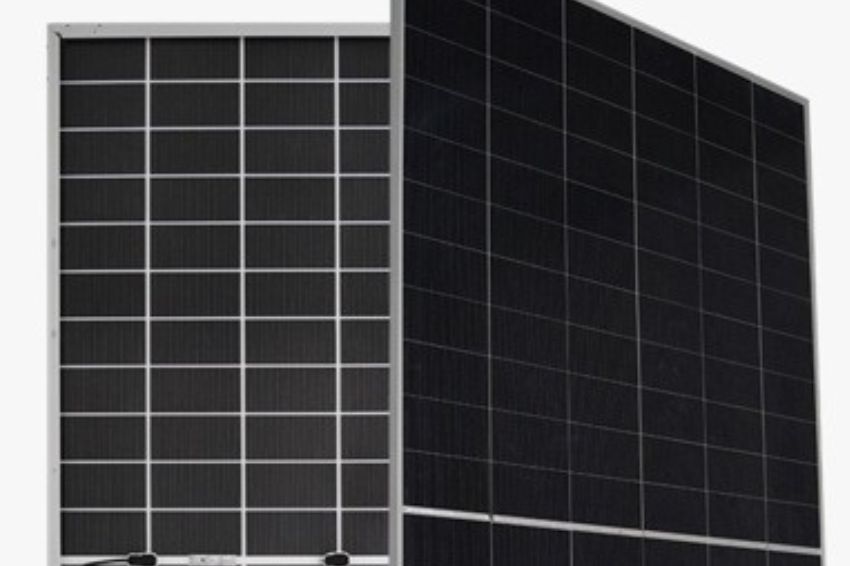
The solar energy market in Brazil is constantly evolving, and proof of this are the new solar cell manufacturing processes, with the aim of improving technologies and enhancing the performance of photovoltaic modules. For 2023, one of the technologies that promises to arrive with greater force in the national market is solar panels. Hjt (heterojunction). The subject was even the theme of the webinar of Canal Solar this Tuesday (24).
During the broadcast, Vanderleia Ferraz, product manager at Risen Energy for Latin America, explained details about the technology and its advantages in relation to other types of cells, and also announced the new line of HJT modules that the company has just launched for Brazil, called Hyper-Ion.
The event also featured the participation of Marcelo Villalva, professor of electrical engineering and researcher at Unicamp (State University of Campinas).
In addition to the webinar, Vanderleia also gave an interview to Canal Solar to talk about Risen Energy's news for the Brazilian photovoltaic market involving the arrival of the company's new solar panels.
What are the module’s differences?
Our modules are manufactured with Type-N, 210mm, ultra-thin cells. This allows us to obtain cells with high efficiency, in addition to manufacturing modules that generate lower BOS costs for the plants. HJT Risen modules have high power, ideal for utility scale, and high efficiency (22,5%). Energy generation per kW installed is up to 6% higher than other technologies.
Other advantages of our modules are: low temperature coefficient – the lowest on the Brazilian market and which makes it ideal for tropical climates like ours, especially in warmer regions – and the low linear degradation coefficient, which allows after 30 years the module still presents 90,75% of its maximum power, being 40% lower than the degradation coefficient of other technologies such as PERC and TOPCon.
Hyper-Ion modules also have a bifaciality coefficient of 85% with a tolerance of 10%. Furthermore, we offer this module in the option of a high-strength alloy steel structure – a special technology patented by Risen, which offers high resistance to corrosion and greater resistance to tears and specific pressures at the module's attachment points in relation to structures. aluminum. All of this translates into low carbon emissions for the entire life cycle of this module.
What are Risen’s objectives with the launch of this module?
Provide the Brazilian market with HJT technology, in which we have been market leaders outside of Brazil since 2020, so that our market can enjoy the advantages of this technology that achieves low cost per kWh with low carbon emissions.
Is it already available for sale?
Yes, we are already taking orders for Hyper-Ion HJT Risen through our distributors.
What impact does technology bring to the solar energy market?
We are opening an era of modules that seek lower costs per kWh generated in balance with low carbon emissions. They are modules produced with cutting-edge technology materials, resistant to the most extreme climatic conditions and that meet the market demand for great power and high efficiencies. We present the lowest temperature and linear degradation coefficients on the market, in addition to high efficiency, for a significant improvement in the return on investment in solar plants with HJT Risen modules.




Comments
Comments are moderated before publication.Comments should be respectful and contribute to a healthy debate. Offensive comments may be removed. The opinions expressed here are those of the authors and do not necessarily reflect the views of the author. Canal Solar.