
This content was originally published by Jornal da Unicamp, in issue 749. reporter It was written by journalist Liana Coll and is being reproduced by Canal Solar, with due credit to the author and the original publication.
In 2017, Unicamp Anthropology professor Artionka Capiberibe witnessed a situation that made her reflect on access to energy in the Kumenê village, located in the Uaçá Indigenous Land of the Palikur-Arukwayene people, in the municipality of Oiapoque (AP). On that occasion, a part of the only electricity generator had broken.
Besides the inconvenience for families, who were left in the dark, with restricted communication and no way to preserve food, another problem arose: the diesel fuel, stored on the banks of the river, posed a risk of contamination. At that moment, the professor understood that it was urgent to implement clean energy sources for the village, where she has been conducting research with the Palikur since 1996.
Five years later, a new challenge reinforced this need. In 2022, with the spread of an aggressive fungus in cassava crops in the region, the indigenous population had its main source of income affected.
These two situations inspired the Clean Energy, Sustainable Life project, focused on promoting school education, transmitting traditional practices, and generating income among the indigenous peoples of the Lower Oiapoque and Mapuera-Trombetas-Nhamundá regions.
Conceived by the professor in conjunction with two colleagues from Amazonian universities, the program was awarded funding in 2023 from the Amazônia +10 initiative.
Along with Capiberibe, the project is coordinated by professors Elissandra da Silva, from the Federal University of Amapá (Unifap), and Lilian Rebellato, from the Federal University of Western Pará (Ufopa). The initiative encompasses, in addition to the Uaçá Indigenous Territory, the Trombetas-Mapuera and Nhamundá-Trombetas Indigenous Territories, in the region known as Calha Norte, in Pará.
The demand for electricity, the Unicamp professor points out, has always been present. “The peoples of the lower Oiapoque River region have had this very intense contact with non-indigenous people for centuries. This means that they have adopted elements of non-indigenous culture, such as clothing and food.
"Indigenous peoples, as I like to say, reverse the image that is always produced in relation to them as peoples who are stuck in time and fixed in the past. They are contemporaries of non-indigenous society, so they use cell phones, go to school, come to university, and have needs for consumer goods, including electronic devices," he explains.
In the Legal Amazon region, 78 indigenous people live with an inadequate supply of electricity, according to a 2026 survey by the Uma Concertação pela Amazônia network, in partnership with the Institute of Energy and Environment (Iema).
Research shows that energy exclusion primarily affects traditional and indigenous communities, which often have to resort to precarious and polluting solutions, such as generators.
“Our villages are very dependent on fuel-powered generators, and we’ve had many problems with engine breakdowns. We’ve even gone a year without power,” says Lenise Batista, a resident of the Kumenê village and a master’s student in Cultural and Political Studies at Unifap. She is part of the project and highlights the importance of bringing clean energy to the community.
“We also need to think about the pollution of the territory itself. We have an issue with the transportation of fuel, which we pick up in the city of Oiapoque and take to the village. This brings risks of accidents, of spilling oil into the rivers. Artionka identified this problem, because in fact, in the villages we don't have adequate places to store diesel fuel,” he states.
Integration of knowledge
For Batista, one of the advantages of the initiative is its integration with the population. “The project listens to and seeks to hear from the people of the village and the community, [inviting people] to participate, bringing their opinions, because our people have a way of understanding energy and sustainable economics. So, bringing all this discussion has been very important for strengthening our community, our people, encouraging and valuing what we know.”
The project concludes in 2027. Throughout its development, the research team listened to and mapped the needs of indigenous people in Amapá and Pará, installed photovoltaic panels in the villages, and acquired work equipment that can contribute to the production of handicrafts.
In addition, it offered pottery workshops in Alter do Chão (PA) and workshops on reusing wood to make bio-jewelry in the Kumenê village. The initiative also included a workshop at Unicamp and two expeditions of Palikur, Karipuna, and Galibi Marworno indigenous people to Gothenburg, Sweden, to help catalog artifacts from these ethnic groups that were brought to the country in the early 20th century.
The repatriation will be done digitally: access to the artifacts will be restored through the digitization of documents and the production of replicas using 3D printers. The decision not to physically bring the objects was due to the lack of a suitable place to store them.
Keyla Palikur, a visual artist from the Palikur-Arukwayene people and a member of the Waça'Wará indigenous artists' collective, led a workshop on reusing wood to make bio-jewelry alongside master craftswoman and PhD in Environment and Society from Unicamp, Marília Giesbrecht.
"The project team held a very important workshop, showing the master craftswomen and women who work making necklaces and earrings that there is another way to obtain materials within the territory, without having to spend money on beads, which are an expensive material," she recalls.
The wood used, he explains, comes mainly from the leftover material from the making of benches by Palikur masters, a traditional activity among the ethnic group. From this material, he believes, a new way of producing earrings and necklaces is developed, which carry the history of the bench-making tradition.
"They carry a memory about the cosmology, about the narratives, about the stories that the shamans and our elders told about the moment when the ritual was performed." tore [sacred ritual] of our people,” he observes.
Furthermore, these pieces promote a new way of generating income by valuing Palikur culture and memory. “The necklaces and earrings being made are new ways to create and tell a little about our people and our culture in a contemporary way, because we are also here in the present, having access to technologies that streamline the making and production of a product, without losing the connection with our people. We are adapting learnings and technologies, but strengthening what is within the village,” says Keyla Palikur.
In the workshop, participants were taught how to handle equipment that facilitates the preparation of materials, such as screwdrivers and sanders. The electrical energy supplied by the photovoltaic kit will allow their use. As part of the project, a small workshop was also built. “Inside the village we now have a small house where everyone can go in to share, learn how to use these tools, and start producing. And there, the kit of panels to power the machines also provides internet access.”
Professor Artionka Capiberibe emphasizes the practical nature of the proposals linked to Amazônia +10, which bring immediate impacts through the exchange of knowledge. “We have managed to achieve practical results, especially with the ceramics and reclaimed wood workshops and with the installation of solar panels, which is not a random installation. They are linked to the workshops, to the workplaces, to handle raw materials and the production of handicrafts and artifacts that are of interest to them and that can benefit them economically.”
The Clean Energy, Sustainable Life project has three pillars: sustainable electricity generation, promotion of production chains for artifacts, and the relationship between indigenous and non-indigenous knowledge. Activities began with a diagnosis of the energy needs of 12 indigenous villages belonging to the Katuena, Xereu, Wai Wai, Tunayana, Sikiyana, Hixkaryana, Karafawyana, and Waimiri Atroari ethnic groups in the Calha Norte region.
The survey was conducted by a team from the Faculty of Electrical and Computer Engineering (FEEC) at Unicamp, coordinated by Professor Luiz Carlos Pereira da Silva, with support from the Paulista Center for Energy Transition Studies (CPTEn). The same survey was carried out in nine villages in the lower Oiapoque River region.
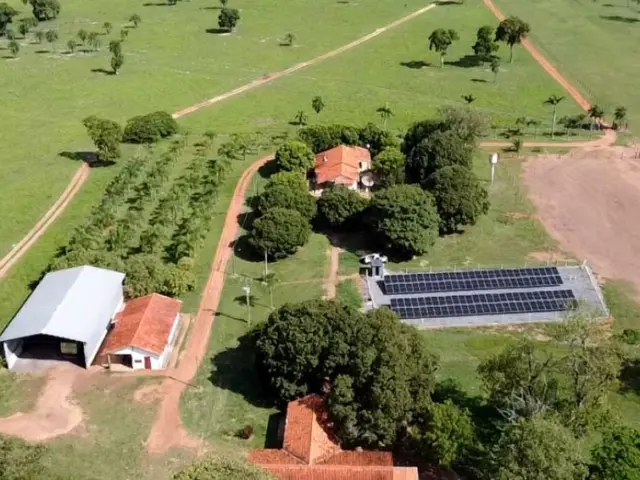
During the mapping process, data was collected on individual, family, and collective energy consumption. In this case, the focus was on energy use in production chains, such as handicrafts. After consulting with the communities, it was decided that community workshops would be the destination for the photovoltaic panel kits, which generate clean energy and are less susceptible to unforeseen events, such as those that occur with a generator.
In June of this year, two villages already received the kits: Kumenê and Mawihgi, both in the Uaçá Indigenous Territory. Installation in the village of Mapuera, in the Calha Norte region, is scheduled for the end of 2026.
Gabriel Baena Chêne, a doctoral student in Anthropology at Unicamp and a member of the project, accompanied and documented the delivery of the kits, as well as the... workshop The workshops, held at Unicamp in 2024, were a highlight for the anthropologist, who noted the importance of knowledge exchange in the initiative.
"This exchange between indigenous and non-indigenous researchers is interesting, as it doesn't just position indigenous knowledge as traditional knowledge, but also as knowledge that produces science," she observes.
Baena, responsible for the project's visual identity, has also been documenting, through photographs, the progress of activities related to Clean Energy, Sustainable Life. Several exhibitions have already been held featuring her photographs, which illustrate this report.
Amazon +10
The Amazon +10 initiative arose from a collaboration between the National Council of State Foundations for Research Support (Confap), the National Council of Secretaries for Science, Technology and Innovation (Consecti), and the National Council for Scientific and Technological Development (CNPq). The call for proposals included projects from Research Support Foundations focused on sustainable and inclusive development in the region. Each proposal brings together two foundations from the Amazon region and another signatory foundation.
all the content of Canal Solar is protected by copyright law, and partial or total reproduction of this site in any medium is expressly prohibited. If you are interested in collaborating or reusing part of our material, please contact us by email: redacao@canalsolar.com.br.


Comments
Comments are moderated before publication.Comments should be respectful and contribute to a healthy debate. Offensive comments may be removed. The opinions expressed here are those of the authors and do not necessarily reflect the views of the author. Canal Solar.