

Solar energy has an important role to play in restoring the population of bees and pollinating insects, according to a study carried out by the United States government's Research Center, ANL (Argonne National Laboratory).
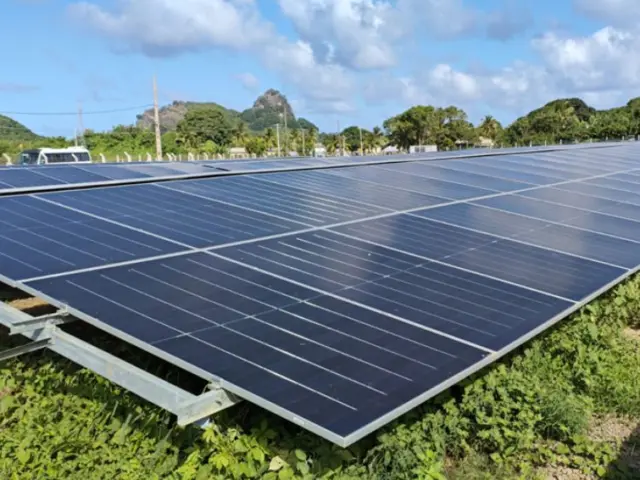
The research was conducted at two solar installations in the state of Minnesota where it was found that the combination of solar panels and agriculture, known as agrovoltaica, bring benefits to the environment, energy generation and agricultural production.
Due to the shaded and pesticide-free spaces, data shows that the installation of panels creates favorable habitats for bees, butterflies and other insects that are responsible for 80% of food pollination worldwide.
The areas analyzed had a threefold increase in the insect population, mainly bees, in addition to greater plant biodiversity, also proving effective for the natural control of pests, as insects help to maintain the natural balance and reduce the need for the use of chemical products on crops.
According to Lee Walston, an ecologist and lead author of the study, “If properly located, habitat-friendly solar energy can protect pollinators and improve pollination services in agricultural areas.”
The study also states that, in five years, it is possible to triple the number of insects worldwide.
Bee recovery in Brazil
EDP, a Portuguese energy company, is breeding native bees at one of its solar plants in Roseira (SP), in the interior of the state. The plant supplies around 160 families, with an installed capacity of 75 kW, in the Favela dos Sonhos, in Ferraz de Vasconcelos (SP).
The BeeVolt project was launched on October 3rd this year in celebration of National Bee Preservation Day. Carried out in partnership with Bee2Be, aims to unite energy generation and agriculture to protect the region's biodiversity, as native bees are threatened with extinction.
Dominic Schmal, EDP's ESG director in South America, says the company is focused on leading a fair energy transition. To do this, in addition to investing in renewable energy, it is necessary to involve and benefit communities and contribute to preserving the biodiversity of the regions where the projects are installed.
“Using a solar plant, whose renewable energy is already directed to the Favela dos Sonhos community, to produce and preserve a native species of bee, fundamental to the balance of ecosystems, is a practical and real example of a fair energy transition,” explains Schmal.

Beekeeping
Native bees are raised by installing a meliponary that houses the bees. There are already 20 swarms that should expand in the coming months, reaching a total of 100 swarms.
Vitor Costa, founder of Bee2B, says that bees are essential for environmental restoration. “In times of climate change and environmental emergencies, their role becomes even more critical. These pollinators ensure the regeneration of native plants and help restore the balance of ecosystems.”
In addition, the project raises awareness, provides environmental education and generates income. Partnerships with a regional social institution are planned, such as the donation of meliponaries and community training, from which it is possible to generate income through the production of products such as honey.
“By installing bee colonies in solar power plants, a positive impact is created on the surrounding area, promoting local biodiversity. In addition, the project generates social benefits by involving and empowering local communities, creating income opportunities and greater environmental awareness,” explains Costa.
The action is completely safe, since native bees of the Mandaçaia species (Melipona quadrifasciata anthidioides) do not have stingers. They measure approximately 1 cm and are black with four yellow stripes that run across and are interrupted in the center of the abdomen. This species pollinates flora species such as Pau-jacaré, Capixingui, Cereja-do-mato and Candeia da Serra, among others. They produce a very aromatic honey, with a bittersweet flavor and fruity touches.

all the content of Canal Solar is protected by copyright law, and partial or total reproduction of this site in any medium is expressly prohibited. If you are interested in collaborating or reusing part of our material, please contact us by email: redacao@canalsolar.com.br.


Comments
Comments are moderated before publication.Comments should be respectful and contribute to a healthy debate. Offensive comments may be removed. The opinions expressed here are those of the authors and do not necessarily reflect the views of the author. Canal Solar.