
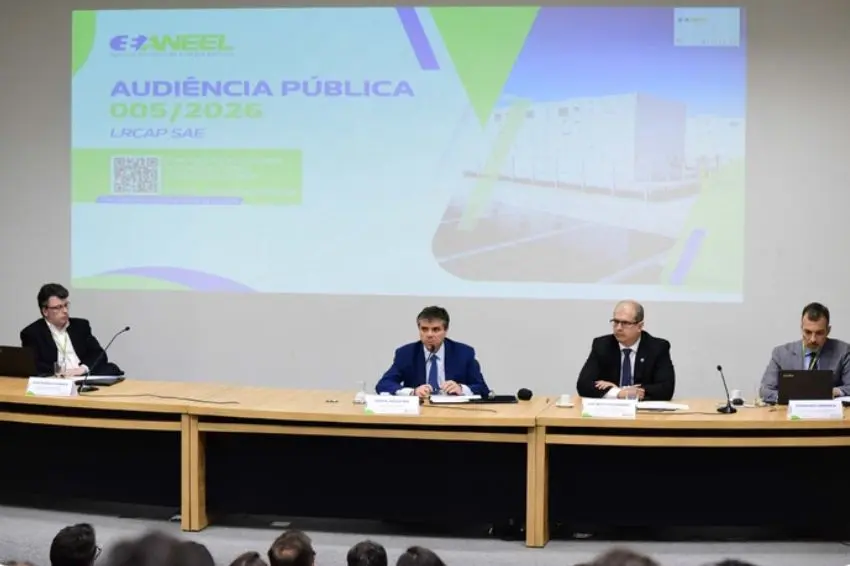
A ANEEL (National Electric Energy Agency) held this Tuesday (1st), in Brasília (DF), Public Hearing No. 005/2026, one of the preparatory steps for the first capacity reserve auctions focused exclusively on large-scale battery energy storage systems in Brazil.
The meeting brought together approximately 70 people in person, and another 200 followed the live stream online. In total, eleven speakers presented during the session, which was chaired by director Gentil Nogueira.
The hearing took place amid the electricity sector's anticipation regarding the two auctions, scheduled for December 2nd and 4th, but also amid uncertainty surrounding who will be responsible for paying for the contracted service.
The discussion gained momentum after the proposal from the technical area of ANEEL It began considering sharing the burden among the generators, while associations advocate for a broader division of costs.
The issue has fueled predictions of postponement and even legal action. Some stakeholders consider the risk of schedule changes high given the uncertainty surrounding the cost allocation and the dissatisfaction of some generation sectors, a possibility rejected yesterday by the regulatory body.
Point of contention
According to lawyer Diogo Nebias, partner at Panucci, Severo e Nebias Advogados, the proximity of the auctions and the high number of interested parties reinforce the urgency of putting the projects into operation, especially given the curtailment problem affecting renewable energy generators.
At the same time, he considers the uncertainty about who will bear the costs problematic, due to its effects on financial modeling, credit risk, and the predictability of returns.
Lawyer Isabela Ramagem, partner at Caputo, Bastos e Serra Advogados, also draws attention to the need to preserve legal certainty in a market that is still unprecedented in the country.
Among his contributions is the advocacy for greater flexibility in the rules for consortia and economic groups, including the use of financial guarantees in place of certain corporate restrictions.
Ramagem also questions the possibility that the auction documents will solidify the current legal rule that exclusively assigns the cost of storage systems to the generators. According to her, given legislative proposals that could alter this model, the auction documents should allow for future adaptations.
The lawyer also argues that the contracting of capacity, through CRCAP, should not be conditional on the prior formalization of COPCAP, an instrument associated with the collection of the charge.
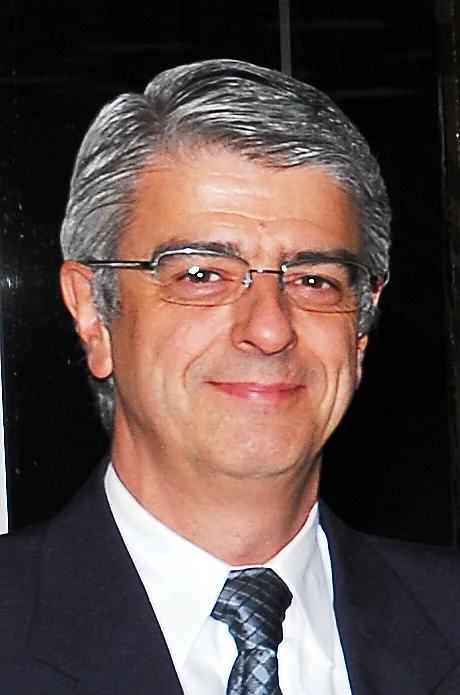
According to Markus Vlasits, president of ABSAE (Brazilian Association of Storage Solutions), the hearing was a positive experience and, overall, constructive.
For him, the draft of the public notice and the contract model presented by ANEEL They have already reached the public consultation stage with a high degree of maturity, so the association's contributions are mainly focused on specific improvements.
The main concern of ABSAE, he said, is to clearly separate, from a legal and regulatory standpoint, the CRCAP, which formalizes the contracting of the capacity reservation service, from the COPCAP, an instrument related to the collection of the charge to cover the cost of this service.
In Vlasits' view, although the two are part of the same arrangement, they are distinct contracts with different functions and parties. Therefore, he considers it risky for the tender to refer to COPCAP while the contract itself... ANEEL It is still conducting a specific regulatory process to define the cost.
The association also requested clarification regarding the continuity of the network access process for the winning projects.
Vlasits mentions, at this point, the need to make it clearer how the transition from the bidding phase to the conclusion of the access season will take place, including the access assessment and the signing of the CUST (Contract for the Access of the State of São Paulo), preventing the winners from being subjected to a new competition later on.
Vlasits opposes the postponement. According to him, the uncertainty surrounding the assignment is complex and needs to be resolved, but it should not serve as justification for postponing the bidding process.
ABSAE understands that the electrical system urgently needs power and that the entrepreneurs have already fulfilled the registration requirements to participate in the bidding process.
He also recalls that, in the first capacity reserve auction, held in 2021, there were also issues related to the allocation still under discussion, without this preventing the auction from taking place.
Schedule and workshop
The president of the Permanent Auction Commission of ANEELIvo Nazareno detailed the next steps, noting that contributions to Public Consultations No. 22 and 23/2026 may be submitted until September 14th.
Before the final approval of the tender, the agency intends to hold a workshop on October 14th specifically for prospective storage operators, to explain registration, technical, economic-legal and financial qualifications, and other procedures of the bidding process.
Nazareno predicts that the public notices will be approved on October 27th, followed by their publication in the Official Gazette of the Union two days later.
Registration is scheduled to be open until November 18th for the auction on December 2nd and until November 20th for the auction on December 4th. CCEE will also provide training on the auction procedures.
Gentil Nogueira emphasized that the agency is working to maintain the schedule. According to the reporting director, postponement would only be considered if any legislative change regarding the charge occurred very close to the auctions.
The two tenders will contract for power availability through autonomous storage systems. The first, for National Storage, will require batteries manufactured in Brazil; the second, for General Storage, will not have this requirement. Both will have 15-year contracts, with supply beginning on August 1, 2028.
Who participated
Among the entities and companies registered to make presentations at the hearing were ABSAE, Comerc, Atlas, Instituto Internacional Arayara, Echoenergia, Instituto Nacional de Energia Limpa (INEL), Absolar (Brazilian Photovoltaic Solar Energy Association), Abradee (Brazilian Association of Electricity Distributors), Apine (Brazilian Association of Independent Electricity Producers), and Newave Energia.
all the content of Canal Solar is protected by copyright law, and partial or total reproduction of this site in any medium is expressly prohibited. If you are interested in collaborating or reusing part of our material, please contact us by email: redacao@canalsolar.com.br.
Comments
Comments are moderated before publication.Comments should be respectful and contribute to a healthy debate. Offensive comments may be removed. The opinions expressed here are those of the authors and do not necessarily reflect the views of the author. Canal Solar.