
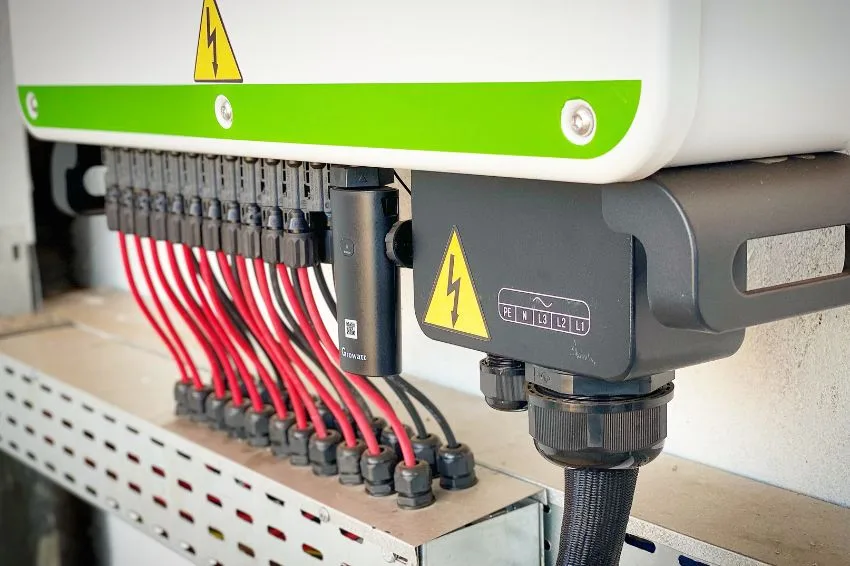
With the expansion of solar energy in Brazil, the safety of photovoltaic installations is becoming increasingly important for the sector's development. Preventing electrical faults, shocks, and fires requires attention to the selection and application of protection devices, making it essential for integrators to be familiar with the available technologies and their respective functions.
Among the main safety mechanisms are the rapid shutdown system (RSD), arc flash protection (AFCI), and surge protection devices (SPDs). Although they operate in different ways, these technologies contribute to reducing risks, protecting equipment, and increasing the reliability of installations.
The choice of devices, however, must take into account the characteristics of each project, the risks involved, and the requirements established by applicable technical standards.
Learn about the main photovoltaic security technologies.
RSD (Quick Shutdown)
Rapid Shutdown (RSD) is a safety function responsible for quickly reducing the electrical voltage of photovoltaic circuits in emergency situations, such as fires, or during technical interventions.
This feature is especially important for protecting firefighters and maintenance professionals, since the photovoltaic modules continue to produce electricity as long as they receive sunlight, even after the inverter is switched off.
By reducing the voltage in the circuits covered by the protection system, the RSD (Resistant Voltage Switch) decreases the risk of electric shock and contributes to making interventions safer.
AFCI (Arc Flash Protection)
The AFCI (Arc Fault Circuit InterrupterThis technology was developed to identify specific arc faults in the DC (direct current) circuits of solar systems and activate protection mechanisms capable of interrupting the affected circuit.
These failures can occur due to improper connections, damaged cables, or installation problems, causing overheating and increasing the risk of fires.
In this way, the technology helps identify dangerous electrical conditions, contributing to reducing the possibility of accidents and damage to equipment.
SPD (Surge Protection Device)
The surge protection device (SPD) is used to protect photovoltaic equipment against transient overvoltages, which can be caused by indirect lightning strikes or switching operations on the electrical grid.
Its main function is to limit these overvoltages, reducing the possibility of damage to inverters and other installation components.
Using properly sized devices helps preserve the integrity of equipment and increase the reliability of the electrical system.
Security depends on a combination of technologies and best practices.
Although they perform different functions, RSD, AFCI, and DPS are complementary protection mechanisms. Their effectiveness depends not only on the presence of the devices, but also on correct sizing, installation quality, and periodic maintenance.
With the growth of the Brazilian photovoltaic market, manufacturers, integrators, and consumers need to pay closer attention to the safety measures adopted in their projects.
In this scenario, the proper application of protection technologies, combined with compliance with technical standards and good maintenance practices, is fundamental to preventing accidents and ensuring the reliability of systems throughout their service life.
Fire Department Regulations
The adoption of protection technologies is also gaining ground in state regulations. Fire departments in different states have already established specific requirements for photovoltaic installations, including, in certain situations, the mandatory use of solar radiation protection systems. The rules vary according to the state and the characteristics of each installation.
The topic was discussed on the Papo Solar Podcast, from Canal Solar, last Tuesday (03), in a conversation with Maurício Siqueira, Product Manager at SolarEdge, and Guilherme Ozomo, partner and director at Dynamis Importadora, about safety requirements and their impacts on professionals in the sector.
Check out the full episode below:
all the content of Canal Solar is protected by copyright law, and partial or total reproduction of this site in any medium is expressly prohibited. If you are interested in collaborating or reusing part of our material, please contact us by email: redacao@canalsolar.com.br.

Comments
Comments are moderated before publication.Comments should be respectful and contribute to a healthy debate. Offensive comments may be removed. The opinions expressed here are those of the authors and do not necessarily reflect the views of the author. Canal Solar.