
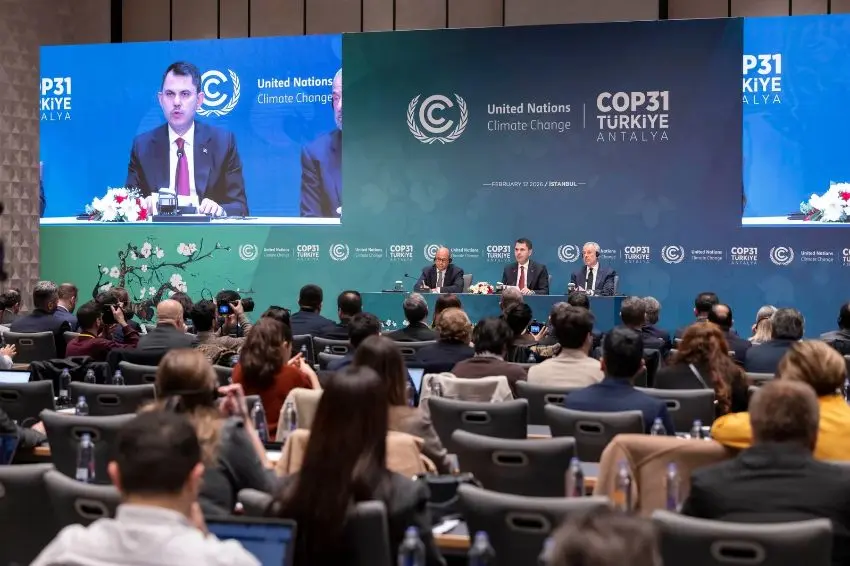
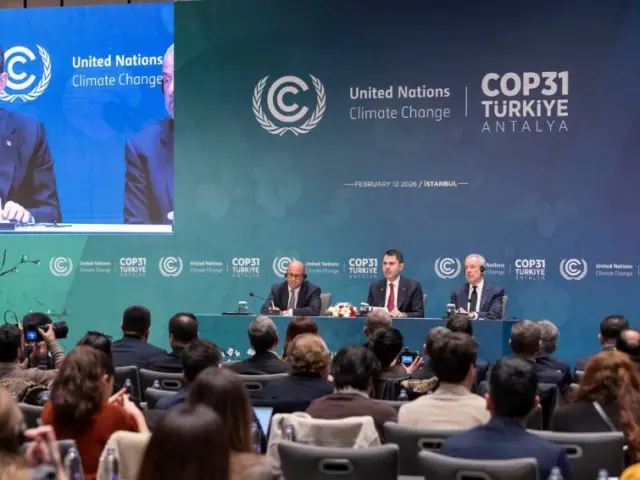
The announcement of an international coalition to finance clean electrification, on November 10th at COP31 in Antalya, has placed project preparation at the forefront of the energy transition agenda. The initiative brings together governments, development banks, and investor representatives, with activities planned until COP33 in 2028.
Its objective is to support emerging and developing countries in structuring projects, reducing risks, and overcoming barriers to investment. In the same context, Brazil and the United Kingdom announced the start of the first call for proposals under a mechanism for preparing industrial decarbonization projects.
The initiative is part of the financial mission of the Global Clean Energy Alliance and operates in coordination with the Brazilian Platform for Investments for Ecological and Climate Transformation (BIP). Its operation, however, is separate from the platform's formal governance and evaluation processes.
The Brazilian partnership's action plan involves the Ministries of Development, Industry, Trade and Services, Mines and Energy, and Finance, in coordination with national institutions and international organizations.
This includes collaboration with the United Nations Industrial Development Organization and technical assistance from the World Bank. In the Brazilian preparation mechanism, the Ministry of Development, Industry and Foreign Trade (MDIC) leads the government decisions, with contributions from the Ministry of Finance and the Ministry of Mines and Energy (MME).
The relevance of this architecture lies in addressing a concrete challenge. A project may present competitive technology, environmental benefits, and potential demand, yet still lack the necessary conditions to secure funding.
Incomplete studies, unpredictable revenue streams, unclear connections, and poorly distributed contractual risks compromise credit assessment and investor decisions. Brazil needs to improve the quality of projects presented to investors and financial institutions.
This requires sound engineering, a verifiable budget, a realistic timeline, licensing compliant with each stage, and contracts capable of sustaining cash flow. Preparation needs to identify who assumes each risk, for how long, and with what instruments to manage it.
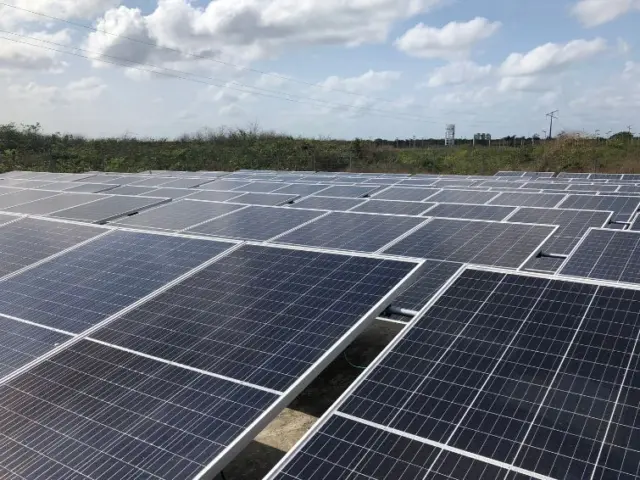
For the solar sector, the discussion goes beyond expanding installed capacity. The economic value of generation also depends on grid access conditions, consumption patterns, and the ability to deliver energy when needed.
Projects that consider energy storage, flexibility, and electrification of production processes can expand the possibilities for energy use. Each combination, however, requires its own technical and economic evaluation.
A responsible financial analysis should test scenarios for price, production, generation constraints, connection costs, interest rates, and, where applicable, currency exposure.
Batteries need to be sized for a specific application and revenue stream. In industry, replacing fuels with electricity must consider operational continuity, process adaptations, and the total cost of the solution over its lifespan.
The Brazilian mechanism supports project preparation without providing capital for construction or operation and without guaranteeing approval or financing. Its focus includes cement, iron and steel, aluminum, and chemical segments, according to applicable routes and conditions.
The potential participation of solar solutions, distributed generation, or storage needs to be analyzed in light of these criteria. The sector should verify its compliance with the call for proposals documents before declaring eligibility.
Implementation should adopt public criteria, clear responsibilities, and indicators that allow for monitoring the progress of projects. Performance should be measured by the quality of completed studies, the risks effectively addressed, and the investments made possible.
For entrepreneurs, transparency regarding steps, requirements, and deadlines reduces the cost of preparing a proposal and helps avoid unfounded expectations.
Organizing information and developing projects should precede the search for financial support. Associations, companies, research institutions, and financial agents can contribute to improving this preparation.
International cooperation needs to be evaluated by its results and its contribution to national priorities, with transparency in the selection and use of resources. Implementation must combine technical discipline, institutional accountability, and verifiable benefits for the electricity system and for society.
The opinions and information expressed are the sole responsibility of the author and do not necessarily represent the official position of the author. Canal Solar.
Comments
Comments are moderated before publication.Comments should be respectful and contribute to a healthy debate. Offensive comments may be removed. The opinions expressed here are those of the authors and do not necessarily reflect the views of the author. Canal Solar.