
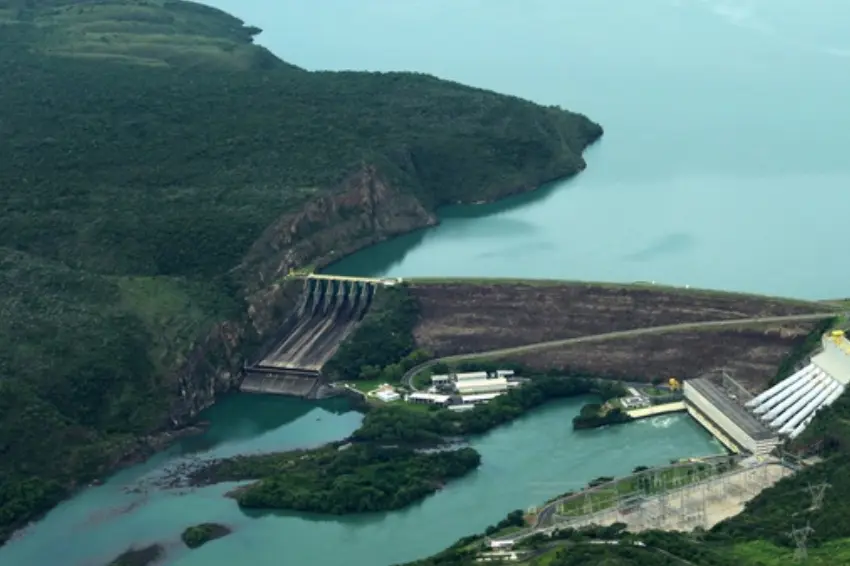
EPE (Energy Research Company) will launch a call in November to identify reversible hydroelectric power plant projects under development in Brazil and gather information to support the design of contracts for this technology in the country.
Before that, in October, the state-owned company intends to publish instructions for registering the projects. The projects must present information on power, storage capacity, implementation and operation costs, schedule, grid access, stage of studies, land tenure status, and environmental licensing.
The initiative is part of the work plan developed by EPE to meet the CNPE Resolution No. 8/2026, which established guidelines for studies and future contracting, through auctions or other competitive mechanisms, of services provided by hydraulic storage systems.
A Law 15.269 / 2025 EPE's responsibilities also included the development of studies and projects related to this type of storage.
The schedule was presented this Tuesday (15) by Gustavo Ponte, Superintendent of Energy Generation at EPE, during a seminar promoted by GESEL/UFRJ on hydraulic storage systems.
EPE wants to know what projects exist in the country.
The November call will, in practice, serve as a market sounding before the definition of any eventual competitive process.
The intention is to identify how many projects are under development, their stage of maturity, technical characteristics, risks, and costs. This information will be used to calibrate evaluation criteria and help in establishing the rules for future contracting.
EPE emphasizes, however, that registration does not represent eligibility for future auctions. The call for proposals will be consultative and informative in nature, without evaluating or classifying projects for participation in any eventual contract.
“The call for projects is a fundamental step in understanding sectoral energy planning, determining if there are projects under development in the country in a volume compatible with the growing demand for the National Interconnected System, as outlined in the plans developed by EPE, justifying the granting authority's decision to conduct a competitive procedure for contracting these resources,” stated Thiago Prado, president of EPE.
What will be required of the projects?
The instructions scheduled for October were divided into three areas. The first will assess the degree of maturity, including the project stage, studies carried out, the granting process, land availability, and socio-environmental issues.
The second will encompass technical characteristics, such as plant design and layout, location, power output, storage capacity, integration into the SIN (National Interconnected System), performance, and operational limitations.
The third section will address costs and timelines, including Capex, Opex, schedule, key milestones, and critical paths for implementation.
The EPE presentation also previews some of the documents required for registration: project and study report, drawings, ARTs (Technical Responsibility Certificates), data sheet, environmental documents, water use permit, environmental license, documentation for access to the Basic Network, and proof of the right to use the property.
The concern regarding the level of maturity is related to the very characteristics of reversible power plants. According to EPE, there is a wide variety of possible configurations, a strong influence from local conditions, and the possibility of large-scale projects, whose delay or non-completion can have significant impacts on expansion planning.
Why have reversible lanes come into focus?
Reversible hydroelectric power plants operate with two reservoirs at different levels. During periods of lower demand or higher energy availability, water can be pumped into the upper reservoir. When the system needs power, the flow is reversed and the water passes through the turbines to generate electricity.
In practice, the structure allows energy to be stored in the form of gravitational potential energy and returned to the system later.
According to EPE, this type of storage can meet four growing needs of the SIN (National Interconnected System): power availability, flexibility, integration of variable renewable sources, and resilience.
Among the attributes mentioned are rapid response, ability to shift energy over time, reduction of operational constraints, voltage and frequency control, and self-restoration services.
The discussion is taking place at a time when energy storage is gaining importance in planning the expansion of the electrical system. In the case of batteries, the 2026 LRCAPs (Local Energy Reduction and Potential Applications) for Energy Storage received 6.091 projects, totaling 296,8 GW of registered capacity, according to EPE (Energy Research Company).
Reversible power plants, however, have different implementation, operation, and investment characteristics compared to batteries, and therefore are being addressed in a specific process.
Licensing is included in the planning process.
Another point highlighted by EPE is the environmental treatment of the projects. Reversible power plants are considered potentially polluting projects or capable of causing environmental degradation and, therefore, are subject to the licensing process.
Law No. 15.269/2025 included hydroelectric power plants (UHRs) among the projects eligible for Special Environmental Licensing (LAE) due to the strategic importance attributed to the technology for energy security and the stability of the National Interconnected System (SIN). The presentation emphasizes, however, that Environmental Impact Assessments (EIA/RIMA) remain requirements for the issuance of the LAE.
According to EPE, the different construction and location configurations of the plants can result in distinct socio-environmental impacts. Therefore, the state-owned company argues that environmental analysis and dialogue with the responsible agencies should begin during the evaluation of location alternatives and the design phase of the projects.
Next stages
The call for projects will open in November 2026. Interested parties should request access via email at aege@epe.gov.br, where they will receive a dedicated link to upload their documentation.
The module dedicated to reversible power plants within the AEGE system is still under development and is scheduled for completion in January 2027.
The work plan also includes coordination between EPE and MME and ANEEL, defining minimum technical criteria and requirements for future auctions, updating cost bases and economic-financial parameters, and contributing to a future ordinance with contracting guidelines.
Click here to access EPE's presentation at the seminar..
all the content of Canal Solar is protected by copyright law, and partial or total reproduction of this site in any medium is expressly prohibited. If you are interested in collaborating or reusing part of our material, please contact us by email: redacao@canalsolar.com.br.

Comments
Comments are moderated before publication.Comments should be respectful and contribute to a healthy debate. Offensive comments may be removed. The opinions expressed here are those of the authors and do not necessarily reflect the views of the author. Canal Solar.