
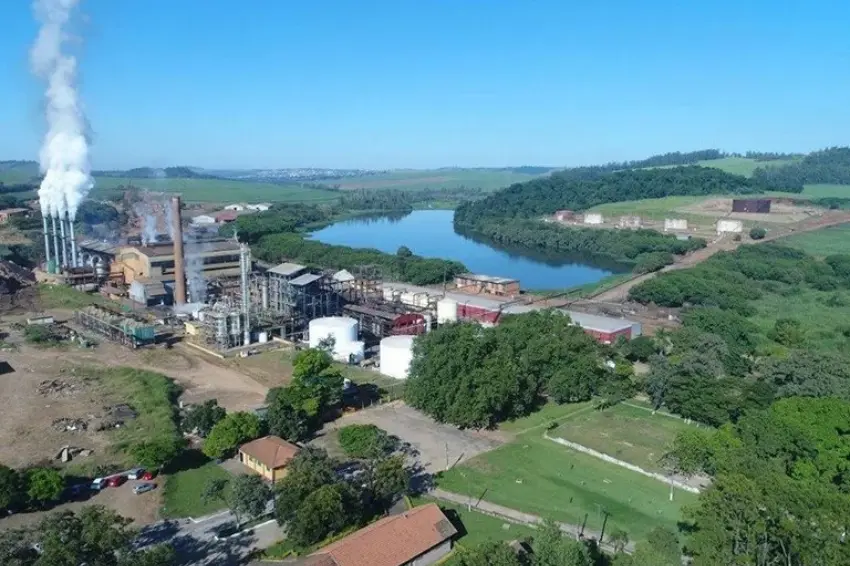
The Jacarezinho Power Plant, located in the municipality of the same name in northern Paraná, has put a new energy cogeneration unit into operation after receiving an investment of R$ 120 million from the Maringá Group, owner of the project.
Dedicated to the production of sugar and ethanol, the plant is now expanding its production capacity using sugarcane bagasse.
With the start of operations at the so-called Maringá Energia II plant, the installed generation capacity of the power plant doubled to 50 MW, of which 35 MW can be allocated for commercialization.
Before the expansion, the unit exported 60.815 MWh of electricity per year. The expectation is to reach 150 MWh annually, a volume almost 2,5 times greater. The expansion should add approximately R$ 27 million to annual revenue.
How does this energy generation process work?
Electricity is produced from the bagasse left over after sugarcane is milled. Instead of being discarded, the residue is used as biomass to fuel a boiler.
Burning bagasse heats water and produces high-pressure steam. This steam drives a turbine connected to a generator, which is responsible for producing electricity.
Some of the energy and steam can be used in the plant's own industrial processes, while the surplus electricity is made available for sale.
The generation principle is similar to that of other power plants that use turbines to convert mechanical energy into electricity. In this case, however, the turbine's movement is caused by steam produced from biomass.
Sugar and ethanol production
Currently, the Jacarezinho Plant processes approximately 2,5 million tons of sugarcane per year, sourced from roughly 30 hectares and a network of about 400 partner producers.
For the 2026/2027 harvest, the expectation is to produce 200 tons of sugar and 85 million liters of ethanol. In the 2023/2024 harvest, ethanol production reached approximately 83 million liters.
With the expansion of cogeneration, the same raw material goes through different stages of utilization: the sugarcane juice is used to manufacture sugar and ethanol, while the bagasse resulting from milling is used to produce steam and electricity.
The project started in 2021.
The first phase of the generation project became operational in 2021, when the Maringá Group also began operating in the generation and commercialization of electricity.
With the start of operations at Maringá Energia II, the unit's installed generation capacity has been doubled, also increasing the volume of energy available for sale.
all the content of Canal Solar is protected by copyright law, and partial or total reproduction of this site in any medium is expressly prohibited. If you are interested in collaborating or reusing part of our material, please contact us by email: redacao@canalsolar.com.br.


Comments
Comments are moderated before publication.Comments should be respectful and contribute to a healthy debate. Offensive comments may be removed. The opinions expressed here are those of the authors and do not necessarily reflect the views of the author. Canal Solar.