
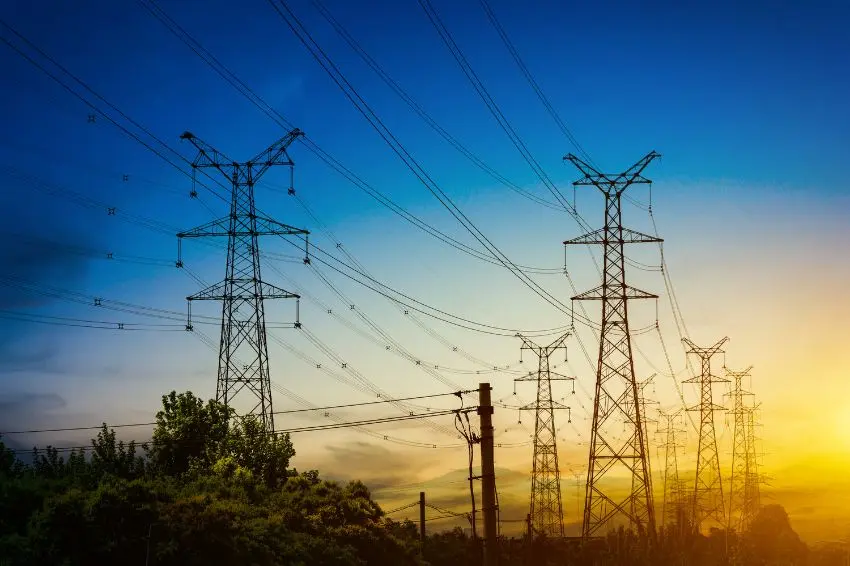
Brazil is unable to transform its predominantly renewable energy matrix into a competitive advantage for the economy.
The assessment consists of a study by CLP (Center for Public Leadership)which attributes the high final price of electricity to the accumulation of charges, subsidies, taxes, losses and costs resulting from legal and regulatory decisions.
According to the survey, the residential price of electricity in Brazil reached US$0,179 per kWh in December 2025.
In nominal terms, the value was close to the world average and below countries like Germany, France, and Japan. However, it exceeded the prices observed in economies such as China, India, and Canada.
The difference becomes more evident when the price is adjusted for purchasing power parity, an indicator that considers the cost of living and the purchasing power of each country.
Based on the average used in the study, the Brazilian residential tariff went from US$0,164 per kWh to the equivalent of US$0,357 per kWh after this adjustment. For businesses, the value increased from US$0,133 to approximately US$0,289 per kWh.
According to CLP's assessment, the results show that electricity weighs more heavily on consumers' budgets and Brazilian companies' costs than the nominal comparison suggests.
This scenario also reduces the country's ability to attract investment and compete with economies that can convert their energy resources or scale into lower final prices.
Energy accounts for less than a third of the bill.
The study highlights the contrast between generation costs and the amount actually charged to consumers. In the A-1, A-2, and A-3 Existing Energy Auctions held in 2025, average prices ranged between R$ 205/MWh and R$ 213/MWh.
However, in the electricity bill, the energy itself accounted for only 30,4% of the amount paid in 2025. Distribution represented 26,1%; taxes, 18,1%; sector charges, 15,2%; and transmission, 10,1%.
Thus, almost 70% of the bill was related to components other than the purchase of energy. For CLP, this composition dilutes the advantage provided by the high participation of renewable and low-cost sources in the Brazilian energy matrix.
Energy losses also put pressure on tariffs. Data from ANEEL (National Electric Energy Agency) cited in the survey indicate that technical losses account for 7,2% of the energy injected into the grids.
When non-technical losses, such as theft, fraud, and measurement errors, are also taken into account, the percentage reaches 14,3% of the distributed energy.
Another factor highlighted by the study is the growth of the CDE (Energy Development Account), a fund that pools resources allocated to various public policies and subsidies in the electricity sector.
In 2025, the CDE budget reached R$ 49,2 billion, of which R$ 46,8 billion was paid by consumers. For 2026, the proposal presented by ANEEL This raised the total value to R$ 52,7 billion, with R$ 47,8 billion covered directly by tariffs.
CLP advocates for public policies not directly related to energy supply to be evaluated with greater transparency and, when possible, funded by the Federal Budget.
Reforms could reduce the relative cost of electricity.
CLP calculated different scenarios to estimate how changes in tariff components would affect residential prices adjusted for purchasing power parity. The results are sensitivity exercises and do not represent projections for tariffs.
In a scenario that considers only a reform of the CDE (Energy Development Fund) and subsidies, the indicator would fall from US$ 0,357 to US$ 0,322 per kWh. With the reduction of charges and part of the losses, it would fall to US$ 0,290 per kWh.
A broader reform, without tax changes, could bring the value down to US$0,275 per kWh. The most comprehensive scenario, which includes halving the estimated tax burden, would lower the indicator to US$0,241 per kWh.
The calculations do not take into account the investments needed to implement the measures. Therefore, according to the study itself, the results only indicate the order of magnitude of the possible effects, and not a future tariff or the net gain resulting from the reforms.
For the central region, Brazil has a generation base capable of offering competitive electricity, but some of this advantage is lost before it reaches consumers.
all the content of Canal Solar is protected by copyright law, and partial or total reproduction of this site in any medium is expressly prohibited. If you are interested in collaborating or reusing part of our material, please contact us by email: redacao@canalsolar.com.br.


Comments
Comments are moderated before publication.Comments should be respectful and contribute to a healthy debate. Offensive comments may be removed. The opinions expressed here are those of the authors and do not necessarily reflect the views of the author. Canal Solar.