

Updated on February 16, 2026
In my solar energy courses at UNICAMP, I always repeat to students that any adaptation to adjust the tilt angle or orientation of photovoltaic modules installed on roofs, besides being unnecessary, can be dangerous.
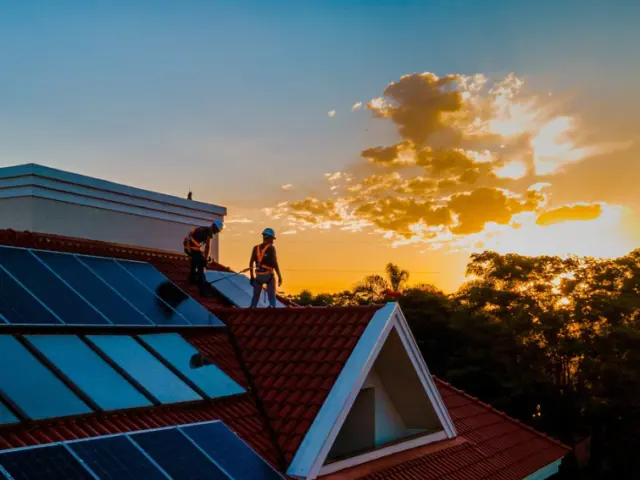
The best approach is always to install the modules directly on the roof's slope. This recommendation applies to residential, commercial, or industrial systems, regardless of the type of roofing tile: ceramic, metal, corrugated sheet, or any other.
Studies with PVSyst Tests can be performed to determine the correct installation angle for photovoltaic modules. In cities like São Paulo, for example, the ideal is to place the modules at a 25° angle relative to the horizontal plane.
Residential roofs, with colonial or Portuguese-style tiles, typically have slopes not much greater than 15 degrees. Metal roofs, on the other hand, usually have slopes between 5 and 10 degrees.
Adaptations with metal structures to tilt the modules by a few degrees or to try to orient the modules towards the North add unnecessary cost to photovoltaic installations on rooftops. The result is poor, producing little practical effect in increasing energy generation.
On roofs, due to area limitations, the spacing between the rows of modules is small, which prevents installation with a very high inclination angle — which would produce losses due to shading in the modules. The solution would be to tilt the modules at a reduced angle, with little or no advantage in this.
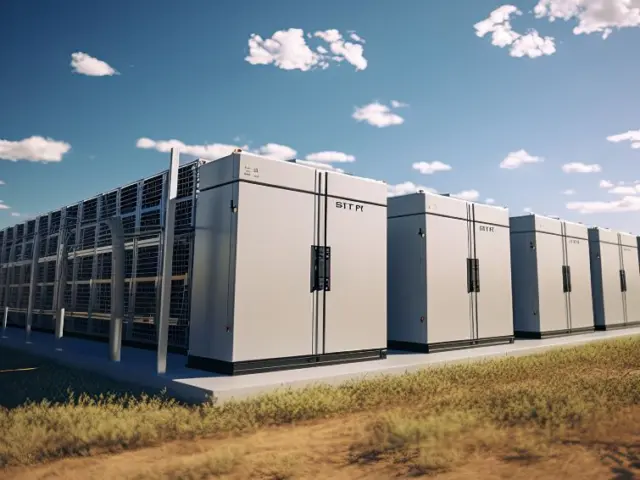
When, then, should the modules be tilted at the ideal angle for the location (for example: 25° in São Paulo)? This "shed" type of installation should only be used when there is plenty of available area, allowing for adequate spacing of the module rows. This is the case for solar power plants built on the ground, as illustrated in Figure 1.

On flat roofs or very large slabs, typically found in commercial buildings, sheds can also be installed, but with reservations: on slabs, the sheds must be solidly supported on concrete footings fixed to the slab with chemical adhesive.
In addition to avoiding drilling into the slab, footings add extra weight to the structure, making it more resistant to wind force. If the installation is done on a roof, the mounting brackets for the modules must be attached to the roof structure and not to the tiles.
Installations like the one in Figures 2 and 3, for example, do not offer adequate fixation in the event of windstorms. The drill screws (which we see in detail in Figure 3) are weakly fixed to the tiles, offering no resistance to vertical tearing in the event of a gale.


In systems like those shown in Figures 2 and 3, no incident may ever occur. However, in extreme (and yet predictable) situations, results such as those shown in Figures 4 and 5 below may occur.


In summary, it is not recommended to use structures to increase the slope of the modules when they are installed on roofs. The best strategy is to follow the natural slope of the roof tiles, even if it is slight. Below are some more examples of installations that are not recommended – unsightly and dysfunctional:


Deepen your knowledge!
[elementor-template id="561643″]


Comments (1)
Comments are moderated before publication.Comments should be respectful and contribute to a healthy debate. Offensive comments may be removed. The opinions expressed here are those of the authors and do not necessarily reflect the views of the author. Canal Solar.
We are a factory of customized solutions complying with NBR (ABNT) standards in supports (fasteners) produced in ALUMINUM and FIRE-GALVANIZED CARBON STEEL, we add QUALITY AND COST-BENEFIT to our products, and cost-benefit exceeding the expectations of the national and international market, we count with a technical team with 32 years of experience in the market, focused on renewable energy.
Our products are manufactured with a traceability system and origin of the raw material and finished product, to guarantee the individual quality of each accessory, we are available for a technical visit and present our product in order to establish a partnership, where we exceed market expectations .
We are developing a line for carports and large solar panel covers, ensuring tightness.
Good business, Success. manassesmendesjunior@gmail.com
Eng. Manasseh 41 9 9856 6200