
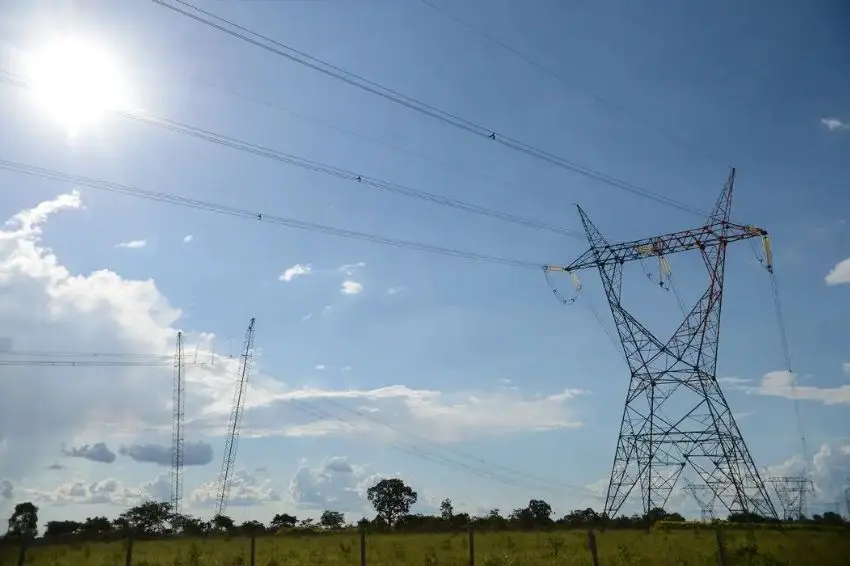
One of the country's main electricity transmission corridors underwent its first major modernization in four decades.
The revitalization of the high-voltage direct current transmission system connecting Foz do Iguaçu (PR) to Ibiúna (SP) was completed in the early hours of Tuesday (24).
The project received approximately R$ 2 billion, financed by Itaipu Binacional, and aims to increase the security and reliability of energy transportation to major Brazilian consumer centers.
The project concluded with the delivery of the protection and control systems for Bipole 2, the final stage of the planned interventions.
The project was executed by Axia Energia, formerly Eletrobras, through a technical and financial cooperation agreement signed with Itaipu. The infrastructure, which began commercial operation in 1984, transports part of the energy produced by the binational hydroelectric plant to the Brazilian market.
Corridor carries up to 6.300 MW
Extending for approximately 800 kilometers, the HVDC system has a nominal transmission capacity of 6.300 MW and its function is directly linked to the electrical configuration of Itaipu.
The power plant generates part of its energy at 50 hertz, the frequency used in Paraguay. The portion not consumed by the neighboring country is purchased by Brazil and needs to be converted to the standards of the national grid.
At the Foz do Iguaçu substation, electricity is converted from alternating current to direct current, a technology that allows for transmission over long distances.
Upon reaching Ibiúna, in the interior of São Paulo state, the power is converted back to alternating current, now at 60 hertz, the frequency used by the Brazilian electrical system.
The corridor has been, since the beginning of its operation, one of the main structures for channeling energy from Itaipu. The modernization was motivated by the aging and obsolescence of equipment installed about 40 years ago.
Equipment and systems
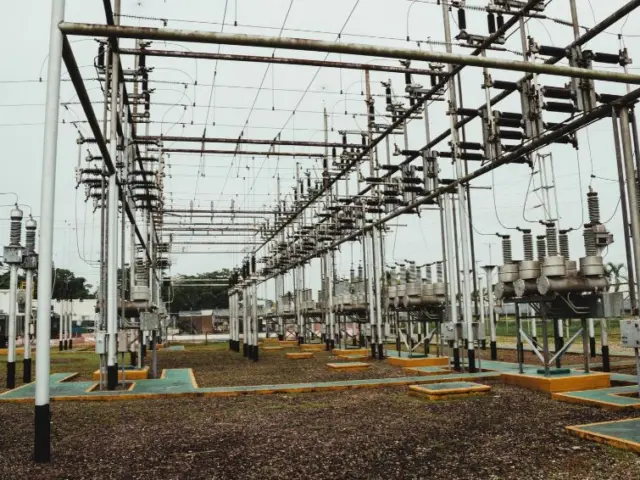
The project included replacing the main components of Bipole 1 in the Foz do Iguaçu and Ibiúna substations, as well as upgrading the supervision, protection, control, and telecommunications systems of both bipoles.
Although the intervention did not increase the nominal transmission capacity, greater operational reliability and the incorporation of new control features are expected.
The structure is now entering a period of assisted operation, scheduled to last until December 2029. The work involved technical teams from Itaipu, Axia Energia, and CET Brazil, a company contracted by Axia to carry out the revitalization.
Financing with no impact on the rate.
One of the relevant aspects of the project is the financing model. Itaipu's decision to fund the modernization was made before the privatization of Eletrobras in 2022.
The agreement that made the initiative possible was signed in December 2020 with Furnas, then a subsidiary of the state-owned company and later incorporated into the current Axia Energia.
With the investment undertaken by the binational company, the resources needed to upgrade the infrastructure were not incorporated into the transmission tariff paid by Brazilian consumers.
According to Itaipu, this model made it possible to reinforce a fundamental structure for the SIN (National Interconnected System) without transferring the cost of such a large-scale intervention to the consumer.
The revitalization is part of the POTEE (Plan for Granting Electricity Transmission Permits), prepared by the MME (Ministry of Mines and Energy) in the 2020 cycle.
all the content of Canal Solar is protected by copyright law, and partial or total reproduction of this site in any medium is expressly prohibited. If you are interested in collaborating or reusing part of our material, please contact us by email: redacao@canalsolar.com.br.

Comments
Comments are moderated before publication.Comments should be respectful and contribute to a healthy debate. Offensive comments may be removed. The opinions expressed here are those of the authors and do not necessarily reflect the views of the author. Canal Solar.