
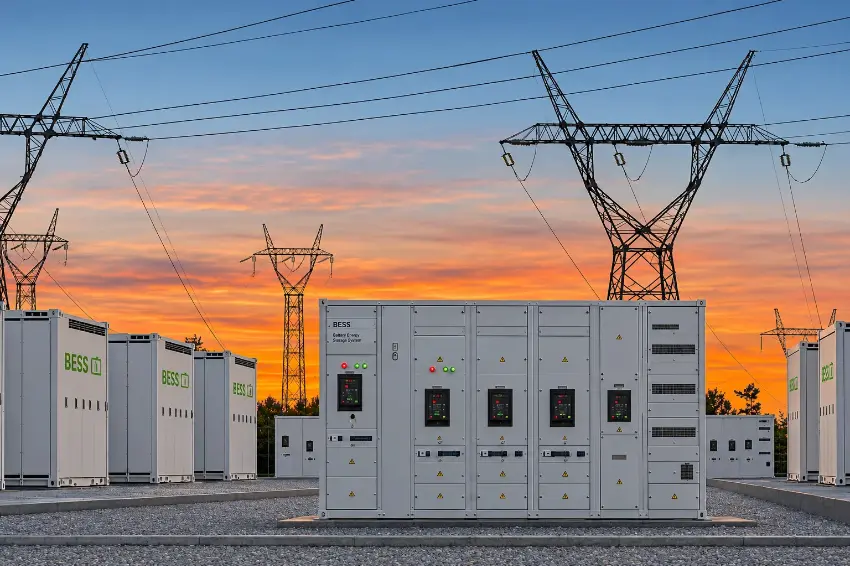
The proposal to transfer the costs of contracting batteries in the Brazilian electricity system to all energy consumers has opened a divergence between entities that, despite differing assessments of the financing, agree that the storage auction scheduled for December should not be postponed.
The FNCE (National Front of Energy Consumers) warns that Bill 3.716/2026 could add up to R$ 6,26 billion per year to electricity bills. In a contract lasting 15 years, as foreseen in the tender notice, the accumulated impact would reach approximately R$ 94 billion.
ABSAE (Brazilian Association of Energy Storage Solutions) questions the methodology and argues that the expense does not represent a new cost for society, since the need for power will have to be met anyway, and batteries would be a more economical alternative than other sources.
The core of the controversy lies in the method of financing, because Law 15.269/2025 assigned to energy generators the responsibility for paying the charge associated with contracting batteries. However, Bill 3.716/2026 proposes modifying this rule so that the expense is distributed among all consumers through a capacity reserve charge.
FNCE considers the transfer unfair.
In the analysis released on November 24, FNCE considers it inappropriate to remove the responsibility for payment from the generators and transfer the cost to consumers who do not necessarily benefit directly from the contract.
The organization points out that distributors serve their markets with different combinations of sources, including hydroelectric and thermoelectric plants, and that some residential consumers could end up paying for a need associated with the operation of solar and wind power plants.
The estimate of R$ 6,26 billion annually considers the maximum prices in the tender and a potential contract of up to 5 GW, using projections from EPE (Energy Research Company) as a reference.
The entity also presents a smaller scenario of 2 GW, in which the annual cost would be R$ 2,5 billion, accumulating to R$ 37,5 billion over 15 years.
FNCE, however, does not oppose the installation of batteries and, on the contrary, recognizes their contribution to reducing the waste of renewable energy caused by generation cuts (curtailment), improving system efficiency and reducing costs in the long term.
Their question is about who should finance this infrastructure. According to the organization, generators that contract the storage will be able to incorporate the costs into the prices negotiated with their clients, without creating a cross-subsidy for the whole of society.
ABSAE challenges the concept of additional cost.
ABSAE refutes the premise that the change would increase electricity bills by up to R$ 6,26 billion per year. According to the association, the need for power exists regardless of the technology chosen. If it is not met by batteries, it will require other solutions, also funded by reserve capacity charges.
The entity compares the estimated fixed revenue for batteries, which is less than R$ 1,25 million per MW per year in the calculation presented by FNCE, with the R$ 2,9 million per MW per year of a new thermoelectric plant.
In ABSAE's assessment, therefore, the discussion should consider the cost of available alternatives, and not treat the contracting of storage as an entirely additional expense.
The association also argues that charging generators does not prevent passing the cost on to consumers. This cost would be incorporated into energy contracts and could be subject to taxes, financial expenses, and intermediation costs.
Based on a study by LCA Consultores, ABSAE estimates that indirect charges can represent a gross increase of 10,2% compared to direct costs, in addition to risks associated with contract renegotiation and the financial capacity of generators.
Another argument is that the system's reliability benefits all users. ABSAE cites projections from NOS (National System Operator) that indicate an additional need for 4,5 GW to 6,5 GW of power in 2028 and a probability of load loss close to 30%, above the 5% limit established by CNPE.
Auction in December is a point of convergence.
Despite their disagreement over the cost allocation, both entities support holding the event according to the planned schedule.
FNCE believes that a postponement would compromise the handling of power outages and the balance of the system. ABSAE reinforces the urgency by recalling that the contracts begin supplying power in August 2028, just before the period of highest nighttime demand.
ABSAE adds that, in addition to meeting power needs, batteries can generate economic benefits. A study by the organization estimates annual gains of up to R$ 5,5 billion for a contract of 4,5 GW, including reductions in capacity costs, system service charges, and wasted renewable energy.
all the content of Canal Solar is protected by copyright law, and partial or total reproduction of this site in any medium is expressly prohibited. If you are interested in collaborating or reusing part of our material, please contact us by email: redacao@canalsolar.com.br.

Comments
Comments are moderated before publication.Comments should be respectful and contribute to a healthy debate. Offensive comments may be removed. The opinions expressed here are those of the authors and do not necessarily reflect the views of the author. Canal Solar.