
Charging different energy rates throughout the day could open up new opportunities for the energy storage market in Brazil, especially for consumers interested in reducing electricity costs during peak hours.
According to GoodWe, this scenario is likely to increase demand for batteries, hybrid inverters, and technologies capable of integrating solar generation, storage, and energy management.
The perspective is related to the proposal of ANEEL (National Electric Energy Agency) for the creation of the Fixed-Time Tariff, a modality that provides for the division of consumption into three tariff periods: Off-Peak, Intermediate and Peak, with different values according to the time of electricity use.
Implementation is planned to occur gradually among low-voltage consumers, but is still subject to approval by the Board of Directors. ANEEL.
According to the company's assessment, the potential change reinforces a transformation already observed in the photovoltaic sector, where the use of generated energy depends not only on the production of solar modules, but also on the capacity to store and control consumption.
The manufacturer states that it has been prepared for this scenario for over ten years, during which time it has directed part of its portfolio development towards hybrid inverters, batteries, and energy management solutions.
“We understood a few years ago that the future of distributed generation would not only be in the production of solar energy, but in the intelligent management of that energy. Therefore, GoodWe anticipated this transformation and began directing a significant part of its portfolio development towards hybrid systems, batteries, and energy management solutions. The 'Tarifa Hora Certa' (Specific Time Tariff) reinforces a market shift for which we had already been preparing,” says Thiago Guimarães, sales director of GoodWe Brazil.
GoodWe points out, however, that the cost savings provided by storage depend on the conditions of each project and should be analyzed individually.
“It’s not enough to install a battery and assume that all the stored energy will be used during peak hours. It’s necessary to analyze the consumption profile, the equipment capacity, the generation forecast, and the tariff conditions. Storage needs to be sized for a specific application,” said Gabriel Reversi, solutions manager at GoodWe.
In addition to residential applications, the manufacturer identifies opportunities in the Small C&I segment, which consists of small commercial and industrial establishments.
If the new tariff structure is approved, these consumers will be able to adopt load shifting strategies, which consist of shifting energy use from more expensive periods to lower-cost times through energy storage.
In practice, the battery can be charged when electricity is cheaper and discharged during periods of higher tariffs, reducing the need to purchase energy from the grid at those times.
This application can also be used in installations without photovoltaic generation, by storing electricity purchased directly from the distributor.
Economic viability, however, will depend on the difference between tariffs, the investment required in equipment, and the consumption characteristics of each establishment.
Hybrid portfolio prepared for the new phase.
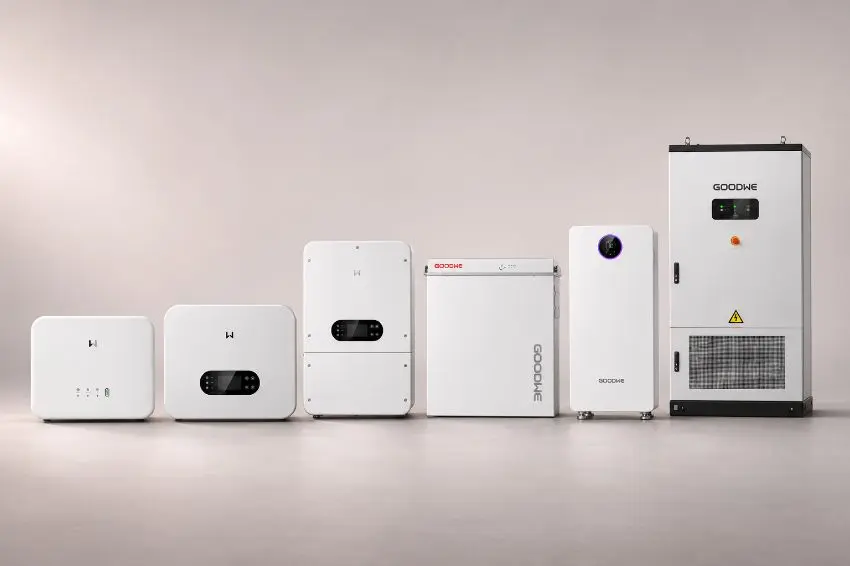
With an eye on the potential expansion of this market, GoodWe maintains a portfolio of hybrid inverters in Brazil aimed at different consumer profiles.
Among the equipment available are the ES G2, ET, ET-LV, and ES-LD lines, which can be integrated with batteries and energy management solutions.
The manufacturer is betting on the hybrid inverter as a central element in systems capable of coordinating photovoltaic generation, storage, the electrical grid, and the installation's loads.
The company also highlights monitoring and control tools, such as HEMS, EZManager3000, and the SEMS+ platform, developed to track the production, consumption, and use of stored energy.
According to the company, these technologies are expected to gain relevance as consumers begin to consider not only the volume of electricity generated, but also the most advantageous times for its use.
“The market is moving towards a model where producing energy is no longer enough. It will become increasingly important to decide when to use, store, and manage that energy in the most efficient way possible,” Guimarães added.
Despite the growth prospects for energy storage, GoodWe believes that conventional photovoltaic systems will remain competitive in various applications.
According to the company, the choice between on-grid and hybrid solutions should consider the consumption profile, the need for reserve energy, the potential for self-consumption, and the expected financial return for each project.
In this scenario, the potential implementation of the Time-of-Use Tariff is likely to increase the demand for customized solutions capable of adapting electricity generation and use to the needs of each consumer.
“Solar generation will continue to be the foundation of the market, but the next step should be in the ability to store, control, and optimize energy use. In GoodWe's view, it is this combination of solar, storage, and intelligence that should mark the next phase of distributed generation in Brazil,” the company concluded.
all the content of Canal Solar is protected by copyright law, and partial or total reproduction of this site in any medium is expressly prohibited. If you are interested in collaborating or reusing part of our material, please contact us by email: redacao@canalsolar.com.br.

Comments
Comments are moderated before publication.Comments should be respectful and contribute to a healthy debate. Offensive comments may be removed. The opinions expressed here are those of the authors and do not necessarily reflect the views of the author. Canal Solar.