
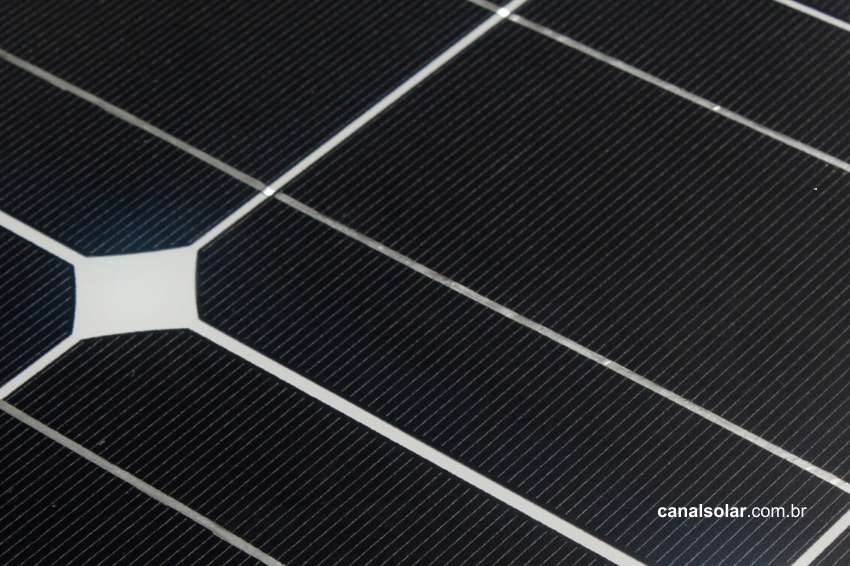
Why do monocrystalline and polycrystalline technologies coexist on the market? Is monocrystalline silicon better than poly? Is polycrystalline cheaper? What determines the number of mono or polycrystalline modules that each manufacturer places on the market? Why and how do they choose one technology or another? These are questions that have been in the air for a long time.
Polycrystalline silicon is manufactured from a large number of small crystals that are melted to form solid blocks of silicon from which cells are produced.
The boundaries between the multiple crystals make it difficult for electrical current to pass through, which explains the reduced efficiency of this type of material compared to monocrystalline silicon.
However, manufacturing polycrystalline silicon requires less energy and produces less raw material waste, which makes its cost lower.
Monocrystalline silicon, on the other hand, is formed by a single crystalline block, resulting in more efficient cells and allowing the manufacture of photovoltaic modules with greater power per area, which requires less physical space for large-scale energy generation and improves the return on investment from solar plants.
However, the manufacture of monocrystalline silicon is more complex and requires greater amounts of energy and raw materials.
Typically, polycrystalline modules found on the market have lower powers compared to their monocrystalline counterparts.
Conventional polycrystalline modules with 60 cells have great difficulty breaking the 300W barrier, while monocrystalline modules with the same number of cells easily exceed this number.
Mono modulesPerc with cells cut in half (half cell) or with larger cells, produced from larger diameter ingots, can reach powers of 340W or higher.
Rise and fall of polycrystalline silicon
Production volumes throughout history have always revealed the predominance of poly technology over monocrystalline technology.
At times, they were side by side, but polycrystalline silicon during the past decade was the flagship of the photovoltaic industry, with high production volumes and lower final costs for the consumer market.
Despite its lower efficiency, the reduced manufacturing cost of polycrystalline silicon has always provided this technology with a great competitive advantage.
Monocrystalline silicon traditionally remained restricted to a smaller niche in the market that sought maximum efficiency and accepted paying the price.
The graph below reveals the results of a study by the Fraunhofer Institute, in Germany, on the global production of photovoltaic modules until 2017.
At the beginning of the 2000s, production of mono- and polycrystalline modules was relatively balanced. From 2012 onwards, the production of polycrystalline silicon began to predominate, reducing the share of monocrystalline silicon in the market.
In the same graph we also observe the behavior of thin film modules, another type of technology that has a very small share in the solar energy market.

The graphs we will present below, on the other hand, show that the score of the mono x poly game is changing.
Dominant until 2018, the production of polycrystalline silicon began to decline from 2019 onwards and the technology appears to have its days numbered according to projections for the coming years.
After many years of absolute reign, polycrystalline silicon should finally give way to monocrystalline silicon, whose production volume will exceed 84% of the market in 2023, as predicted in the graph in Figure 2.
This reversal that occurred in the photovoltaic market in 2019, with the decline of polycrystalline silicon and the rise of monocrystalline silicon, can in part be explained by the reduction in the manufacturing cost of monocrystalline silicon with the introduction of two techniques in the industry: production of thinner wafers by sawing with diamond wire and the production of high-efficiency passivated cells, known as PERC cells.


In Figure 3, the following scenario can be seen: the global manufacturing volume of polycrystalline silicon underwent a reversal from 2019 onwards and is expected to continue falling.
The share of standard monocrystalline silicon will also be reduced, making room for the dominance of mono-PERC silicon.
P-type PERC monocrystalline silicon will be the big player of the market in the coming years, accompanied by N-type silicon in the higher efficiency segment. To the N-type silicon solar cells They are a new technology that is emerging.
Several global manufacturers are currently abandoning the manufacture of polycrystalline silicon.
According to the graphs shown above, the extinction of polycrystalline silicon has already been practically announced on the world market.
This strong movement towards monocrystalline silicon is led by Chinese companies such as Jinko, Longi and JA.
In consultation with Jinko's technical department, I received the following justifications regarding the preference for monocrystalline silicon:
"Due to continuous improvement in technology and innovation in manufacturing processes, the production capacity of monocrystalline silicon has grown while its relative cost has fallen. This, together with the increased efficiency provided by mono-PERC cells, enabled a complete revolution in the photovoltaic market, with market attention focused on high conversion efficiency rather than lower cost. High-efficiency monocrystalline modules allow reducing the cost of energy generated by photovoltaic plants".
The manufacturer also added the following advantages regarding mono-PERC technology:
"reduction in the installation cost of photovoltaic plants (fewer modules are used), greater generation (high efficiency), lower annual degradation of output power (0,6% per year), requires less area for installation (more power per area with modules which reach 20% efficiency and 405W)".
Solar market changes
The main reasons for this change, which leads to the disappearance of polycrystalline silicon, are the reduction in the price difference between mono and polycrystalline silicon and the global market's preference for higher efficiency modules.
But that is not all. The Chinese market, the main manufacturer and at the same time the largest consumer of photovoltaic modules, is partly to blame for the announced death of polycrystalline silicon.
An announcement of the reduction of subsidies and incentives for photovoltaic generation made by the Chinese government in May 2018 shook and contradicted all expectations of the world market.
Known as “Policy 531”, China's sudden change in its attempt to regulate the photovoltaic market caused the slowdown and disappearance of some manufacturers of photovoltaic cells and modules.
In the system in force until then, the Chinese Ministry of Energy defined annual targets for the installation of solar plants in projects that were made possible through subsidies.
With the new policy, which came into force immediately after its announcement, the targets for new plants were withdrawn and new projects that depended on subsidies were simply cancelled.
The Chinese government's motivation, according to official sources, was to promote the sustainable development of the market, stimulating quality and accelerating the removal of subsidies for the solar market.
At the same time that the production of photovoltaic modules decreased as a sudden effect of the new policy, China's demand for electrical energy continues to grow, which also helps to explain the preference for monocrystalline modules with greater efficiency in a more difficult and subject to new rules, in addition to the preference of the North American and European markets for more efficient modules.
It was already known that in the long term monocrystalline silicon would dominate the market, but the announcement of the new Chinese policy was a decisive factor in the sudden reduction in the production volume of polycrystalline silicon and the sudden increase in monocrystalline silicon production that we observed in 2019 .
The program also certainly contributed to the shift towards monocrystalline silicon top runner of the Chinese government, which since 2016 has been stimulating technological development and increasing the efficiency of the photovoltaic industry.
With this program, the Chinese government encouraged (or practically forced) many manufacturers to invest in improvements to achieve the quality and efficiency requirements imposed by the program.
For many manufacturers, the solution found to meet the program top runner of the Chinese Ministry of Industry was to invest in adapting its lines for the production of PERC cells.
The program's mechanism consists of reserving shares of the solar power plant market for projects that use modules that meet minimum efficiency requirements. This started a real race among manufacturers, in an all-out quest for maximum efficiency.
The program top runner resulted in several innovations in photovoltaic module manufacturing that are now found in the latest modules.
In addition to the presence of PERC cells, which have already become a market standard, the market today has products such as half cell, shingle cell, multi bus bar, double glass, bifacials and other inventions.
The first phases of the program top runner resulted in significant results in improving the quality of photovoltaic cells and modules, pushing the global solar panel market to a new level.
Efficiency targets that were program requirements later became standards adopted worldwide by the industry.
It goes without saying that, in the context of the search for maximum efficiency encouraged by the program, there was no space left for polycrystalline silicon.
Conclusions
Finally, we can conclude that a combination of factors indicates that the manufacture of polycrystalline silicon modules will practically disappear in the coming years, making room for the definitive dominance of monocrystalline silicon.
For the consumer market, the impacts of this trend will be positive, as the price difference between mono and poly is decreasing and higher power and more efficient modules are reaching the market at an accelerated rate.
References
- China's Plan For Solar World Domination: The Top Runner Program
- Secrets of monocrystalline silicone
- Photovoltaics Report, Fraunhofer Institute for Solar Energy Systems, ISE with support from PSE Conferences & Consulting GmbH Freiburg
- Why did China tap the Brakes on its solar program?
- Top Runners – China moves to upgrade its PV industry from quantity to quality
- Bid Winners of China's Top Runner Program (3rd phase) Have Been Announced, Mono-Si Products Account for More than 60%
- China's 'Top Runner' solar program becomes dominated by P-type mono PERC modules
- Top runner program in China: A theoretical analysis for potential subsidies
- China's solar industry is at a crossroads
- China's PV manufacturers after '531': What makes a winner in overseas Market
- China-531 to accelerate demise of multi; polysilicon consumption declines to 3g/W by 2022
- Mono and multi production 50:50 in 2018, but mono is the future
- Polysilicon consumption to decline below 4g/W
- China putting major brakes on solar deployment as new market rules imposed



Comments
Comments are moderated before publication.Comments should be respectful and contribute to a healthy debate. Offensive comments may be removed. The opinions expressed here are those of the authors and do not necessarily reflect the views of the author. Canal Solar.