
Trina Storage, a manufacturer of large-scale storage systems, is considering installing a battery factory in Brazil and has already submitted quotes for projects totaling more than 50 GWh of storage capacity in the country.
The progress in negotiations comes amid preparations for the first reserve capacity auctions focused on energy storage, which should help to gauge demand and guide the company's future investments in the Brazilian market.
The auctions are scheduled for December 2nd and 4th, and the bidding rules were approved last week by... ANEEL (National Electric Energy Agency).
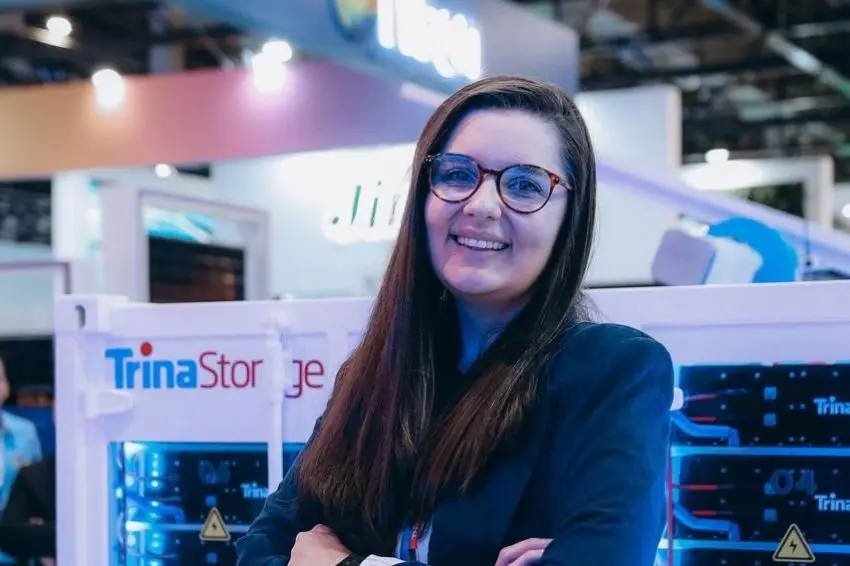
In an interview with Canal SolarAccording to Mariana Goudel, Sales Leader for South America at Trina Storage, the installation of an industrial unit is under analysis, but it is not part of the strategy for fulfilling the first tender.
For this phase, the company intends to combine imported equipment with components produced in Brazil, in addition to carrying out engineering and systems integration activities locally. "There is a plan underway, yes, at Trina, where we want to bring a factory here in the coming years," the executive stated.
The decision, however, will depend on the market's growth rate and the demand resulting from the auction. Mariana did not provide a specific timeframe or investment amount for the potential unit. The company's assessment is that accelerating the installation of a factory to fulfill the initial contract could pose risks to the execution and quality of the equipment.
Therefore, the initial strategy focuses on structuring a solution with local content, supported by the group's existing presence in the country. The quoted volume exceeding 50 GWh includes negotiations at different stages and does not represent already finalized supply contracts.
According to Mariana, there are clients who are still evaluating participation in the auctions and advanced negotiations for signing memoranda of understanding. Trina Storage's preparation began before the bidding rules were defined.
According to the executive, the company had already been studying BNDES's rules and holding meetings with the bank since last year, but accelerated its plans given the prospect of contracting storage systems in Brazil.
According to Mariana, the company is completing an additional requirement in the process of obtaining the BNDES CFI code. This accreditation is part of the strategy for accessing the bank's financing lines, which the company considers a key factor in making its projects viable.
Mariana highlighted that the group's experience with TrinaTracker, which already has a product accredited by Finame, contributes to understanding the procedures. In the executive's assessment, the financing conditions offered by BNDES, including the Climate Fund, can play a similar role in energy storage as that observed in the expansion of the wind and solar power chains.
The solution prepared for the auction considers systems with a duration of four hours. The nationalization strategy focuses on the alternating current part, related to energy conversion, while the direct current equipment will be imported. The work in Brazil will also involve local suppliers, labor, electrical designs, and integration.
Among potential buyers, Trina Storage identifies power generators, transmission companies, investment funds, and foreign companies. The interest from transmission companies, in particular, caught the executive's attention due to the perceived alignment between their business model and the contracting of battery power availability.
According to Mariana, the contracted remuneration structure and availability obligations make the segment familiar to companies accustomed to transmission auctions. There are also international groups evaluating entry into Brazil through partnerships and consortia, with interested parties from Latin America, Europe, and Africa.
Despite the existence of two tenders, the executive stated that commercial efforts are concentrated on the first, aimed at solutions with national content. According to the clients with whom she negotiates, the expectation of directing the remaining demand to the open competition auction on December 4th reduces the predictability of the volume that can be contracted in this second phase.
"Really, today, 80% of my conversations, of my time, is local content," she said. According to her, clients also request proposals for imported systems and compare alternatives, but these discussions have less negotiation intensity.
In addition to defining suppliers, projects require structuring contracts capable of distributing the risks of a technology that is still gaining scale in the sector.
Mariana explained that manufacturing, commodity, and transportation risks usually fall on the supplier, as do equipment performance commitments. Currency exposure depends on the structure negotiated with the buyer. Tax changes also need to be considered in pricing and contractual clauses.
In the regulatory field, the executive positively assessed the removal of the ban on associated and co-located storage systems, as it allows the use of projects that already have wind or solar generation. On the other hand, she pointed to the definition of the cost sharing of the contracting as one of the most important discussions for the stakeholders.
Her concern is that the potential imposition of an unforeseen charge on generators could affect already structured financial models and reduce investor security. According to Mariana, projects with adjusted returns may have their viability compromised by the inclusion of new costs.
To advance in Brazil, Trina Storage also intends to use the experience gained in other markets in the region. The executive cited a portfolio exceeding 2,5 GWh in Argentina, with projects in different stages of operationalization, and stated that the learning from initial negotiations helps support Brazilian clients in evaluating the technology and contracts.
The company expects that the initial auctions will set a benchmark for expanding storage in the country. In addition to defining supply opportunities, the results should help indicate whether there will be sufficient demand to support the next steps in Trina Storage's industrial strategy in Brazil.
all the content of Canal Solar is protected by copyright law, and partial or total reproduction of this site in any medium is expressly prohibited. If you are interested in collaborating or reusing part of our material, please contact us by email: redacao@canalsolar.com.br.

Comments
Comments are moderated before publication.Comments should be respectful and contribute to a healthy debate. Offensive comments may be removed. The opinions expressed here are those of the authors and do not necessarily reflect the views of the author. Canal Solar.