

The rapid growth of photovoltaic energy has brought numerous advantages, but along with them have come significant challenges, particularly in terms of electrical safety. The notoriously difficult-to-control electric arc flashes are statistically one of the biggest causes of problems and fires in direct current generating plants.
Unlike alternating current (AC) systems, where the voltage becomes zero for a few moments during the cycle, DC photovoltaic systems sustain and maintain the electric arc active all the time, since the voltage does not have zero crossings, meaning the electric arc is unlikely to be extinguished naturally.
DC arcs occur for a variety of reasons, including insulation failures, connections made with inadequate tools or by untrained professionals, loose wiring, aging equipment, design or construction flaws, and many others. The main consequence is high temperatures that gradually increase to the point where they culminate in large-scale fires.
The electric arc, in its initial phase, is practically imperceptible to the human eye, and traditional safety devices are unable to detect and act quickly, representing a significant risk to the efficiency and safe operation of photovoltaic systems.
The problem of DC arc flash, when not treated correctly, becomes a huge risk to small and large residential and commercial installations and can be largely responsible for fires and damage to property.
Compliance with Standard 17193
The ABNT NBR 17193:2025 standard requires compliance with higher safety requirements for grid-connected photovoltaic systems (on-grid or off-grid). To meet the standard, an AFCI (Arc-Fault Circuit Interrupter) is essential.
The AFCI detects and interrupts electrical arcs, preventing fires in solar energy management systems. The AFCI device ensures compliance with ABNT NBR 17193:2025, increasing the protection, reliability, and value of photovoltaic installations.
AFCI Technology Principle
The DC arc flash detection and protection device is a professional piece of equipment (used in residential, commercial, or industrial installations) for complete electrical protection.
Its operating principle is to accurately identify potential faults by monitoring and analyzing current and voltage signals in the circuit, combining them with the typical characteristics generated by the electric arc. When a DC arc signal is detected, the device almost instantly electronically interrupts the circuit, thus extinguishing the arc and preventing further damage and eliminating the chances of fire.
In the case of large-scale photovoltaic plants, the interference generated by long cable runs and routing makes the precise identification of the DC arc using traditional solutions even more difficult.
In these projects, the use of the AFCI device is highly recommended to mitigate and prevent the cascading effect (once a small arc is generated, it compromises the rest of the installation and generates new DC arc points) which cause enormous damage and large-scale fires.
Proauto Electric has been excelling in the development of solutions that utilize high-precision signal analysis technology to significantly increase detection capacity and reliability.

Key solutions include:
AFCI Integrated into the Inverter
Module integrated into the inverter that allows both detection and extinction of the electric arc, acting directly to interrupt the circuit.
AFCI integrated into String/Combinerbox
- A module integrated into the protection panel called String/Combinerbox allows for the monitoring and detection of various phenomena that can harm the system, cause damage, and even large-scale fires;
- Modular and plug-and-play design that simplifies installation and saves time/cost;
- Flexible and adaptable to different system sizes, with a high cost-benefit ratio.
AFCI protective box:
- Compatible with most inverters on the market, easy to install, operate and maintain.
- Proauto's patented DC arc extinguishing technology does not affect normal power generation;
- Used in a separate and independent box, the device must be installed in parallel with the inverter, transforming it into a complete piece of equipment capable of detecting surges and possible photovoltaic arcs, acting directly to interrupt the array that is at fault.
Applications and Recommendations
- It must be integrated in parallel with inverters that do NOT have AFCI (Air Fire Prevention and Control) to fully meet fire department specifications;
- For older power plants, the renewal of the Fire Safety Certificate (AVCB) provides greater safety against arcs and consequently fires;
- For projects seeking higher security performance or advanced detection features.
In summary, AFCI technology is crucial for the long-term safety of photovoltaic systems, as DC arcs are dangerous and difficult to control. AFCI solutions aim to detect and quickly interrupt these arcs, with different implementations offering varying levels of protection and adaptability to meet the specific needs of each project.

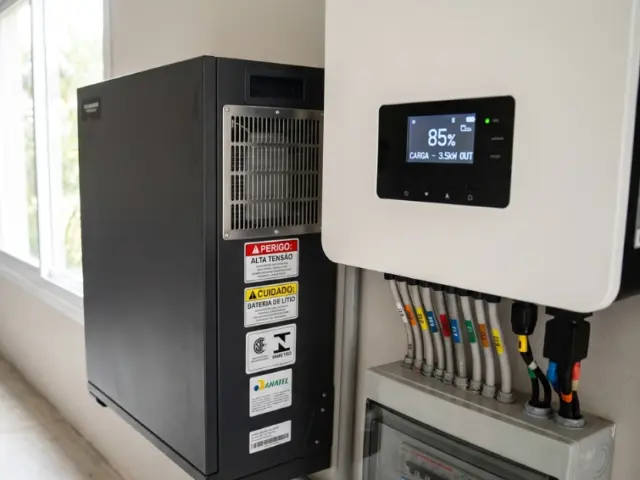
O AFCI BOX Proauto productThis product was developed specifically to meet the demand for already installed systems that are not in compliance with ABNT NBR 17193:2025 standards and INMETRO ordinances 140 and 515, bringing these systems back into compliance with current Brazilian standards and ensuring the safety of these installations, especially against fires.
Click here to access the document.
The opinions and information expressed are the sole responsibility of the author and do not necessarily represent the official position of the author. Canal Solar.




Comments (2)
Comments are moderated before publication.Comments should be respectful and contribute to a healthy debate. Offensive comments may be removed. The opinions expressed here are those of the authors and do not necessarily reflect the views of the author. Canal Solar.
great explanation
how to make a budget