
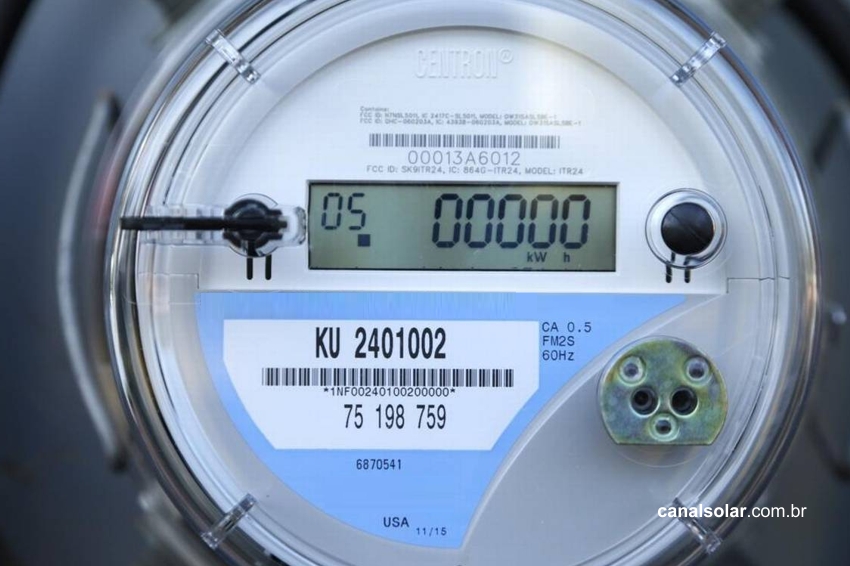
Updated October 15, 2025
Did you know that some consumer units in group A can be billed as if they were in group B?
This framework can generate significant savings and greater viability for distributed generation projects. In this article, we explain in which situations this is possible according to Resolution 1.000/2021 (Normative Resolution No. 1000/2021) and what to consider when designing a photovoltaic system in these cases.
Electricity consumers can be classified into two groups: A or B. Group A (high voltage) consists of CUs (consumer units) that receive electricity at a voltage equal to or greater than 2,3 kV or are served by an underground distribution system. This group generally includes large industries and large commercial establishments.
Group B (low voltage) is characterized by CUs served at a voltage lower than 2,3 kV, generally with a monomial tariff, proportional only to consumption, with no demand charges. This category generally includes residences, small industries, and small commercial establishments.
A Resolution 1.000/2021, which deals with the general conditions of electricity supply, determines the criteria for a CU to be classified as Group A or Group B. In general, they meet both requirements. These are:
- Group B: CUs served by an overhead network, when the installed load is equal to or less than 75 kW;
- Group A: CUs served by underground networks, or overhead networks with an installed load greater than 75 kW.
Resolution 1.000/2025 also provides that a consumer unit in Group A may choose to be billed as Group B (without having to pay the billable demand), as long as it meets at least one of the criteria below:
- The sum of the nominal powers of the consumer unit's transformers is less than or equal to 112,5 kVA;
- The sum of the nominal powers of the consumer unit's transformers is less than or equal to 1.125 kVA, if classified in the rural electrification cooperative subclass;
- The activity carried out in the consumer unit is the operation of hotel or guesthouse services and is located in a summer or tourism area, regardless of the total nominal power of the transformers; or
- The installed load of the reflectors used for lighting is greater than or equal to 2/3 of the total installed load in permanent installations for sporting activities or agricultural exhibition parks.
If the option to bill as Group B is made, there will be no need for physical changes to the facilities, and the consumer unit will continue to be served at high voltage, from its private distribution transformers.
The change will only affect the way this consumer unit is charged for energy, with a monomial tariff, not paying for billable demand. For consumer units that have a photovoltaic generator installed, such a change, when possible, increases their profitability, as this customer will no longer pay for billable demand, potentially reducing their energy bill to the minimum availability cost.

Conclusion
The possibility of billing Group A units as Group B may represent an opportunity for consumers to reduce fixed demand costs. However, this decision requires careful technical analysis. If you work in the photovoltaic sector, understanding these rules is essential to offering the best solution to your customers. To learn more, check out our solar power plants course.
Deepen your knowledge
[elementor-template id="561643″]



Comments (3)
Comments are moderated before publication.Comments should be respectful and contribute to a healthy debate. Offensive comments may be removed. The opinions expressed here are those of the authors and do not necessarily reflect the views of the author. Canal Solar.
Dear Bruno
I am resuming studies on photovoltaic solar energy and would like to maintain a dialogue in favor of these technical issues.
I come from UFSC, in Florianópolis, I work at CGT ELETROSUL ELETROBRAS, a COBEI participant in the TC88 working groups and active in the Wind and Solar Energy Area. I also remain available by phone (WhatsApp) (48)999528845.
Hello Bruno, this article is very good, congratulations!!! In this regard, and considering the FREE ENERGY MARKET, what will consumers be classified as A and B? As the supply of clean energy will be guaranteed, if they opt for this modality and possible savings of up to how much, there will be scaling. In a didactic way, as you did in the article above, it is possible to explain it to all of us, thank you very much.
Many people will say 30% and others will say 40%, but in reality the savings can easily exceed that. Just analyze how much is sold to the customer and how much you are quoting. I have done several migrations where the customer saved up to 50%. If the customer has solar panels, the savings can increase. This varies a lot from customer to customer.