
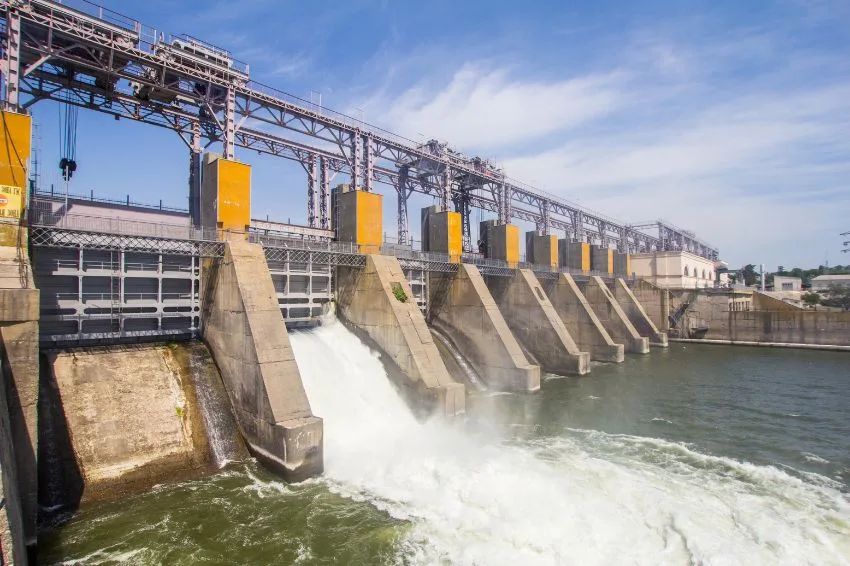
The low incidence of rainfall in July and the low levels of ENA (Influent Natural Energy) in almost all regions of the country, except the South, led the ONS (National Electric System Operator) to project a greater use of thermoelectric plants in the coming months.
Therefore, the expectation for September is to maintain the red flag level 2 or, in the best case scenario, a drop to level 1, according to an analysis by the Bolt Group.
Since April, when the 2025 dry season began, the system has been operating at high rates. In July, the red flag level 1 added R$4,46 for every 100 kWh consumed. In August, level 2 was activated, with an additional cost of R$7,87.
The ONS maintains a conservative stance, prioritizing system security. The extension, by the MME (Ministry of Mines and Energy), of the contracting of thermal plants until September 30 reinforces this strategy.
The Operator's model already provides for adequate storage levels, but, given the water shortage, thermal dispatch is increased as a preventive measure.
"The dry season, which typically lasts until mid-September (the end of winter), could continue. Therefore, the expectation is that the flag will remain as it is or fall back to red level 1," said Luiz Madeira, head of retail at Grupo Bolt.
This definition will depend on how the reservoirs behave in the coming weeks, but the ONS's conservative model tends to maintain high thermal dispatch until water security is achieved," said Madeira.
Consumers in the captive market are therefore directly affected by tariff flags. However, free market and distributed generation customers enjoy greater protection, according to an analysis by Bolt Group.
In the ACL (Free Contracting Environment), contracts usually have fixed prices or are tied to renewable sources, without direct transfer of thermal costs.
With distributed generation, consumers reduce their dependence on the conventional grid and avoid tariff adjustments. Models like subscription-based solar energy have gained popularity precisely because they offer savings in the face of system fluctuations.
“In the free market, for example, the consumer chooses their supplier, negotiates terms, has predictable costs, and, most importantly, does not bear most of these additional charges.”
"It's a more transparent, efficient, and economically viable model. The subscription-based solar energy model has been gaining increasing adoption because it offers innovation, freedom of choice, and an average 20% savings on electricity bills compared to traditional tariffs," concludes the executive.
all the content of Canal Solar is protected by copyright law, and partial or total reproduction of this site in any medium is expressly prohibited. If you are interested in collaborating or reusing part of our material, please contact us by email: redacao@canalsolar.com.br.




Comments
Comments are moderated before publication.Comments should be respectful and contribute to a healthy debate. Offensive comments may be removed. The opinions expressed here are those of the authors and do not necessarily reflect the views of the author. Canal Solar.