
Collaboration with Yanael de Medeiros
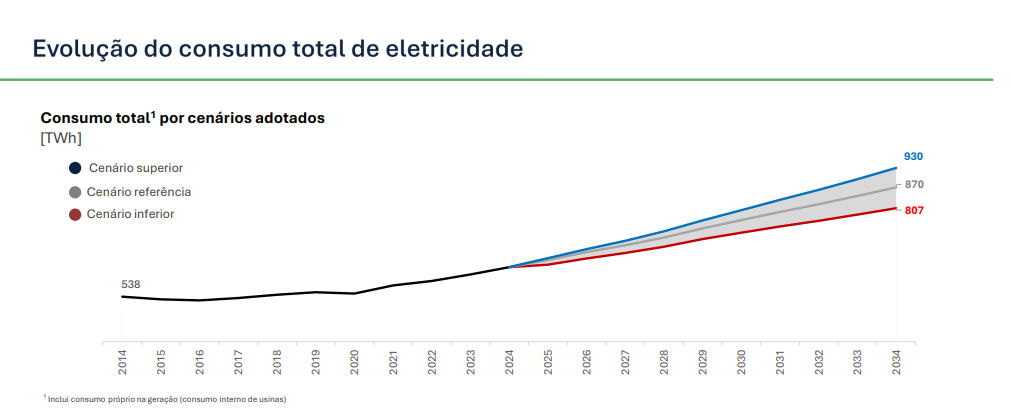
O Brazil may have a average annual growth of 3,4%, reaching 870 TWh in electricity consumption until 2034. This amount includes consumption supplied by the grid, as well as that supplied by MMGD (micro and mini distributed generation) and by local self-production.
It projection was made by EPE (Energy Research Company) and by MME (Ministry of Mines and Energy) in Energy Demand and Efficiency Notebook-PDE 2034, released last Friday (11).
Graphic: EPE/Reproduction
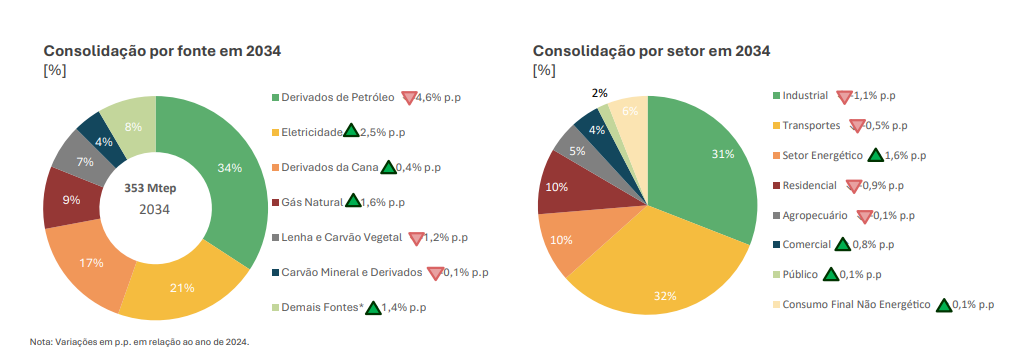
Final energy consumption by source and sector
Graphic: EPE/Reproduction
Consumption in the Industrial sector
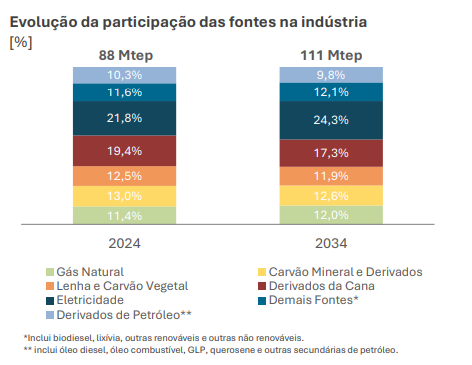
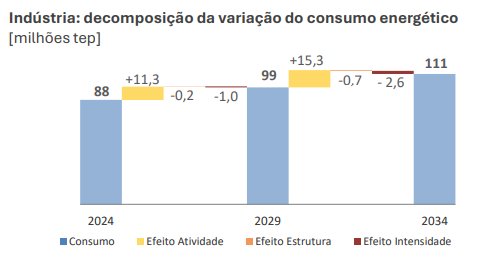
O industrial sector is the second sector that consumes the most energy. According to the data, the total energy consumption in the industrial sector will grow from 88 Mtep (Ton of oil equivalent) in 2024 to 111 Mtoe in 2034.
Graphic: EPE/Reproduction
Graphic: EPE/Reproduction
Also according to the document, the main element which justifies the variation in energy consumption in industry is the level of activity in the sector.
although some changes in structure e efficiency help a reduce a little this consumption, the big change is that industries are using more electricity and less sugarcane-derived products (such as sugar and ethanol).
isso it happens because the participation da manufacturing de foods e drinks is decreasing, while sectors that depend more on electricity are growing.
Consumption in buildings
Graphic: EPE/Reproduction
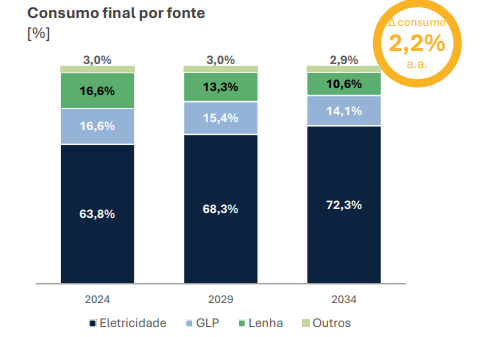
Highlights the and growing of about 3,5% between 2024 and 2034 in the participation of electricity.
Graphic: EPE/Reproduction
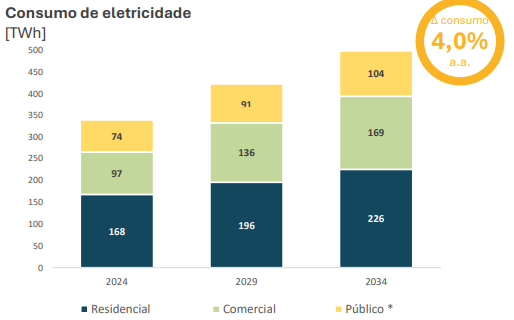
It is designed to 2034 that the buildings will be responsible for approximately about 53% do total consumption de electricity No. country, with emphasis on residences (26%) and the commercial sector (20%).
A electrical energy is the predominant source, and the sector Rehab Centers will be main source of consumption. This is because homes alone will account for around a quarter of the total electricity used in buildings.
Residential consumption
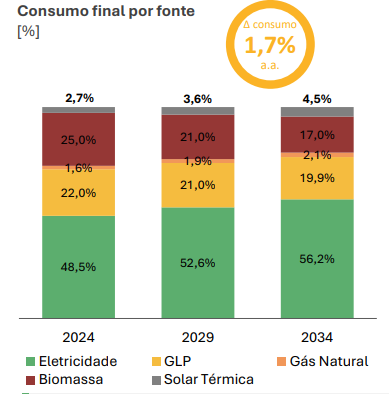
A electricity follow as the main source of energy in the residences in 2024 and must reach half of the share of the total of residential energy consumption in 2026.
O study states that this is due to increase da possession of electrical equipment, driven by air conditioning units.
Although the total LPG consumption (Liquefied petroleum gas) and natural gas in the residences keep increasing, your participation in energy matrix tends to decrease. This is because the use of electricity as an energy source is growing more significantly.
Graphic: EPE
According to EPE, the demand future of energy nose residences can change em function de changes de individual habits or induced by public policies, technological disruptions or circumstantial events.
“The advancement of replacement da firewood and charcoal in cooking by other energy sources are important factors No. increase energy efficiency in this sector,” said EPE.
Consumption in the commercial and public sectors
Em 2034, electricity will represent 93% of the total energy consumed in the sector, with the public lighting and water, sewage and sanitation services Responsible for 17 % of this portion.
With regard to the total energy consumption, the segments of hotels, restaurants and retail trade account for 28%, while the health sector participates with 13 %.
The document also states that the technological progress will be evident with the increase of use of LED lighting, greater automation and digital transformation in companies, in addition to the expectation of reducing in the generation of diesel power due to the growth of photovoltaic solar energy.
Finally, also if foresees improvements nose energy efficiency policies, especially for refrigeration and air conditioning, reflecting the growth in demand for natural gas and electricity, which highlights the importance of the commercial sector.
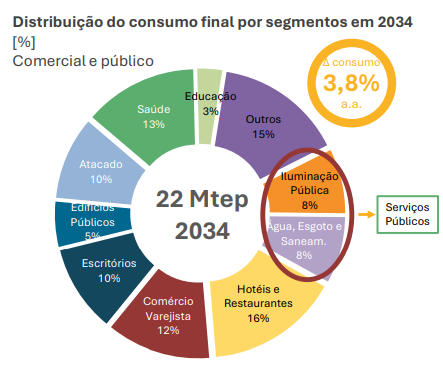
Graphic: EPE/Reproduction
Consumption in the transport sector
A recovery of the industrial sectors, services and the construction, driven by the New PAC (Growth Acceleration Program), increase the demand for charge transport, with a predicted energy growth of 1,9 % per year between 2024 and 2034.
Already road transport will continue to be the more used, while there will be an expansion of rail transport with investments in the existing network and the operation of new sections. In passenger transport, relevance of the individual road will follow expressive.
However, most of the incremental demand in the ten-year period should be served by public road transport. Between 2024 and 2034, energy demand will grow 1,6 %.
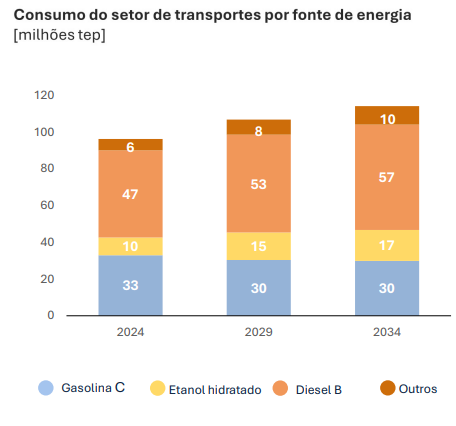
Graphic: EPE/Reproduction
Energy Efficiency
Efficiency means generating the same amount of energy on less natural resources or get the same service with less energy.
Each sector faces challenges e opportunities distinct for the reducing do energy consumption, through the adoption of more efficient technologies and improved processes.
Industrial
Electrical efficiency will reduce by 3% or consumption of energy of industries in 2034, equivalent to 11 TWh.
A energy efficiency will also result in a decrease de 5 million de pulse (Ton of oil equivalent) in the potential consumption of the industry, which indicates a significant reduction in the use of energy in this sector.
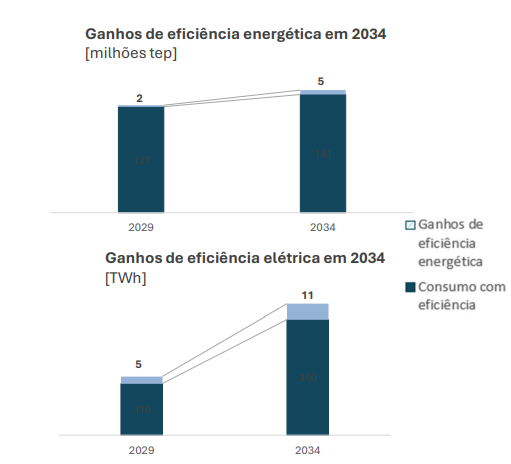
Graphic: EPE/Reproduction
Buildings
According to the document, 226 TWh are expected in 2034 for the consumption of residences, which are responsible for about half of the electricity consumption of buildings.
In total, the buildings will account for 53% of the consumption of energy electricity in the country in 2034, contributing 26 TWh of electrical efficiency gains.
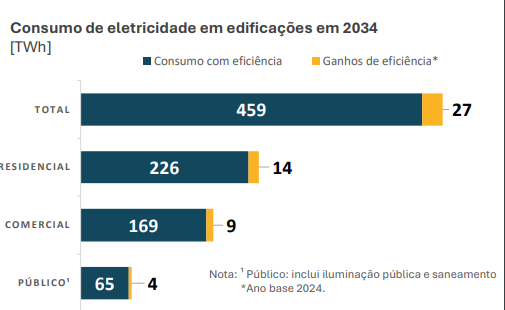
Graphic: EPE/Reproduction
Residential
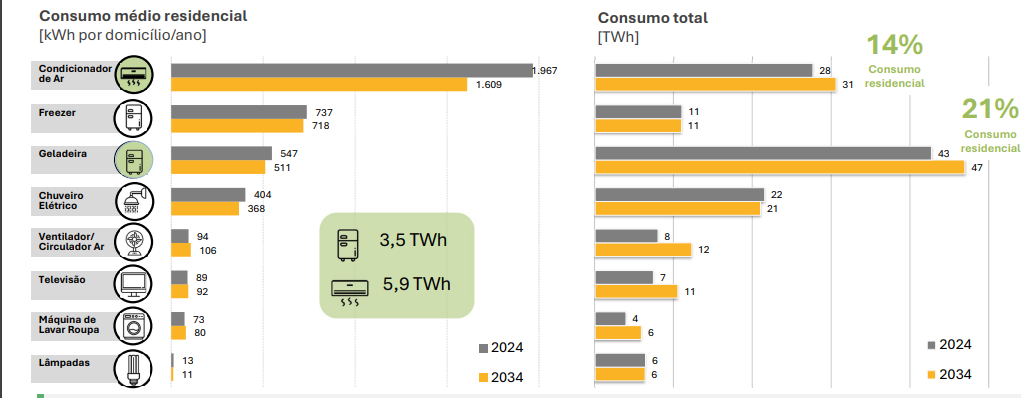
The gains of electrical efficiency in homes reach 14 TWh in 2034, corresponding to 6,2% of best before date total in the year.
According to study data, the projections contemplate the regulations de minimum indexes of energy efficiency of air conditioners, refrigerators, freezers and lamps.
Graphic: EPE/Reproduction
Transport
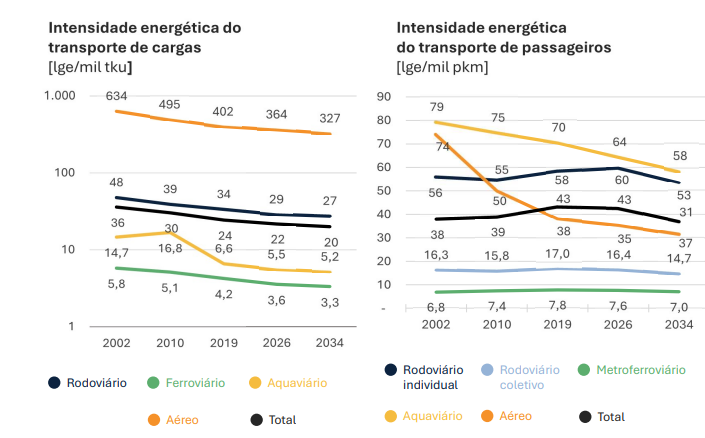
A energy intensity of trucks must continue to decrease, driven by efficiency gains in new models, the increased share of heavy trucks in the fleet and improvements in road infrastructure.
Policies of energy efficiency aim improve that intensity over the next decade.
Furthermore, increasing electrification of transportation also plays a big role in this process.
the implementation of Urban Mobility Plans prioritizes public transport, which increases its use and improvement a energy efficiency general.
Graphic: EPE/Reproduction
Energy Efficiency: general analysis by sector
Industrial
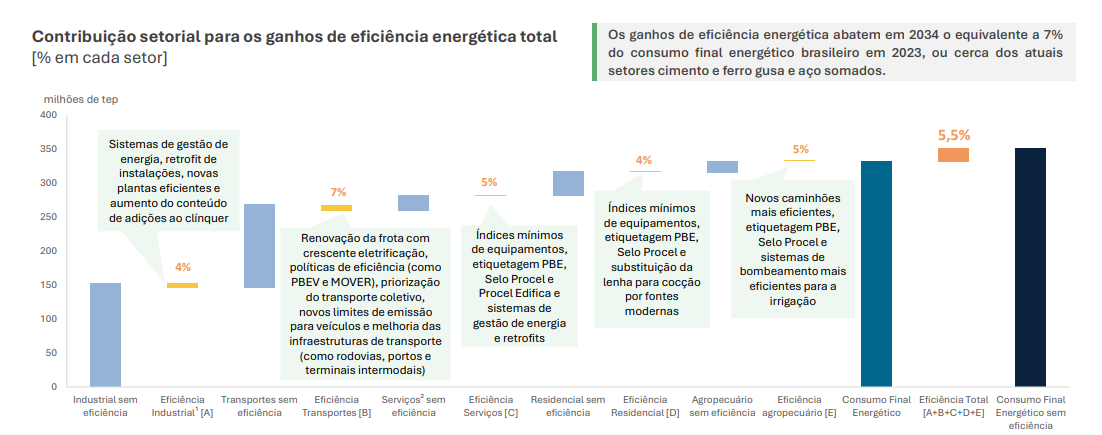
In short, the energy efficiency gains should reduce or consumption of energy in Brazil in 7% in relation to final consumption in 2023.
In the industrial sector, the projection is that there is a increase of 4% in the gains of energy efficiency in relation to the sector that does not adopt efficiency measures.
According to the EPE study, this increase is due to adoption of energy management systems, advanced energy management, modernization (retrofit) of old facilities to make them more efficient, the construction of new ones industrial plants with modern and efficient technologies, and the increased use of alternative materials in the production of clinker.
Transportation
In the transport sector, a increase of 7% in energy efficiency gains in relation to the sector that does not adopt efficiency measures.
The document states that the Implementation da fleet renewal focusing on increasing electrification, together with efficiency policies such as PBEV (Brazilian Vehicle Labeling Program) and the MOVER (National Green Mobility and Innovation Program).
This approach prioritizes public transportation and sets new emission limits for vehicles, in addition to improving transportation infrastructure, including highways, ports and intermodal terminals.
Services
In the service sector, the expectation is 5% in energy efficiency gains compared to the sector that does not implement efficiency measures.
According to EPE, this increase is due to minimum indexes of equipment, labeling PBE (Brazilian Labeling Program), Procel Seal (National Electric Energy Conservation Program) and Procel Building and energy management systems and retrofits.
Residential
In the transport sector, a increase of 4% in energy efficiency gains in relation to the sector that does not adopt efficiency measures.
As in the service sector, the increase is also due to minimum indexes of equipment, labeling PBE e Proce Seall. In addition to replacing firewood for cooking with modern sources.
agricultural
In the agricultural sector, the projection is that there is a increase of 5% in energy efficiency gains in relation to the sector that does not adopt efficiency measures.
The study states that new more efficient trucks, labeling PBE, Procel Seal e pumping systems more efficient irrigation systems can contribute to the energy efficiency.
EPE/Reproduction
all the content of Canal Solar is protected by copyright law, and partial or total reproduction of this site in any medium is expressly prohibited. If you are interested in collaborating or reusing part of our material, please contact us by email: redacao@canalsolar.com.br.




Comments
Comments are moderated before publication.Comments should be respectful and contribute to a healthy debate. Offensive comments may be removed. The opinions expressed here are those of the authors and do not necessarily reflect the views of the author. Canal Solar.