
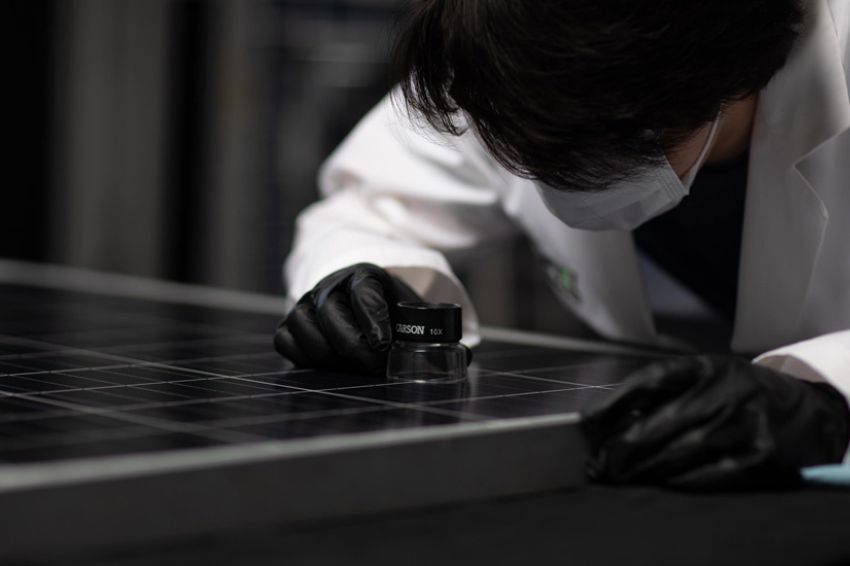
In the solar PV industry, many consumers are hearing about “fake power” or “fake panel”. However, do you know what these terms mean?
In this case, they are modules from some companies that do not generate the expected power and generally do not have international certifications, such as RETC, PVEL, AAA.
The equipment was approved by international bodies and Inmetro, but, upon delivery, the modules are of inferior quality and do not reach the expected power. Furthermore, the price is much cheaper than panels that meet certifications and are from manufacturers with a long history in the market.
This is called “fake power” or “fake panel”. Therefore, we give JA Solar, we highlight that it is essential that consumers pay attention to these issues when making a purchase, thus preventing their projects from being harmed.
Company modules, for example, have nine certifications in the photovoltaic market. Among them are the classifications received by PV Tech, RETC, PVEL, EUPD Research, TUV SÜD, UL Solutions, BNEF, ETL from Intertek and the Inmetro seal.
Of the more than 150 existing panel manufacturers, 39 are listed in the Bloomberg T1 financial ranking, 35 were certified by the PVEL laboratory, six have quality certification by RETC and only four have AAA certification by PVTech.
Check out, below, the video produced by JA Solar showing the precautions that must be taken to avoid so-called “fake power” or “fake panel”.
The opinions and information expressed are the sole responsibility of the author and do not necessarily represent the official position of the author. Canal Solar.


Comments (3)
Comments are moderated before publication.Comments should be respectful and contribute to a healthy debate. Offensive comments may be removed. The opinions expressed here are those of the authors and do not necessarily reflect the views of the author. Canal Solar.
Because this way, this information becomes very easy and very vague, since it only leaves professionals with the responsibility of having to individually verify (if we have the conditions and competence to do so) whether the modules purchased from X or Y company are working correctly.
I would like to know which brands and models of photovoltaic modules are listed as likely fake equipment. If the authors of this edition are unable to inform us of these brands and/or models, at least then they can show the brands and models of the modules that are real.
JA is without a doubt one of the best manufacturers of photovoltaic panels.
Now this article is a marketing shot in the foot.
Not all competitors have these bad practices.
Believe me, there are already good and cheap panels.
The accusation made here is frivolous, it adds nothing to the market, raising suspicions.
since these are crimes, the path should have been different